
Font size
 Worksheets
C.3.1 Achievement Motivation Overview
Total questions: 32
Worksheet time: 16mins
Which statement best describes Need Achievement Theory in achievement contexts?
Personality and situational factors interact, shaping emotions and behaviour
Success depends mainly on innate ability, not environment
Situational factors alone determine motivation and effort
Emotions drive personality, which then creates situations
A coach wants athletes to approach challenging tasks. Which action aligns with Need Achievement Theory?
Modify situational factors to encourage approach behaviours
Focus only on athletes’ fixed personality traits
Avoid changing training conditions across sessions
Ignore emotional responses to achievement situations
Goal Orientation Theory suggests success can be judged by different standards. Which pair correctly matches the standard with orientation?
Self-referenced success—task orientation; Norm-referenced success—ego orientation
Peer-referenced success—task orientation; Coach-referenced success—ego orientation
Outcome-referenced success—task orientation; Process-referenced success—ego orientation
Self-referenced success—ego orientation; Norm-referenced success—task orientation
Which outcomes are most associated with high task orientation?
More excuses
Sustained effort
Greater perseverance
Lower effort
When can high ego orientation become problematic for performance and well-being?
When individuals ignore external evaluations entirely
When athletes receive consistent positive social evaluation
When task orientation is high and ability is seen as high
When task orientation is low and ability is perceived as low by others
Which reactions are likely when someone with high ego orientation believes others see their ability as low?
Defensive responses
Greater dropout risk
Improved perseverance
Increased anxiety
Which statement best defines motivation in the context of exercise behavior?
The desire that selects a goal and energizes effort
A schedule that organizes training sessions weekly
A mood that reflects temporary feelings during workouts
A trait that determines fixed athletic potential
Direction of effort refers to which aspect of motivation?
When rest periods are scheduled in plans
How long training is sustained over years
How intensely a person pushes themselves
Where a person chooses to invest effort
Intensity of effort is best described as
The amount of effort a person exerts
The sport a person decides to pursue
The emotions felt before competition
The social status gained from success
Motivation primarily helps answer which question about behavior?
Why a person starts, persists, and chooses paths
Which nutrients should be eaten daily
What specific exercise program should be used
When biological growth spurts will occur
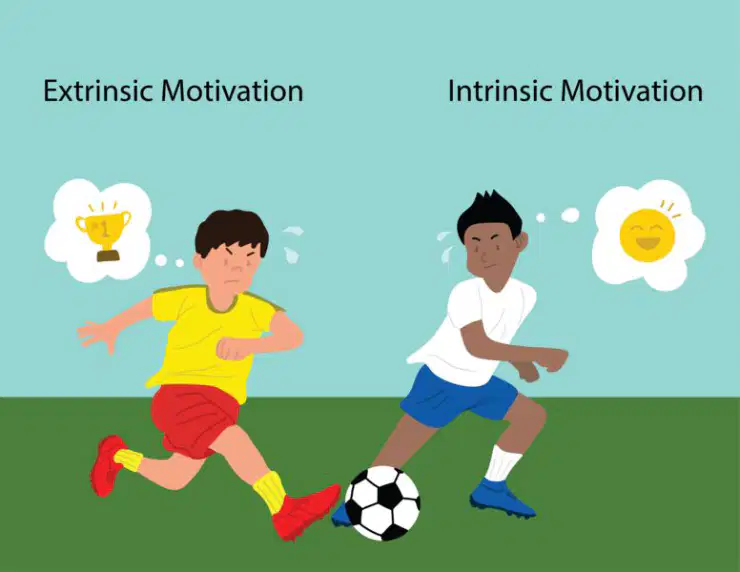
Select all examples that illustrate intrinsic motivation in physical activity.
Exercising because it is fun and exciting
Training to gain a trophy or medal
Competing to increase social status
Working out for personal improvement goals

Which option best characterizes extrinsic motivation?
Motivation arising from inner enjoyment and curiosity
Motivation driven by external rewards or status
Motivation determined by genetic predispositions
Motivation controlled exclusively by coaches’ orders
A student runs daily because they love the feeling of progress, but also hopes to win a community race. Which principle does this scenario demonstrate?
Intensity of effort without direction of effort
Direction of effort without intensity of effort
Overjustification eliminating intrinsic enjoyment
Additive principle combining intrinsic and extrinsic
Without motivation, which outcome is most likely regarding exercise and its benefits?
Exercise is unlikely to occur and benefits are missed
Exercise will occur automatically due to habit
Benefits will be achieved regardless of effort
Exercise frequency increases without clear reasons
Which formula best represents achievement motivation in Need Achievement Theory?
Desire to succeed minus fear of failure
Probability of success plus incentive value
Effort level multiplied by task difficulty
Intrinsic motivation plus extrinsic rewards
A student chooses moderately difficult tasks, persists, and focuses on pride in success. Which profile fits best?
Performance avoidance
High achiever tendencies
Low achiever tendencies
Amotivation pattern
In NAT, what happens when fear of failure becomes very large?
Incentive value of success disappears
Motivation rises and risk-taking increases
Personality factors become irrelevant
Motivation drops and attempts may stop
Which situational elements influence motivation in NAT?
Peer approval unrelated to outcomes
Incentive value attached to success
Amount of intrinsic enjoyment only
Probability of success in the task
Resultant tendencies in NAT refer to which direction of behavior?
Balance pride with shame
Approach success or avoid failure
Increase intrinsic rewards
Shift to external regulation
Which emotion pairs are central in NAT’s outcomes?
Joy and anger
Hope and despair
Guilt and relief
Pride and shame
Which behavior is more typical of low achievers under NAT?
Seek challenges and persist
Focus on mastery over performance
Avoid difficult tasks and lower effort
Choose moderate risk and plan
Which statement about combining motivators aligns with the additive principle depicted?
Informational feedback can increase perceived competence
Any reward always boosts intrinsic motivation
Controlling praise may reduce self-driven interest
Extrinsic rewards can lower intrinsic motivation
Which statement best describes a task-oriented individual within Goal Orientation Theory?
Defines success as outperforming peers
Focuses on correct execution and improvement
Avoids challenging tasks to protect self-image
Bases motivation on external rewards primarily
Ego-oriented individuals are most likely to prioritize which outcome in achievement settings?
Personal skill development over time
Being better than other participants
Process goals and accurate technique
Persistence regardless of feedback
Which combination in Goal Orientation Theory leads to achievement behavior?
Task orientation plus external incentives
Achievement goals plus perceived ability
Effort plus persistence without goals
Perceived ability plus social comparison
Select all statements that align with how perceived ability influences orientations.
It minimally affects task-oriented individuals
It makes task-oriented people chase status
It shapes how ego-oriented people expect success
It has stronger effects on ego-oriented people
Which elements are included when evaluating achievement behavior under Goal Orientation Theory?
Persistence and task choice
Social comparison exclusively
Appearance management only
Performance and effort indicators

Which combination most increases the risk of detrimental motivation in athletes?
High ego with high task orientation
High ego with low task orientation
Low ego with high task orientation
Low ego with low task orientation

A swimmer highly focused on outperforming others stops practicing fundamentals. Competition rises and results decline. What most likely explains this drop?
Strong mastery focus and resilience
High ego orientation with low task orientation
Low ego orientation with high perceived ability
Balanced ego and strong self-improvement habits

In team sports, how can high ego orientation harm overall performance?
It enhances long-term persistence
It improves task-oriented training
It shifts focus from team to self
It increases cooperative decision-making

When perceived ability is high, what feeling is most likely in a person with high ego orientation?
Ambivalence about outcomes
Confidence in performance
Anxiety about skill level
Avoidance of competition
Feedback that challenges performance makes an athlete feel their self-worth is attacked. Which response is most predicted by high ego orientation?
Open acceptance and reflection
Defensive attitudes and resistance
Increased task practice immediately
Neutral acknowledgment and planning

