
Font size
 Worksheets
PCT Ch 12 Moving, Positioning, and Preventing Falls Assignment
Total questions: 32
Worksheet time: 19mins
Directions: Match the device on the left to the correct purpose on the right. (Table 12.1)
Helps weak patient to roll from side to side or to sit up in bed
side rail
Used to maintain the legs in abduction after total hip replacement surgery
Wedge Pillow
Maintain feet in dorsiflexion, which prevents plantar flexion
foot boots or foot boards
Provides support and shape to body contours; immobilizes extremity; maintains specific body alignment
sandbag
Individually molded for patient to maintain proper alignment of thumb; slightly adducted in opposition to fingers; maintains wrist in slight dorsiflexion
Hand/ wrist splint
When using hydraulic lifts for transfers of older adults, particularly for those with __________, it is reassuring to provide basic instructions and make sure they have their eyeglasses (if they use them).
visual impairment
hearing loss
mobility issues
cognitive decline
Use a(n) __________ to assist with ambulation for patients with continuous IV therapy.
IV pole
Walker
Wheelchair
Crutch
Muscles decrease in size and __________ when not continually used.
strength
color
temperature
length
Weakness and low blood pressure are common signs and symptoms noted in an older adult on bedrest.
True
False
Safety reminder devices are primarily used to keep staff safe.
True
False
Immobility always results from trauma.
True
False
Several body mechanics and positioning techniques that protect the patient care technician from physical injury include:
Using proper lifting techniques, maintaining a straight back, and bending at the knees.
Twisting the back while lifting heavy objects.
Lifting with the arms extended far from the body.
Ignoring the use of assistive devices when moving patients.
Impaired mobility may lead to which of the following emotional responses?
Depression, agitation, or emotional distress
Increased happiness and motivation
Improved social interaction
Enhanced physical strength
Which of the following assistive devices can be used to immobilize an extremity when a patient needs prolonged bed rest?
Pillow
Side rail
Sandbag
Bed board
The patient experienced a cerebrovascular accident (CVA) that left her with severe left-sided paralysis and very limited mobility. Which device would prevent plantar flexion?
Footboard
Bed board
Trapeze bar
Trochanter roll
Which patient has a contracture? (Procedure 12.2)
Patient has abnormal extension of a finger joint.
Patient's wrist is abnormally flexed and joint is fixed.
Patient's knee is hyperextended.
Patient has abnormal lateral movements of ankle joint.
What is the most likely complication if an elderly patient gets pulled across the bed when changing wet linens?
Dislocation of a joint
Increased stress to the joints
Abnormal hyperextension of a joint
Shearing or tearing of the skin
Which of the following is a complication of immobility? (Box 12.1)
Diarrhea
Dehydration
Kidney stones
Increased fatigue
The PCT is caring for a patient who has had a CVA with right sided impairment. The patient has difficulty moving her right arm and leg and this results with interference with ADLs. Before turning or transferring this patient, the patient assessment and preparations that should be made include:
Assess the patient's level of consciousness, mobility, and need for assistance.
Only check the patient's temperature.
Ignore the patient's medical history.
Move the patient without any assessment.
The PCT is caring for a patient who has had a CVA with right sided impairment. The patient has difficulty moving her right arm and leg and this results with interference with ADLs. The appropriate action to assist the patient to move from the bed to a chair is:
Support the patient at the waist and use a gait belt.
Pull the patient by the arms.
Ask the patient to move without assistance.
Lift the patient quickly without preparation.
The PCT is caring for a patient who has had a CVA with right sided impairment. The patient has difficulty moving her right arm and leg and this results with interference with ADLs. While transferring the patient from the bed to a chair, the patient starts to fall. The patient care technician should:
Ease the patient to the floor and protect their head.
Try to hold the patient upright at all costs.
Leave the patient to get help immediately.
Pull the patient back onto the bed.
The PCT is caring for a patient who has had a CVA with right sided impairment. The patient has difficulty moving her right arm and leg and this results with interference with ADLs. The patient is unable to perform range of motion (ROM) of the right extremities. What can the patient care technician do to help the patient accomplish the ROM exercises?
Assist the patient with passive ROM exercises
Instruct the patient to avoid moving the right extremities
Apply restraints to prevent movement
Leave the patient alone to attempt exercises
The PCT is caring for a patient who is comatose after experiencing a head injury several months ago. He is breathing on his own and his vital signs are stable but shows no purposeful movements. The complications of immobility for this patient include:
Pressure ulcers, deep vein thrombosis, muscle atrophy, and pneumonia.
Increased appetite and weight gain.
Improved cardiovascular fitness.
Enhanced bone density and joint flexibility.
The PCT is caring for a patient who is comatose after experiencing a head injury several months ago. He is breathing on his own and his vital signs are stable but shows no purposeful movements. Interventions that may be implemented to prevent the occurrence of complications of immobility include:
Regular repositioning and range-of-motion exercises
Limiting fluid intake and bed rest
Restricting movement and reducing nutrition
Encouraging prolonged immobility and isolation
The PCT counsels the immobilized patient in regard to prevention of muscle atrophy and contractures. What will the PCT be sure to include when counseling this patient?
The need for additional calcium
The need for additional protein
The need for some type of exercise
The need for a special protective bed
The PCT is performing range of motion (ROM) for the patient. When will the PCT discontinue the exercise?
Only after the joint is fully stretched
Until the joints reach 90 degrees
At the point of resistance
When the PCT is tired
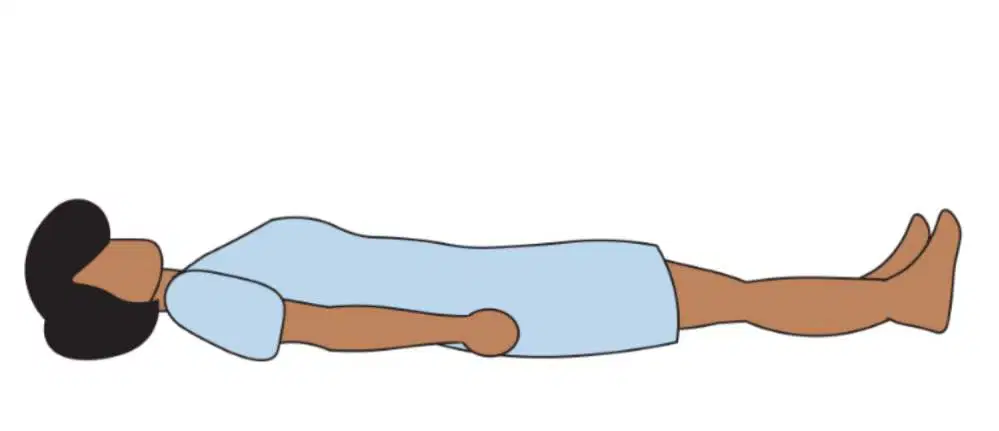
Which position is this?
Which choice below is the Fowler's position?
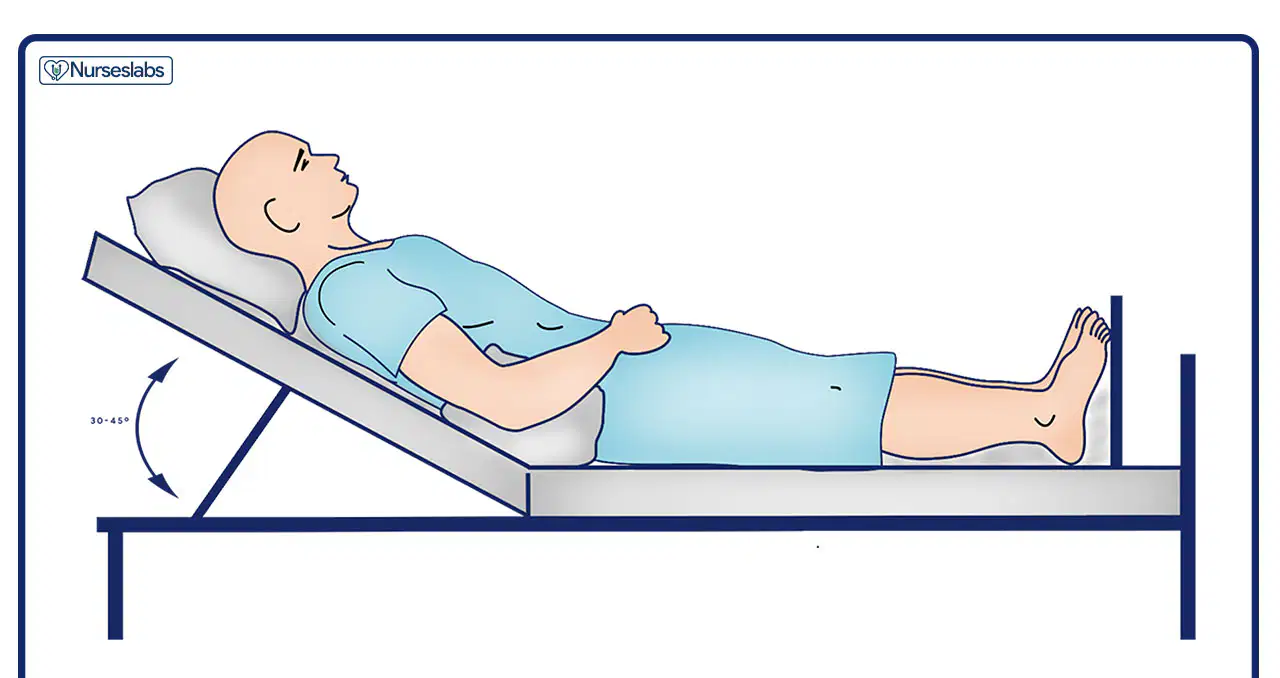
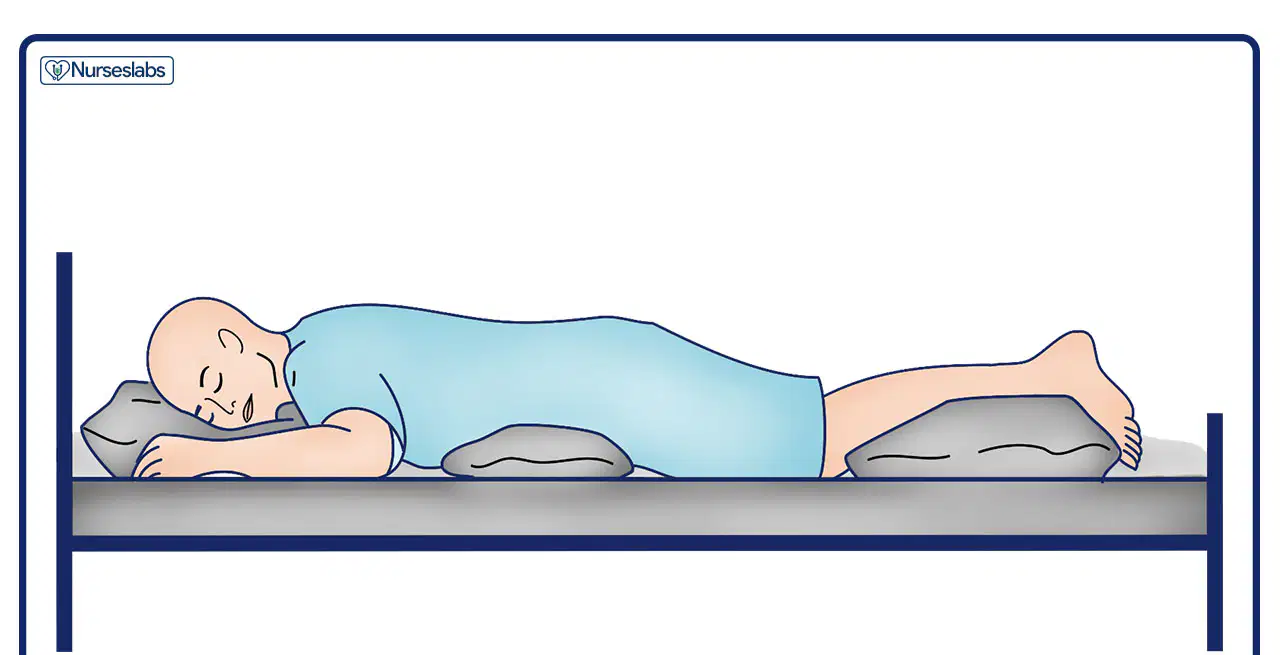
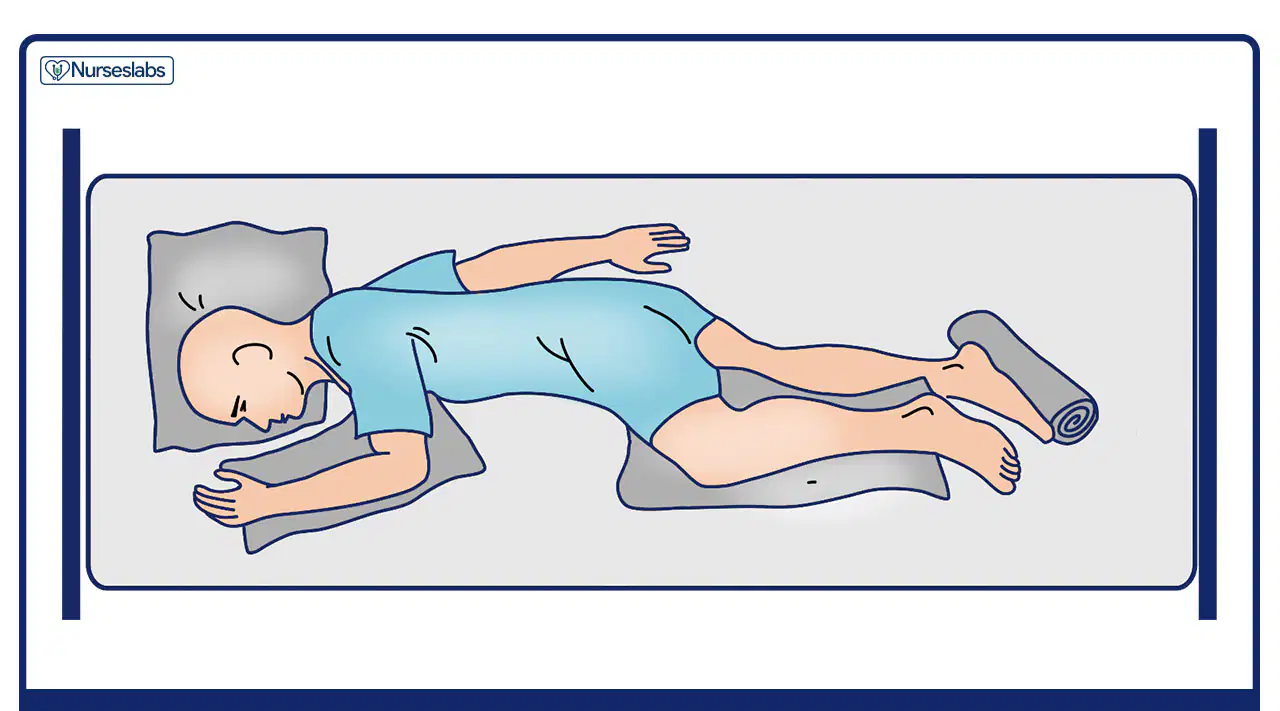
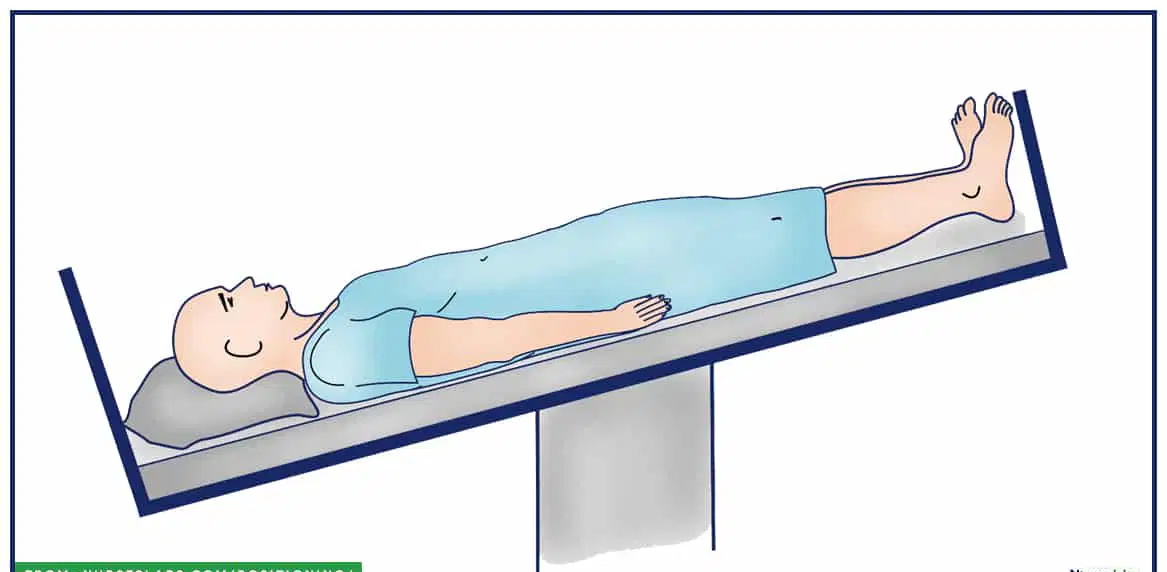
A nurse instructs a PCT about moving older adult patients in bed. When should the nurse intervene when observing the PCT perform a return demonstration?
The PCT is using simple language.
The PCT is avoiding jerky movements.
The PCT is pulling the patient across bed linens.
The PCT explains the procedure to the patient.
The PCT assists a patient into the semi-Fowler position per physician order. What would indicate that this patient is in the correct position?
Patient is leaning over the bedside table
Head of bed is at a 30-degree angle
Knee is drawn toward the chest
Arms are flexed toward the head
The PCT advises the elderly person to move from a lying to standing position slowly because they are at higher risk for which of the following?
Orthostatic hypotension
postural hypertension
decreased urinary output
increased visual acuity
Before assisting the patient with ambulation, the PCT ensure that the patient has on _____.
ID bracelet
robe
socks
non slip slippers
The PCT is caring for a patient with a SRD. The PCT is aware that which of the following has occurred prior to the use of an SRD?
The patient attempted to hit the sitter
The patient yelled at the nurse
The patient fell too many times
The patient was bothering other patients
Before applying the SRD, the nurse must do which of the following?
Explain the device to the patient
Attempt alternatives first
Obtain a physician's order
All of the above
Which examination position requires the medical assistant to raise the head of the bed to a 30- to 45-degree angle?
Fowler's
recumbent
prone
Sim's
The PCT is ambulating the patient for the first time after a period of bedrest. The PCT is aware that the patient is higher risk for falls because of which effects of prolonged bedrest?
fatigue
hunger
weakness
poor vision

