
 Worksheets
Chemistry 1 Practice Review First sem
Total questions: 189
Worksheet time: 4hrs 39mins
Situation: You are sitting under an apple tree when an apple suddenly falls to the ground. This specific event is famously associated with the legend of how a scientist formulated the Law of Universal Gravitation. Who is this scientist?
(a)
Identification: I am the naturalist who traveled to the Galapagos Islands aboard the HMS Beagle. My observations of finches with different beak shapes led me to propose the Theory of Evolution by Natural Selection. Who am I?
(a)
Identification: I am the naturalist who traveled to the Galapagos Islands aboard the HMS Beagle. My observations of finches with different beak shapes led me to propose the Theory of Evolution by Natural Selection. Who am I?
(a)
Situation: You are looking at a formula that changed the world: E = mc2 . This formula establishes that mass and energy are interchangeable. Which German-born physicist developed this Theory of Special Relativity?
(a)
Situation: You are looking at a formula that changed the world: E = mc2 . This formula establishes that mass and energy are interchangeable. Which German-born physicist developed this Theory of Special Relativity?
(a)
Situation: You are looking at a formula that changed the world: E = mc2 . This formula establishes that mass and energy are interchangeable. Which German-born physicist developed this Theory of Special Relativity?
(a)
Identification: In the late 19th century, this American inventor held over 1,000 patents. He is most famous for developing the practical incandescent light bulb and the phonograph. Who is he?
(a)
Situation: You pick up a phone to call a friend. This technology exists today because of a Scottish-born inventor who was the first to patent the telephone in 1876. Who is he?
(a)
What acts as the "fingerprint" of an element, represented by the whole number usually found above the element symbol in the periodic table, and is equal to the number of protons?
(a)
Which separation technique is most suitable for separating a mixture of two liquids with different boiling points, such as water and ethanol?
(a)
Identify the separation method used to separate magnetic components, like iron filings, from a non‑magnetic mixture.
(a)
What do you call the positively charged subatomic particle found in the nucleus of an atom?
(a)
When measuring a liquid in a graduated cylinder, you must read the volume at the lowest point of the curved surface. What is this curve called?
(a)
Which law states that mass is neither created nor destroyed in a chemical reaction?
(a)
What type of property depends on the amount of matter being measured, such as mass and volume?
(a)
Name the phase change that occurs when a solid turns directly into a gas without passing through the liquid state.
(a)
In the chemical formula SH 2 OS, what does the subscript "2" represent?
(a)
Who is the scientist credited with the discovery of the electron using the cathode ray tube experiment?
(a)
Matter is broadly classified into pure substances and mixtures. What are the two types of pure substances?
(a)
In the scientific method, what do you call a tentative, testable explanation for a set of observations?
(a)
What is the specific term for a mixture that appears uniform throughout, also known as a solution?
(a)
Which subatomic particle has no electrical charge and is located in the nucleus?
(a)
Write the scientific notation for the number 0.00052.
(a)
What is the SI unit for "amount of substance"?
(a)
An ion with a positive charge, formed by the loss of electrons, is called what?
(a)
Name the horizontal rows on the periodic table.
(a)
Which physical property refers to the ability of a substance, usually a metal, to be hammered into thin sheets?
(a)
What is the common name for the compound CH4 ?
(a)
What is the chemical symbol for the element Potassium?
(a)
Which separation technique involves pouring off a clear liquid from a mixture after the heavy solid particles have settled at the bottom?
(a)
Identify the state of matter that has a definite volume but takes the shape of its container.
(a)
What do you call a change in matter that results in the formation of a new substance, such as iron rusting or wood burning?
(a)
In the Periodic Table, what specific name is given to the elements in Group 18, known for being unreactive or inert?
(a)
What is the specific term for a negatively charged ion?
(a)
Which subatomic particle orbits the nucleus and has a negative charge?
(a)
What physical property is defined as the mass of a substance per unit of volume ( m/v )?
(a)
What do you call a mixture where the individual components are distinct and visible, such as a fruit salad or oil and water?
(a)
In measurement, what term describes how close a measured value is to the true or accepted value?
(a)
What is the chemical formula for simple table salt?
(a)
Which theory, proposed by John Dalton, states that all matter is composed of extremely small particles called atoms?
(a)
Temperature is a measure of the average kinetic energy of particles. What is the SI base unit for temperature?
(a)
What is the process of separating a solid from a liquid by using a porous material called?
(a)
What is the term for a substance that speeds up a chemical reaction without being consumed?
(a)
It is a measure of the amount of matter that an object contains.
(a)
It is a a property that depends on the amount of matter in a sample.
(a)
It is a property that depends on the amount of matter in a sample.
(a)
The SI base unit of mass is
(a)
Matter that has a uniform and definite composition
(a)
It is a quality or condition of a substance that can be observed or measured without changing the substance’s composition
(a)
It describes the gaseous state of a substance that is generally a liquid or solid at room temperature
(a)
(a) is the branch of chemistry that would study enzymes used in the digestion of food.
Which method would be the best to separate styrofoam mixed with small stones?
chromatography
filtration
flotation
magnetic attraction
Petroleum is a mixture of different hydrocarbons with different boiling points. What technique must be employed to separate its components?
Chromatography
Decantation
Fractional distillation
Evaporation

Panning is a method used to separate particles with higher specific gravity (like gold) from the soil/gravel mixed with it. By slowly swirling the water in the pan, the soil is suspended and is poured off slowly. This is an example of:
Filtration
Decantation
Magnetic separation
Evaporation
What properties does paper chromatography make use of to separate its components?
adsorption and solubility
vapor pressure and boiling point
viscosity and concentration
specific gravity and density
What is the correct technique for removing a precipitate from a solution?
(a)
What is the chemical formula of a compound made up of two hydrogen atoms, one sulfur atom, and four oxygen atoms.
(a)

The image above shows the _________ of methane molecule.
Structural formula
Ball-and-stick model
Space-filling model
Molecular formual
It is the kind of formula used by chemists to picture out molecules by showing the bonding between atoms using either lines or electron-dot formula.
Ball-and-stick model
Space-filling model
Structural formula
Chemical formula
(a) is shorthand of expressing the types and the number of atoms present in a substance.
What is the correct formula for an ionic compound made up of Li+1 and O2-?
LiO
Li2O
LiO2
Li2O2
What is the formula for for an ionic compound made up of Mn+3 and O2-?
MgO
Mg2O3
MnO
Mn2O3
What is the formula of calcium phosphate made up of Ca+2 and PO43-?
CaPO4
Ca2(PO4)3
Ca3PO4
Ca3(PO4)2
What is the chemical formula of Iron(III) bromide made up of Fe+3 and Br-?
FeBr
Fe(III)Br
FeBr₃
Fe₂Br₃
The chemical compound for sodium (Na+) phosphate (PO43-) would be:
NaPO4
Na2PO4
Na3PO4
Na(PO4)3
What is the ratio of ions in the ionic compound formed from:
Na1+ F1-
NaF
NaF3
Na3F
Na1F2
What is the ratio of ions in the ionic compound formed from:
? Al3+ O2-
AlO
Al2O3
Al3O6
Al3O2
No matter what you do, sand will not dissolve in water, sand is _________ ?
dissolved
soluble
insoluble
aqueous
Decantation only works well if the solid forms a
suspension
decantation
sediment
filtrate
The liquid that condenses during distillation is called the
residue
filtrate
distillate
suspension

How would you write the isotope name from this nuclide symbol?
Sodium-23
Sodium-11
Sodium-12
Sodium-22
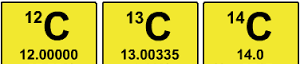
Which of the following does NOT differ in isotopes of the same element?
mass number
number of neutrons
number of protons
chemical properties
What is a mass number?
Name the ionic compound SnSe2
Tin diselenide
Tin (IV) Selenide
Tin selenide
Tin (II) triselenide
Which of these combinations is an ionic compound made of?
Metal and Metal
Nonmetal and Nonmetal
Metal and Nonmetal
Cation and Cation
When naming a compound, what must the last part be?
the element with "ide" at the end
the element with the ending "ite"
the name of the element
the element with "ide" at the end, unless its a polyatomic ion
What is the formula for diphosphorus pentoxide?
P2O5
PO
P5O2
What is the chemical formula for mercury (II) oxide?
HgO2
HgO
Hg2O
Identify the following compound as Ionic or Covalent.
NaCl
(a)
Covalent compounds are formed by
a metal and metuloid
a metal and nonmetal
metal and metal
nonmetal and nonmetal
What is the correct name for the following formula C2H6
carbon hydrogen
dicarbon hexoxide
carbon oxide
dicarbon hexhydride
What is the formula for Calcium Chlorate?
Ca(ClO3)2
CaCl2
CCl
What are valence electrons?
Electrons in the nucleus of an atom.
Electrons in the middle energy level of an atom.
Electrons in the outermost energy level of an atom.
Electrons in the innermost energy level of an atom.
What is the octet rule?
Write the electron dot structures for the following elements:
bromine


Write the electron dot structures for the following elements:
S


Name the following ionic compounds. a) Na³N
sodium nitoide
Magnesium Bromide
oxygen carboide
Name the following ionic compound: InCl3
Write the chemical formula for the following ionic compounds given their names: lithium oxide


Electrons that have not been excited are said to be at:
high level
base line
set state
ground state
There may be a maximum of ____ p orbitals at a given energy level.
2
6
3
8
The principle quantum number, n, represents the:
spin value
suborbital value
energy level
magnetic value
Orbital sublevels, or L, represents:
orbital color
orbital shape
electron spin
energy level
If n = 5, then "m" can be equal to
4,3,2,1
-4,-3,-2,-1
-4,-3,-2,-1,0,1,2,3,4
infinity

How many VALENCE ELECTRONS does Chlorine have?
2
7
8
10
17

Ionic bonds are formed when electrons get
Shared between two atoms
Removed from both atoms
Transferred from one atom to another
Added to both atoms

Cations _______ electrons, becoming _______ charged.
Gain; positively (+)
Gain; negatively (-)
Lose; positively (+)
Lose; negatively (-)
The number used to do moles-atoms conversions is known as?
Avogadro's number, 6.022 x 10^23
Planck's constant, 6.626 x 10^{-34}
Boltzmann's constant, 1.38 x 10^{-23}
Faraday's constant, 96485 C/mol
The formula used to find molar mass when provided with mass and number of moles is:
Molar mass = mass / number of moles
Molar mass = number of moles / mass
Molar mass = mass x number of moles
Molar mass = mass + number of moles
Which one will have the highest mass; 1 mole of oxygen, 1 mole of gold, 1 mole of hydrogen, or 1 mole of sodium?
1 mole of oxygen
1 mole of gold
1 mole of hydrogen
1 mole of sodium
What is the equation for percent composition?
Percent composition = (mass of element/mass of compound) x 100
Percent composition = (mass of compound/mass of element) x 100
Percent composition = (mass of element/mass of compound) x 10
Percent composition = (mass of element/mass of compound) x 1000
Calculate the molar mass for the compound H₂SO₄.
98.08 g/mol
100.10 g/mol
98.00 g/mol
99.09 g/mol
The difference between the molecular and empirical formulas of a compound is:
Molecular formula shows the actual number of atoms of each element in a molecule, while empirical formula shows the simplest whole-number ratio of atoms in a compound.
Molecular formula shows the simplest whole-number ratio of atoms in a compound, while empirical formula shows the actual number of atoms of each element in a molecule.
Molecular formula and empirical formula are always the same for any compound.
Molecular formula is used only for ionic compounds, while empirical formula is used for covalent compounds.
How many liters are in 187 grams of calcium hydroxide?
4188 liters
59.8 liters
585 liters
4.0 liters
Find the percent composition of each element in the compound Mg(OH)₂.
Mg: 41.67%, O: 54.87%, H: 3.46%
Mg: 54.87%, O: 41.67%, H: 3.46%
Mg: 3.46%, O: 54.87%, H: 41.67%
Mg: 41.67%, O: 3.46%, H: 54.87%
What is the empirical formula for a compound containing 38.8% carbon, 16.2% hydrogen, and 45.1% nitrogen?
CH4N2
CH5N
CH3N
CH5N3
Triethylenemelamine has an empirical formula of C₃H₄N₂ and a molar mass of 204.23 g/mole. What is the correct molecular formula?
C₆H₈N₄
C₉H₁₂N₆
C₁₂H₁₆N₈
C₁₅H₂₀N₁₀
What is the empirical formula for P4O10?
P4O10
P2O5
P4O5
PO
A mole of potassium contains 6.022 x 10²³ _____.
atoms
formula units
ions
molecules
What is Avogadro's Number?
6.022 x 10²³
- 6.022 1023
6.022 x 10²²
6,022,000,000,000

The big number that tells you the number of molecules.
The atomic number
The little number that tells the number of atoms for each element.
Determine whether the following equation is balanced or unbalanced. 4P +5O2 ---> 2P2O5
Balanced
Unbalanced
Determine whether the following equation is balanced or unbalanced. 2Fe + 3Cl2 ---> FeCl3
Balanced
Unbalanced
Which of the following equations is balanced?
P4 + 3O2 ---> 2P2O3
N4 + 3F2 ---> 2NF3
2LiF + Br2 ---> 2LiBr + F4
24 grams of CH4 was added to the above reaction. Calculate the theoretical yield of CO2.
When reacting Na with Cl2, we calculated that the theoretical yield should be 13 grams. Our actual yield was 12.5 grams. What is the percent yield?
90.4%
104%
96.15%
1.04%
2Fe2O3 + 3C → 4Fe + 3CO2
You add 28 grams of carbon. You find the actual yield to be 81.2 grams of CO2. What is the percent yield of CO2? (Hint: calculate theoretical yield of CO2 first)
58.83%
308%
6435%
79.14%

What happens to the density of the balloon if volume is doubled?
The density is cut in half.
The density stays the same.
The density doubles.
Not enough information to tell.

What is the density of the sphere, if its mass is 50 g?
mL40 gr
g65mL
cm32 g
mL25g
What happens to pressure when the area over which a force is distributed increases?
Pressure increases
Pressure decreases
Pressure remains constant
Pressure becomes negative

Which best explains why increasing the pressure on a gas decreases the volume of the gas sample?
Increasing the pressure causes the gas particles to hit the container walls more often.
Increasing the pressure on a gas sample moves the gas particles closer together.
Increasing the pressure on a gas sample causes the kinetic energy to increase.
This law may be demonstrated by connecting a metal sphere to a manometer and varying the ambient temperature. It follows from the proposition that, as average kinetic energy increases, the frequency of molecular collisions with the sides of the container also increases. What law predicts that, under conditions of constant volume, the pressure exerted by a gas is directly proportional to its Kelvin temperature?
Boyle's Law
Charles's Law
Gay-Lussac's Law
Avogadro's Law
This law can be expressed as P equals KC, in which the constant is the ratio between fugacity and mole fraction. This law is observed whenever carbon dioxide bubbles out of a solution of soda when it is opened. What is this ideal solution law that states that the amount of gas dissolved in a liquid is proportional to its partial pressure above that liquid?
Boyle's Law
Henry's Law
Charles's Law
Avogadro's Law
The formulator of this law attempted to use musical notation to describe it because he viewed it as the "music of the spheres." Because of this, this law is also known as the Law of Harmonies. What law of planetary motion explains that as the radius of orbit around the Sun increases, so does the period of any planet orbiting the Sun?
Kepler's First Law
Kepler's Second Law
Kepler's Third Law
Newton's Law of Universal Gravitation
This law can be used to determine the lattice energy of an ionic solid in the Born-Haber cycle. This law establishes that enthalpy is a state function. Also called the law of constant heat summation, what law suggests that the change in enthalpy during a chemical reaction is independent of the path taken?
Hess's Law
Boyle's Law
Charles's Law
Avogadro's Law
This equation, which calculates impulse, J, is not valid for systems where the mass is not constant. One statement of this law is that F equals dp over dt, or the derivative of momentum with respect to time. Give this law of motion, more commonly written as force equals mass times acceleration.
Newton's First Law
Newton's Second Law
Newton's Third Law
Law of Universal Gravitation
This ideal law can be modified with fugacity [fyoo-GAS-ih-tee] and activity coefficients, to improve use in distillation modeling. It does not predict azeotropes [uh-ZEE-uh-tropes], but can be used to calculate dew points and bubble points. Name this law which equates partial vapor pressure of a substance in liquid solution to the vapor pressure times mole fraction.
Dalton's Law
Henry's Law
Raoult's Law
Boyle's Law
This law can be proven by the Noether [NUH-tur] theorem, given the fact that the laws of physics are symmetrical throughout time. It can be simplified to, change in U equals change in Q, minus change in W, to give the first law of thermodynamics. Name this law of physics, which states a certain entity, often measured in joules, cannot be created or destroyed.
Law of Conservation of Mass
Law of Conservation of Energy
Law of Universal Gravitation
Law of Thermodynamics
A law named for this man preceded the ideal gas law, assuming constant volume, temperature and pressure. Identify this scientist, who gives his name to a number denoting the number of atoms or molecules in a mole.
Avogadro
Boyle
Charles
Gay-Lussac
This scientific law was at the heart of Gregor Mendel’s experiments, and dictates the central tenet of modern genetics. It relies on the concept that each gene has more than one possible allele and that offspring inherit two alleles for every trait. What law states that only one of the two alleles present in an organism is randomly distributed to each gamete during meiosis?
Law of Independent Assortment
Law of Segregation
Law of Dominance
Law of Inheritance
This law was first proposed after its namesake did an experiment with charged pith balls being used on a torsion balance he built. The proportionality constant used in this law is represented with a lowercase k and represents one over 4 times pi times the law's namesake constant. What is this inverse square law that is analogous to the law of universal gravitation and solves for the force between two different charges?
Coulomb's Law
Newton's Law of Universal Gravitation
Ohm's Law
Faraday's Law
This law can be modified for non-ideal conditions by multiplying one side by fugacity [fyoo-GAS-ih-tee], and the other by an activity coefficient. While Henry's Law generally applies to very dilute solutions, this gas law is most accurate for nearly pure solutions. Identify this law which states a gas's partial pressure is equal to the vapor pressure of the pure component times the mole fraction.
Raoult's Law
Boyle's Law
Charles's Law
Avogadro's Law
Examples of this law can be seen through the motion of a ball falling through the atmosphere, or a model rocket being launched into the atmosphere. This law states that objects at rest remain at rest and objects in motion remain in motion in a straight line, unless acted upon by an unbalanced force. Name this law of motion.
Newton's First Law of Motion
Newton's Second Law of Motion
Newton's Third Law of Motion
Law of Universal Gravitation
This law, the law of definite proportions, and the law of multiple proportions work together to form the basis of stoichiometry. A classic example of this principle is burning a piece of wood within a sealed jar, an experiment similar to one first carried out by Antoine Lavoisier. What is this basic law of chemistry that says that the amount of matter before a chemical reaction must be the same after the chemical reaction?
Law of Conservation of Mass
Law of Definite Proportions
Law of Multiple Proportions
Avogadro's Law
A practical implication of this law is that adiabatic [ay-dee-uh-BAT-ik] demagnetization is limited to a nonzero lower bound. Sometimes called the Nernst Heat Theorem, it states that reactions cannot generate entropy at a certain temperature. What law states that the entropy of a perfect crystal is zero at absolute zero?
First Law of Thermodynamics
Second Law of Thermodynamics
Third Law of Thermodynamics
Zeroth Law of Thermodynamics
Descartes [day-CART] presented the first form of this law, which follows from Fermat's [fer- MAHS] Principle of Least Time. The law explains how fiber optics work, using the principle of total internal reflection, which occurs above the critical angle. Whose law relates the speed of light in two media as the ratio of those media's indices [IN-duh-seez] of refraction?
Snell's Law
Newton's Law
Ohm's Law
Hooke's Law
Diodes do not obey this law because they only allow flow in one direction, and Kirchhoff [KEERKH-hawf] reformulated this law to relate the current density to the product of the conductivity and the electric field. It can be analogized to say that the rate of water flow across a flow restrictor is proportional to the pressure difference across the restrictor. Name this law that says that the voltage is the product of the current and the resistance.
Ohm's Law
Newton's Law
Coulomb's Law
Faraday's Law
In one use of this law, stress is proportional to strain, which is known as the theory of elasticity. It applies when a steel beam is bent by a weight, provided the beam is supported at both ends. Name the law that states that the force needed to stretch a spring is proportional to the distance of movement.
Newton's First Law
Hooke's Law
Ohm's Law
Boyle's Law
What law states that the entropy of a perfect crystal is zero at absolute zero?
First Law of Thermodynamics
Second Law of Thermodynamics
Third Law of Thermodynamics
Zeroth Law of Thermodynamics
A chaotic type of this system was named for Leon Chua [chwah], while the integrated type commonly used in electronics was invented by Jack Kirby. The sum of the potentials in one of these constructs must be zero, according to Kirchhoff’s Second Law, while Ohm’s Law says that current is directly proportional to voltage in a closed one of these systems. Name this system composed of electrons moving through a wire that may include resistors, diodes, or batteries.
Circuit
Transformer
Oscillator
Transistor
It can be mathematically stated using the equation delta U equals Q minus W. It divides energy transfer into heat and work, two factors which must equal a system's internal energy. In the context of thermodynamic processes, what is this formalized law of conservation of energy?
First Law of Thermodynamics
Second Law of Thermodynamics
Third Law of Thermodynamics
Zeroth Law of Thermodynamics
Metamaterials with negative values for this property have the ability to cloak objects, while the Kerr effect sees this value being changed by an applied electric field. It appears as the coefficient in Snell’s law, which relates it to the sine of the angle of incidence, while the arctangent of the ratio of two of these values gives Brewster’s angle. Name this dimensionless property of a medium that measures the extent to which a ray of light is bent when it enters the medium.
Refractive index
Reflectivity
Absorptivity
Conductivity
Which of Kepler's laws of planetary motion states that a radial vector joining an orbiting body to the sun sweeps out equal areas in equal times?
First Law
Second Law
Third Law
Fourth Law
This law is named for a scientist who was in the so-called “Experimental Philosophy Club” with John Locke, and who worked on experiments with Robert Hooke. It describes the inverse relationship between the pressure applied to a gas, and the volume that gas takes up while the gas is maintained at a constant temperature. What is this law, that can be derived from the ideal gas law?
Boyle's Law
Charles's Law
Avogadro's Law
Gay-Lussac's Law
This quantity for a quantum system can be found by way of the Hamiltonian operator. The total amount of this must be conserved, according to the first law of thermodynamics. Give this property of a system, the ability to do work, which comes in internal, potential and kinetic types.
Energy
Entropy
Momentum
Force
What name did Ralph Fowler give to this most basic law of thermodynamics that establishes the basis for quantifying temperature and constructing thermometers?
Zeroth Law of Thermodynamics
First Law of Thermodynamics
Second Law of Thermodynamics
Third Law of Thermodynamics
In physics, this term is defined as an inverse of plasticity, and it can be quantified using quantities such as the bulk modulus or shear modulus. Materials with the Cauchy kind of this property are also said to possess the "simple" version of this, and it is a topic of Hooke's Law. What is this ability of an object to resist distortion and return to its original shape and size?
Elasticity
Plasticity
Viscosity
Density
What theoretical substance's properties are described by a law proposed by Benoît Paul Emile Clapeyron in 1834, combining several other gas laws into a unified formula?
Ideal Gas
Real Gas
Noble Gas
Inert Gas
Name this law, named for the seventeenth century British physicist who proposed it, which is only valid within the elastic limit of the material to which it is applied.
Newton's First Law
Hooke's Law
Pascal's Law
Boyle's Law
This law was first stated by Rudolf Clausius when he showed a contradiction between the ideas of Carnot and this law. This law is commonly expressed as Q equals delta U plus W or heat equals the change in potential energy plus work. What is this law of thermodynamics that is a restatement of the law of conservation of energy?
First law of thermodynamics
Second law of thermodynamics
Third law of thermodynamics
Zeroth law of thermodynamics
Identify this law of resistance, frequently stated as I equals V over R, which holds that current is directly proportional to the voltage across two points.
Ohm's Law
Newton's Law
Coulomb's Law
Faraday's Law
Other terms for this include pellucidity and diaphaneity. Light passing through an object described by this term obeys Snell's Law. Identify this quality of objects, which results in them being entirely see-through.
Opacity
Translucency
Transparency
Reflectivity
What is this law that states when the pressure is held constant, the temperature and volume are directly proportional?
Boyle's Law
Charles's Law
Avogadro's Law
Gay-Lussac's Law
This law is valid throughout a material’s elastic range. This law relates the restoring force to displacement. What is this law that describes the behavior of springs?
Hooke's Law
Newton's Law
Ohm's Law
Boyle's Law
This man's work was verified by Carl Correns and Hugo de Vries after his research was rediscovered over 30 years after its initial publication. Ronald Fisher analyzed this man's results and started a long running debate about the possible falsification of the data he got from his experiments. Who was this man that developed the law?
Gregor Mendel
Charles Darwin
Louis Pasteur
Isaac Newton


Elements are made of tiny solid particles
Bohr
Democritus
Thomson
Aristole
All matter is made of atoms
Rutherford
Bohr
Democritus
Dalton
Positively charged atoms with electrons. "Plum pudding"
Democritus
Bohr
Thomson
Dalton
electrons travel in fixed orbits
Dalton
Bohr
Thomson
Rutherford
In chemical reactions, atoms are separated, combined, or rearranged.
Rutherford
Thomson
Dalton
Democritus
conducted gold foil experiment
Schrodinger
Dalton
Heisenberg
Rutherford
founded electron cloud
Thomson/Rutherford
Dalton/Thomson
Schrodinger/Heisenberg
Bohr/Democritus
Founded electron
Bohr
Thomson
Democritus
Dalton
Who proposed a model with electrons moving in specific layers?
Dalton
Rutherford
Bohr
Thomson

Proposed that electrons move around the nucleus in specific layers, or shells.
Bohr
Rutherford
Chadwick
Thomson
No matter how much extra oxygen is available, 12 grams of carbon always combines with 32 grams of oxygen to form CO2. This best illustrates which law?
Multiple proportions
Definite proportions
Conservation of Energy
Conservation of Mass
What were most Alchemists obsessed with?
Creating gold
Finding diamonds
Finding copper
Creating dollars

