
 Worksheets
Unit 1 Test Review
Total questions: 185
Worksheet time: 4hrs 4mins
What is the independent variable in the above question?
Your teacher has asked you to perform an experiment to see if the shape of objects, alone, affects the motion of objects. Which of the following would be the best experiment to perform?
Apply the same amount of force to a ball, cylinder, cube, and pyramid, each of the same mass.
Apply the same amount of force to balls of different mass
Apply the same amount of force to a ball, cylinder, cube, and pyramid, each of a different mass.
Apply different amounts of force to the same ball.
In a controlled scientific experiment, a scientist...
alters the outcome variable (dependent variable) and observes the effects on the test variable (independent variable).
alters one test variable (independent variable) and observes the effects on other test variables (independent variables).
alters the test variable (independent variable) and observes the effects on the outcome variable (dependent variable).
alters one outcome variable (dependent variable) and observes the effects on other outcome variable (dependent variables).
You have decided to do an experiment to learn if a certain type of cactus will grow better in a dark closet or a sunny window. To begin your experiment, you place one cactus in a dark closet and one cactus in a sunny window. Over the next month, you record data about the cacti and their appearance every day. At the end of the month, you determine that the cactus in the sun is alive but didn’t grow and that the cactus from the dark closet is alive and grew one centimeter. Can you conclude that a dark closet is better for this type of cacti’s growth?
No, you need to repeat an experiment multiple times before accepting a conclusion.
Yes, one cactus can accurately reflect the behavior of all similar cacti.
Yes, when you are a student your results will be accepted on small-scale studies.
No, you need to use one cactus in both conditions.
Maggie loves fresh brownies. Her grandma told her if she placed a piece of bread in the storage container with the brownies, the brownies will stay fresh and moist longer. Maggie decides to test this idea. She bakes a batch of brownies. She places 6 brownies in 6 individual plastic containers. Each brownie is the same size and placed in the same location. She adds a piece of bread to three of the bread containers and leaves the other three alone. Each day for 3 weeks she measures the moistness of the brownies and records the results. What is the independent variable?
moistness of brownies
the bread
the containers
brownies
What is the basic unit of mass in the metric system?
Liter
Meter
Gram
Kilometer
Select the largest unit.
kilogram
centigram
decigram
decagram
What is the basic unit of length/distance in the metric system?
Liter
Meter
Gram
Kilometer
What unit of measurement is the biggest?
Millimeters
Meters
Kilometers
Centimeters
Which unit of measurement is the smallest?
Millimeters
Kilometers
Centimeters
Meters
What is the basic unit of mass in the metric system?
Liter
Meter
Gram
Kilometer
Which of the following is the correct abbreviation for Kilogram?
Kg
Hg
Km
Kl
Which of the following is the correct abbreviation for millimeter?
mm
ml
mg
m
Which of the following are using the prefix deka?
dag
dam
dg
dm
Which abbreviation represents Liter?
l
ll
m
t
What is the abbreviation decimeter
Km
m
d
dm
What is the correct order to use when converting metric units
Klmgcm
Kbdcm
KHDbdcm
mcdbDHK


Days Cm
1 1.0
2 3.5
3 5.0
4 8.5
Which variable of a graph does the scientist control
Dependent variable
Independent variable
sign variable
respect variable
Which axis does the dependent variable go on?
z
y
x
p
Which of the following is not part of a graph
Best fit line
Title
Scale
All are part of a graph
Horseplay and practical jokes in the lab are
Always against the rules
Okay
Not Dangerous
Which of the following is NOT an acceptable way to determine the identity of a chemical?
Sight
Reading the label
Asking the teacher
Taste
There is a fire extinguisher in the lab
True
False
Which of the following should you always do before leaving the lab?
Read the lab
Ask the teacher what to do
Clean up your materials
Put your goggles on
A type of substance containing atoms of two or more elements chemically bonded together is a mixture.
True
False


A Mixture is defined as
A combination of two or more substances that are not chemically combined
A combination of compounds that are chemically bonded
2 or more elements chemically bonded


Spaghetti Sauce
HOMOGENEOUS
HETEROGENEOUS
Pure Air
HOMOGENEOUS
HETEROGENEOUS
The substance being dissolved is called the ________
solvent
solid
solute
solvate
In which of the following do particles sit at the bottom
Solution
Suspension
None of the above
Colloid
The properties of a compound are different from the elements that make them up.
True
False


A substance that is made up of only one kind of atom is a(n)
compound
homogeneous mixtures
element
solution

Gold is an element because it only contains gold atoms.
True or False?
Which of these is an element?
Salt (NaCl)
Water (H20)
Oxygen (O)
Carbon Dioxide (CO2)
Both elements and compounds are pure substances.
Agree
Disagree
Carbon is considered an element, while carbon dioxide is considered a compound. This is because carbon dioxide is ---
a gas at room temperature.
made of two different elements.
given off by green plants.
useful to human beings
Au
Can be broken down into a simpler substance
Elements
Compounds
Both
Salt (NaCl)
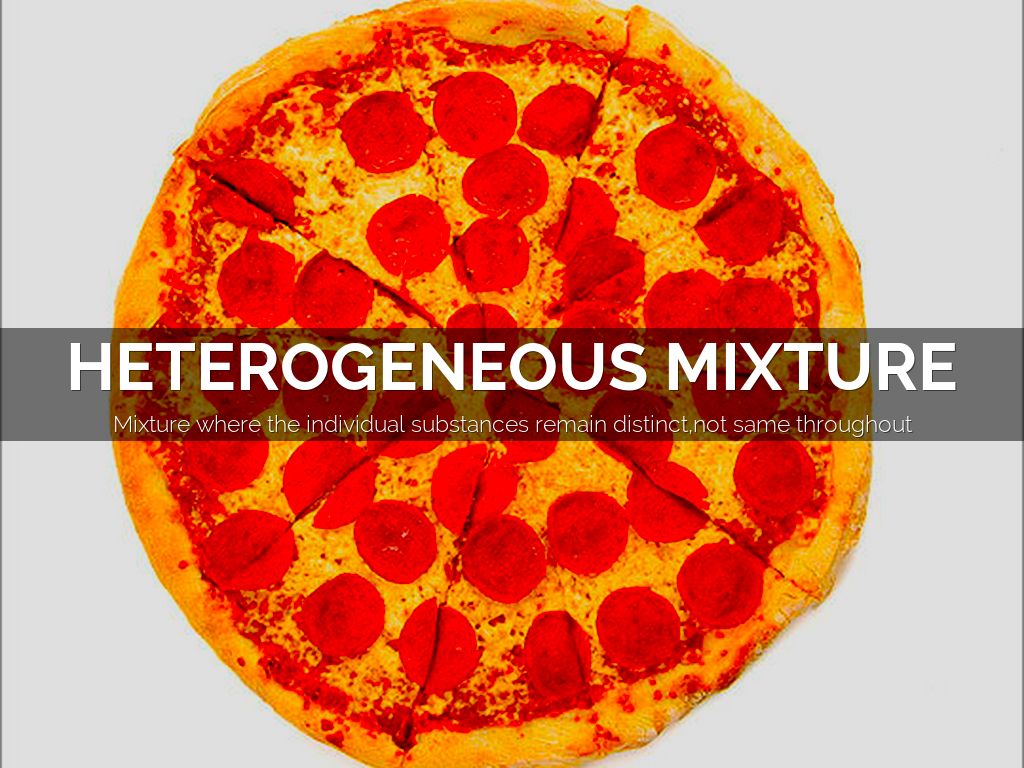


Which of the following is a pure substance?
carbon
pizza
salad
sand
What is the smallest unit of matter? It is composed of protons and neutrons, held together in the nucleus, and electrons around the nucleus in different electron orbitals, which form an electron cloud.
cell
nucleus
atom
electron
Chemistry is the study of
Mass
Space
Matter
Density

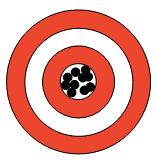
What is this?
Element
Compound
Heterogeneous MIxture
Homogeneous Mixture

Element
Compound
Homogeneous Mixture
Heterogeneous MIxture

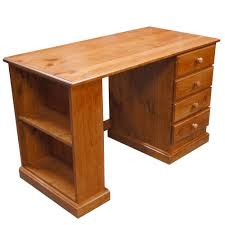
What is it?
Pure Substance
Mixture

Pure Substance
MIxture

What is it?
Pure Substance
Mixture

When mixing a saltwater solution the water is the _____________ and the salt is the _____________
water = solvent, salt = solute
water = solute, salt = solvent

The mass of a lead cube is 64 grams. This is an example of __________.
physical intensive property
physical extensive property
chemical change
physical change
Density: Chemical or Physical Property?
Chemical Property
Physical Property
Flammability (burns): Chemical or Physical Property?
Chemical Property
Physical Property
Solubility (dissolves): Chemical or Physical Property?
Chemical Property
Physical Property
Properties that can be measured or observed without matter changing to an entirely different substance are called __________.
Chemical Properties of Matter
Physical Properties of Matter
Physical Change
Chemical Change
Properties that can be measured or observed only when matter undergoes a change to become an entirely different kind of matter are called ___________.
Evaporation
Density
Physical Properties Of Matter
Chemical Properties of Matter
Which of the following is an intensive property?
Color
mass
volume
Ductility - the ability to be drawn out into a wire without breaking
chemical property
intensive physical property
extensive physical property
Ability to rust - the ability to form metal oxides (rust)
chemical property
intensive physical property
extensive physical property
Corrosiveness - the ability to eat away at or damage living tissue
chemical property
intensive physical property
extensive physical property
Malleability - the ability to be bent and forged
chemical property
intensive physical property
extensive physical property
Conductivity - the ability to transfer heat or electricity through something
chemical property
intensive physical property
extensive physical property
Hardness - the ability to resist being dented or scratched
chemical property
intensive physical property
extensive physical property
Reactivity - the ability of a substance to cause a chemical reaction
chemical property
intensive physical property
extensive physical property
Volume - the amount of space a substance takes up
chemical property
intensive physical property
extensive physical property
Melting point - the temperature at which a substance changes from a solid to a liquid
chemical property
intensive physical property
extensive physical property
Boiling point - the temperature at which a substance changes from a liquid to a gas
chemical property
intensive physical property
extensive physical property
Density - the ratio of mass to volume of a substance
chemical property
intensive physical property
extensive physical property
mass
density
volume
flammabiity
weight
solubility (ability to dissolve in water)
color
weight
boiling point
density
height
freezing point
softness
length
width
conductivity
temperature
length
density
color
temperature
area
length
Define a liquid.
Indefinite shape, indefinite volume
Definite shape, definite volume
Definite volume, indefinite shape
what are the states of matter
solid, liquid, gas, and plasma
solid, liquid, density, gas
solid, gas, liter, plasma


Which set of properties, intensive or extensive, are based on the size of a sample?
intensive
extensive
What kind of physical property is this? Color
intensive
extensive
What kind of physical property is this? Temperature
intensive
extensive
What kind of physical property is this? Energy
intensive
extensive
What kind of physical property is this? Number of Atoms
intensive
extensive


All matter is made of what
energy
atoms
electrons
compounds
What kind of physical property is this? Energy
intensive
extensive
.000457
1010.10
1.245 x 10³
Is the number 90.00 x 10² in valid scientific notation? Explain why or why not.
Is the number 5.4 x 10¹⁰ in valid scientific notation? Explain why or why not.

If the exponent on the power of 10 is a positive number...
you will get a large number that is greater than 1
you will get a smaller number that is less than 1

Which of the following numbers is written in correct scientific notation?
64.2⋅102
6.42⋅103
0.642⋅104
6240

Which of these numbers is the smallest?
3.5 x10⁷
3 x10⁸
5 x10⁷
5.5 x10⁶

To compare two numbers that are in scientific notation, first compare the (a) . If they are the same, then compare the (b) .
Which of these numbers is the greatest?
9 x 10⁹
8.1 x10¹⁰
9.02 x10⁹
6.35 x10¹⁰
How is the following number written in scientific notation?
450,000
4.5 x 10⁵
45 x 105
4.5 x 10⁴
4.5 x 10⁶
How is the number below written in scientific notation?
0.000398
39.8 x 10⁻⁵
3.98 x 10⁻⁵
3.98 x 10⁻⁴
39.8 x 10⁻⁶
Which of the following is the correct way to write 3.97 x 10⁻² in standard form?
0.000397
0.0397
0.0000397
0.397
Which is the correct way to write the number 3.5 x 10⁶ in standard notation?
0.0000035
35,000,000
3,500,000
0.00000035

