
 Worksheets
Introduction to RPD Diagnosis
Total questions: 39
Worksheet time: 20mins
Which sequence best represents core categories in initial diagnostic procedures for removable partial denture planning?
Clinical exam, treatment plan, investigations, patient history
Investigations, treatment plan, patient history, clinical exam
Patient history, clinical exam, investigations, treatment plan
Treatment plan, investigations, clinical exam, patient history
Which item is correctly listed as part of investigations during diagnostic procedures for prosthodontic planning?
Radiographic evaluations and diagnostic casts
Occlusal splint delivery and polishing
Articulator mounting and glazing
Final impression making and try-in
Which age-related change most directly affects denture manipulation skills in older adults?
Reduced neuromuscular coordination and adaptability
Increased elasticity of oral epithelium
Enhanced salivary flow and lubrication
Thicker, more resilient oral mucosa
In females, which gender-related factor may influence oral tissues relevant to RPD planning?
Adolescence-linked salivary hypersecretion
Menopause-linked atrophy of oral epithelium
Pregnancy-linked enamel remineralization
Andropause-linked tongue hypertrophy
How can occupation influence provisional choices for partial dentures?
Some occupations may necessitate interim or immediate dentures
Occupation rarely affects denture selection decisions
Office work always contraindicates immediate dentures
Manual labor mandates delayed dentures in all cases
Which oral complication of poorly controlled diabetes most directly reduces denture retention and comfort?
Gingival pigmentation changes
Xerostomia reducing saliva film
Increased salivary viscosity only
Caries limited to posterior teeth
Temporomandibular joint arthritis most commonly interferes with which clinical step in complete denture fabrication?
Try‑in of polished surfaces
Jaw relation recording accuracy
Primary alginate impression
Shade selection appointment
For a patient with severe, uncontrolled epilepsy, which management regarding removable dentures is most appropriate?
Avoid removable dentures entirely
Provide thin acrylic partials
Use soft liners for cushions
Schedule long morning visits
Which cardiac status requires medical clearance before elective denture procedures?
Asymptomatic mitral valve prolapse
History of remote myocarditis
Well‑controlled hypertension only
Unstable or acute cardiac conditions
Cancer therapy may make denture fabrication difficult primarily because of which oral effects?
Opportunistic infections
Mucositis development
Excessive salivation
Rapid enamel remineralization
Persistent xerostomia
When planning dentures for a xerostomic patient with diabetes, which modification best improves comfort and function?
Saliva substitutes with meticulous hygiene
High occlusal vertical dimension
Abraded polished surfaces
Minimal post‑dam in maxilla
A patient on warfarin requires multiple extractions for denture preparation. What is the safest management plan?
Temporarily stop warfarin without medical consultation
Use NSAIDs postoperatively to control bleeding
Proceed in clinic with sutures and pressure packs
Coordinate care and refer to an oral surgeon
Endocrine therapy is associated with which oral effect relevant to prosthesis tolerance?
Accelerated mucosal healing under dentures
Reduced risk of Candida-associated stomatitis
Severe oral soreness independent of denture fit
Increased salivary buffering and lubrication
Saliva-inhibiting drugs such as atropine are best avoided in which patients when taking impressions?
Patients with cardiac disease risk profiles
Patients with prostatic hypertrophy symptoms
Patients with primary open-angle glaucoma
Patients with well-controlled seasonal allergies
When saliva control is needed for impressions in a patient with glaucoma, the preferred approach is to use
Topical atropine mouthrinse cautiously
Mechanical methods such as cotton rolls
Systemic anticholinergics in low dose
No isolation to avoid intraocular effects
A patient lost several teeth due to periodontal disease. How does this influence planning for a new partial denture?
No effect on prognosis or maintenance
Poorer prognosis necessitating periodontal maintenance
Favorable prognosis for remaining teeth
Focus should only be on caries prevention
Past experience with a previous prosthesis is most valuable because it
Replaces the need for new clinical exams
Guides design choices for the new prosthesis
Eliminates try-in and adjustment appointments
Predicts insurance coverage for materials
Which statements about patient expectations and education are appropriate for successful prosthesis outcomes?
Providing instructions improves adaptation
Expectations rarely affect clinical outcomes
Education is essential to align expectations
Unrealistic expectations can compromise satisfaction
In the front-view facial examination, which feature most directly indicates reduced lower facial height in long-term denture wearers, as suggested by the diagram?
Flattened mentolabial sulcus angle
Widened nasolabial folds depth
Prominent zygomatic arch contour
Increased philtrum length
When assessing the profile view, which trio best summarizes the parameters emphasized in the diagram?
Skin tone, pore size, hair
Color, texture, edema
Occlusal plane, curve of Spee, midline
Size, form, facial shape
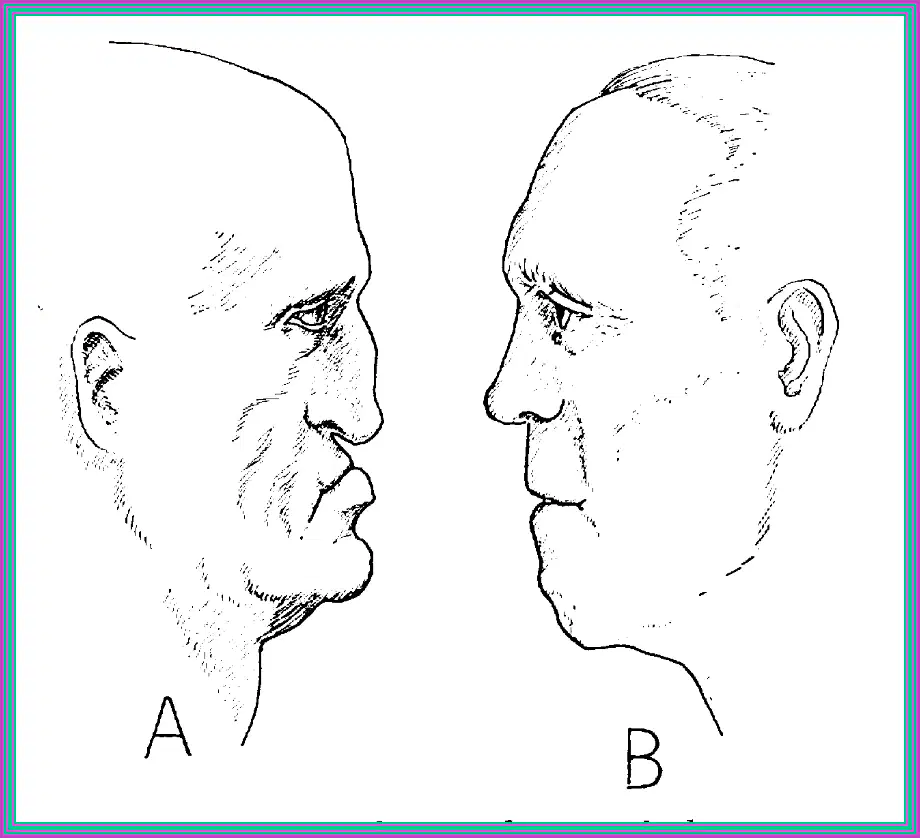
Loss of maxillary teeth most likely produces which combined soft‑tissue changes illustrated in the comparative profiles?
Mentalis region becomes less prominent
Upper lip contour loses fullness
Philtrum appears unsupported
Nasolabial folds deepen
Vermilion border becomes more defined

Which single finding best differentiates an edentulous profile from a restored profile in the diagram?
Exaggerated mentalis tip prominence
Increased nasal dorsum projection
Wider intercanthal distance
Elevated supraorbital brow position

During clinical TMJ assessment, which observation listed in the diagram most directly suggests internal derangement on jaw opening?
Tender parotid swelling
Facial asymmetry at rest
Audible clicking or popping
Reduced gag reflex response

Which imaging modality from the diagram provides the best soft‑tissue visualization of the TMJ?
Corrected cephalometric tomography
Transcranial radiography
MRI of the joint complex
Panoramic radiography

Match each TMJ imaging method to its primary utility as implied by common practice. Select all that are reasonable based on the diagram content.
CT for detailed cortical bone evaluation
Transcranial for condylar position screening
MRI for disc and soft‑tissue assessment
Corrected cephalometric tomography for craniofacial relationships
Panoramic for general osseous survey
During intra-oral caries evaluation, which finding most directly affects selection of abutment teeth before restorative treatment?
Presence of recurrent decay on potential abutments
Color shade of opposing dentition surfaces
Slight extrinsic staining from dietary habits
Minor enamel craze lines without sensitivity
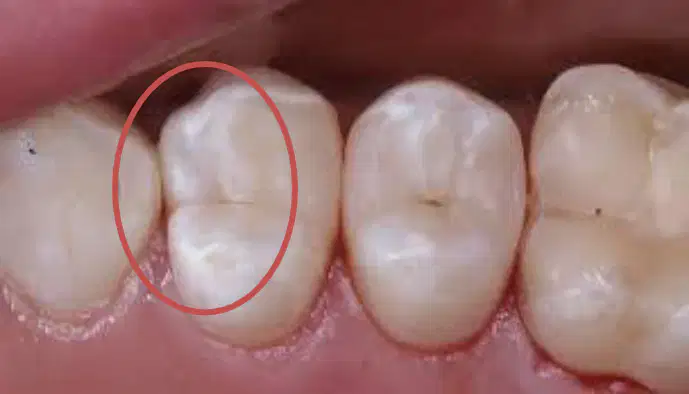
Hidden occlusal caries is most likely when which clinical scenario is present on a posterior tooth?
Fresh composite restoration with ideal margins
Wide flat fossae with shallow grooves
Smooth buccal surface without plaque deposits
Intact fissures with localized undermined enamel
Which combination best represents a comprehensive periodontal assessment?
Clinical attachment level evaluation
Tooth color and translucency grading
Furcation involvement identification
Probing pocket depth measurements
Mobility grading with mucogingival assessment
A tooth shows 5 mm probing depth with 3 mm recession. What is the clinical attachment loss?
Two millimeters attachment loss only
Eight millimeters attachment loss total
Five millimeters attachment loss only
Three millimeters attachment loss total
Mobility noted on a molar resolves after occlusal adjustment. What is the most appropriate interpretation?
Mobility proved vertical root fracture existed
Mobility indicated hopeless periodontal prognosis
Mobility confirmed advanced mucogingival defect
Mobility was secondary to occlusal trauma
Which periodontal finding most strongly influences rest seat design on a mandibular molar abutment?
Mild extrinsic staining level
Degree of furcation involvement present
Shade matching of adjacent teeth
Presence of shallow craze lines
Before definitive restoration, which management is most appropriate when reduced periodontal support is present on abutment teeth?
Reassess caries and margins post-therapy
Delay until spontaneous attachment gain occurs
Ignore furcation involvement if asymptomatic
Perform root planing or periodontal surgery
Consider splinting after periodontal therapy
During intra‑oral examination for removable partial denture planning, which factor best predicts the residual ridge’s load‑bearing capacity?
Height and width of the ridge crest
Color of the attached gingiva
Number of missing posterior teeth
Presence of saliva viscosity only
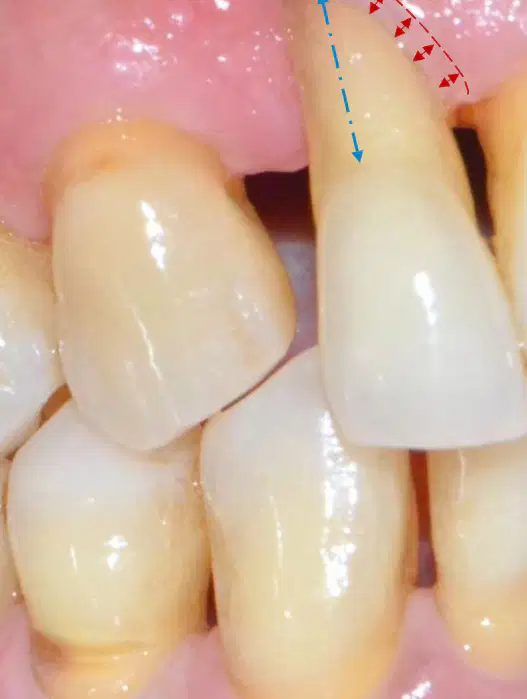
A patient shows gingival recession with a shallow sulcus. Pocket depth is 3 mm but clinical attachment loss exceeds 5 mm. What is the most accurate interpretation?
Attachment loss can exceed pocket depth with recession
Pocket depth always equals attachment loss clinically
Pocket depth is irrelevant to attachment level
Attachment loss is underestimated due to tissue swelling
Which soft tissue condition most compromises denture support and may require preprosthetic surgery before RPD fabrication?
Tightly bound mucosa over residual ridge
Shallow vestibule with adequate keratinization
Pigmented attached gingiva without inflammation
Flabby mobile ridge in edentulous area
Regarding hard tissue abnormalities relevant to RPD design, which statement is correct?
Tori can interfere with major connector placement
Exostoses may create undercuts affecting clasping
Sharp bony spicules reduce mucosal tolerance
Small mandibular tori always mandate removal
Radiographic evaluation of abutment teeth for RPD planning should include which assessments?
Pulp chamber calcification alone
Periodontal ligament space and lamina dura
Root length and crown‑root ratio
Periapical status and bone levels

In maxillary first molars, furcation involvement influences abutment selection. Which scenario is most acceptable for clasp support without periodontal therapy?
Any furcation regardless of bone condition
Grade I furcation with good bone support
Grade II furcation with horizontal mobility
Grade III furcation with through‑and‑through defect
Which radiographic finding most strongly contraindicates using a tooth as an RPD abutment until treated?
Calcified canal with normal periapex
Short root but healthy periodontium
Slight widened PDL without mobility
Periapical radiolucency with symptoms

