
 Worksheets
SCIENCE 8 - PRE-ASSESSMENT Q4
Total questions: 30
Worksheet time: 23mins
Direction: Write the letter of the correct answer. What is defined as the rate of change of velocity?
A. Speed
B. Distance
C. Acceleration
D. Work
Which of the following causes an object to accelerate?
A. Constant speed
B. Balanced forces
C. Net force acting on the object
D. The object being at rest
What is the definition of acceleration?
A. The rate of change of an object's velocity.
B. The rate of change of an object's position.
C. The total distance traveled by some object.
D. The force that acts on an object at rest.
A car is traveling at a constant speed of 60 km/h around a sharp curve. Is the car accelerating?
A. No, because the speed is constant.
B. Yes, because its direction is changing.
C. No, because there is no force.
D. Yes, because the magnitude of velocity is increasing.
Which of the following is an example of uniform circular motion?
A ball thrown straight up in the air.
A passenger sitting on a bus that is stopping.
A rider on a Ferris wheel moving at a constant speed.
A sprinter starting a race from the blocks.
If a car moves in a straight line and its velocity changes from 10 m/s to 20 m/s in 2 seconds, what is its acceleration?
5 m/s2
10 m/s2
15 m/s2
20 m/s2
You observe a leaf falling from a tree, swaying back and forth as it drops. Is this motion considered uniform acceleration?
Yes, because gravity is constant.
No, because its velocity changes non-uniformly due to air resistance.
Yes, because it is moving toward the ground.
No, because it is at rest.
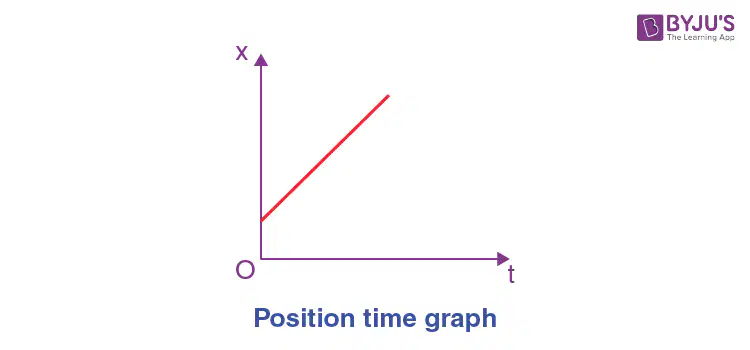
In a distance-time graph, what does a straight diagonal line represent?
The object is at rest.
Uniform speed/velocity.
Constant acceleration.
Non-uniform motion.

In a velocity-time graph, a horizontal line (flat) indicates:
The object has stopped.
The object is moving with constant velocity (zero acceleration).
The object is speeding up.
The object is slowing down.
Which graph would you use to most easily identify if a vehicle is undergoing uniform acceleration?
Distance-Time graph
Velocity-Time graph
Mass-Volume graph
Force-Weight graph
What type of energy is possessed by objects in motion?
Potential Energy
Chemical Energy
Kinetic Energy
Thermal Energy
What do you call the energy stored due to an object's position or height?
Potential Energy
Chemical Energy
Kinetic Energy
Thermal Energy
Which of the following has the most Potential Energy?
A ball on the ground.
A ball held 1 meter above the ground.
A ball held 5 meters above the ground.
A ball rolling on the floor.
As a roller coaster climbs to the top of the highest hill, what happens to its energy?
Kinetic energy increases, Potential energy decreases.
Kinetic energy decreases, Potential energy increases.
Both Kinetic and Potential energy increase.
Both Kinetic and Potential energy decrease.
A rock is perched on the edge of a cliff. A gust of wind knocks it off. At what point is its kinetic energy at its maximum?
While it is sitting on the cliff
Halfway down the fall
Just before it hits the ground
It has no kinetic energy while falling
What is the sum of kinetic and potential energy in a system?
Total Work
Mechanical Energy
Power
Force
Work is done when a ______ causes the displacement of an object.
Mass
Force
Acceleration
Velocity
In which situation is work NOT being done?
Pushing a lawnmower across a yard
Lifting a heavy box from the floor to a table
Holding a heavy grocery bag while standing still
Throwing a baseball
What is the rate of doing work?
Energy
Force
Power
Friction
To calculate Power, you must know:
A. Force and Distance only.
B. Work and Time.
C. Velocity and Mass.
D.Acceleration and Force.
A student pushes a wall with 100 Newtons of force for 1 hour. The wall does not move. How much work was done?
100 Joules
1 Joule
0 Joule
3600 Joule
How do dams in the Philippines (like the Maria Cristina Falls or Angat Dam) generate electricity?
A. By burning the water to create steam.
B. By using the potential energy of stored water to turn turbines (kinetic energy).
C. By using the chemical energy in the fish.
D. By reflecting sunlight off the surface of the lake.
Which of the following is a primary source of renewable energy found in many provinces of the Philippines?
Coal
Nuclear Power
Hydroelectric Power
Natural Gas
Why is the conservation of energy important when discussing the Philippines' energy resources?
A. Because the Philippines has an infinite supply of oil.
B. To maximize the benefits of natural resources for the population.
C. Because energy can be created from nothing.
D. To prevent the sun from running out of light.
Which is the most sustainable way for a local Philippine community to use a nearby river?
A. Building a dam for hydroelectric power.
B. Using it as a waste disposal site
C. Draining it for land reclamation.
D. Blocking the flow completely.
Potential energy in a lake is used to produce ______ energy, which then generates electricity.
Sound
Kinetic
Nuclear
Heat
What do you call the bouncing of light off a surface (like a mirror)?
Refraction
Absorption
Reflection
Diffraction
What do you call when light passes from air into a transparent glass block and bends?
Refraction
Absroption
Reflection
Diffraction
Which device uses refraction to help people with blurry vision see clearly?
A. A wooden door
B. A plane mirror
C. Eyeglass lenses
D. A brick wall
What happens when white light passes through a prism?
A. It is reflected back perfectly.
B. It disappears
C. It is refracted and separated into a rainbow of colors.
D. It turns into a single beam of black light.

