
 Worksheets
Atoms & Periodic Table
Total questions: 25
Worksheet time: 13mins
What is chemistry?
The study of living organisms
The study of energy and forces
The study of matter, its properties, and the changes it undergoes
The study of planets and stars
Air is classified as a mixture because it:
Is made of only one type of particle
Contains atoms that are chemically bonded
Contains different gases that are not chemically bonded
Has a fixed composition
Which statement correctly defines an atom?
A group of different elements bonded together
The smallest particle of an element
A substance with fixed composition
A mixture of particles
What is an element?
A substance made of different atoms
A mixture of substances
A pure substance made of only one type of atom
A compound that can be separated physically
Which of the following is a compound?
Oxygen (O₂)
Nitrogen (N₂)
Water (H₂O)
Helium (He)
How does a mixture differ from a compound?
Mixtures have fixed ratios of elements
Compounds can be separated physically
Mixtures are chemically bonded
Mixtures are physically combined substances
Fireworks are examples of chemical reactions because:
They only involve physical changes
No energy is released
New substances and light are produced
The mass of substances disappears
Which property explains why copper is used to make electrical wires?
High melting point
Good electrical conductivity
High density
Bright colour
Which statement about physical changes is correct?
New substances are formed
They are usually irreversible
The chemical composition changes
No new substances are formed
Ice melts to form liquid water. Which type of change is this?
Chemical change, because a new substance is formed
Chemical change, because energy is released
Physical change, because atoms are rearranged
Physical change, because no new substance is formed

Identify the product(s) in this word equation:
Sodium
Sodium chloride
Sodium and Chlorine
Sodium and sodium chloride
In a chemical reaction …
New atoms are created
Atoms rearrange
Atoms are destroyed
Nothing Happens
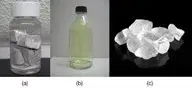
Sodium reacts with chlorine to produce chloride. Choose the correct word equation.
sodium chloride → chlorine + sodium
sodium + carbon dioxide → sodium carbonate
sodium + chlorine → sodium chloride
sodium chloride → sodium + chlorine
The new substances formed in a chemical reaction are called…
Reactants
Atoms
Products
Reagents
According to Dalton’s atomic theory, atoms:
Can be created and destroyed
Are different within the same element
Rearrange during chemical reactions
Can be broken into smaller particles
The Law of Conservation of Mass states that:
Mass increases during reactions
Mass decreases during reactions
Mass of reactants equals mass of products
Mass only applies to solids
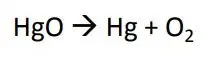
Look at the chemical equation. How many atoms of oxygen (O) are in the reactants?
1
2
3
4
When 3 g of magnesium reacts completely with 2 g of oxygen, magnesium oxide is formed. What is the mass of magnesium oxide produced?
1 g
3 g
5 g
6 g
What does a chemical formula show?
The colour of a compound
The ratio of elements in a compound
The physical state of a substance
The reaction speed
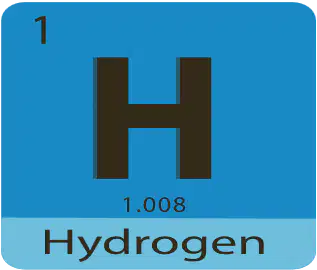
What information does the value 1.008 give?
Atomic number
Charge of the atom
Atomic mass
Number of protons
Which statement about hydrogen is correct?
It is a metal found in Group 1
It has two electron shells
It is an element made of only one type of atom
It is a compound
Elements in the same period of the periodic table have the same:
Number of valence electrons
Atomic mass
Number of electron shells
Chemical symbol
Which property is typical of metals?
Poor conductor of electricity
Brittle and dull
Good conductor of heat and electricity
Low melting point
Which element is most likely to be a metal based on its properties?
Dull and brittle
Poor conductor of electricity
Shiny and malleable
Low melting point and fragile
Which of the following is a non-metal?
Iron
Copper
Oxygen
Zinc

