
 Worksheets
1212312121
Total questions: 24
Worksheet time: 12mins
What is the primary material of the failed boiler tube mentioned in the study?
Stainless steel
20G steel
Cast iron
High-temperature alloy
What was the operating pressure of the boiler tube in the investigation?
10.8 MPa
15 MPa
8.5 MPa
12 MPa
What was the identified failure mechanism of the boiler water-wall tube?
Stress corrosion cracking
Localized wall thinning due to oxidation
Thermal fatigue
Pitting
What technique was used to examine the microstructure of the failed tube?
X-ray diffraction
Scanning electron microscopy
Ultrasonic testing
Magnetic particle inspection
Based on the study, why is it important to identify the failure mechanism of boiler tubes in power plants?
To reduce the cost of materials used in manufacturing
To ensure the integrity of the equipment and prevent future failures
To increase the operating pressure of the boiler
To improve the aesthetic design of the boiler
The study mentions that the fire-facing side of the tube experienced significant wall thinning. What could be a potential preventive measure to avoid such failures in the future?
Use of higher-grade steel with better oxidation resistance
Increasing the operating pressure of the boiler
Reducing the operating temperature of the boiler
Avoiding the use of de-aerated water in the boiler
What was the thickness of the thinnest area on the fire-facing side of the failed tube?
6.08 mm
1.90 mm
3.50 mm
2.75 mm
What material was the failed boiler tube made of, according to the manufacturer?
20G steel
304 stainless steel
Cast iron
Aluminum alloy
What was observed on the internal surface of the fire-facing side of the failed tube during the visual inspection?
No significant bulges
Pits and cocked-up metal
Smooth and uniform surface
Cracks on the back side
What does the wall thickness difference between the fire-facing side and the back side of the tube indicate?
Uniform wear and tear
Localized wall thinning leading to failure
Corrosion on the back side
Manufacturing defect
What standard does the chemical composition of the failed tube meet?
ASTM A106
GB 5310-2008
ISO 9001
ASME B31.3
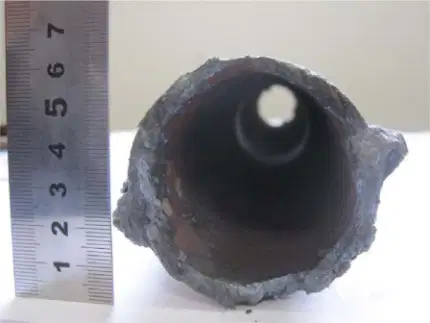
What does the cross-section of the failed tube reveal about the damage?
Uniform thickness throughout
Significant thinning on the fire-facing side
Cracks on the back side
No visible damage
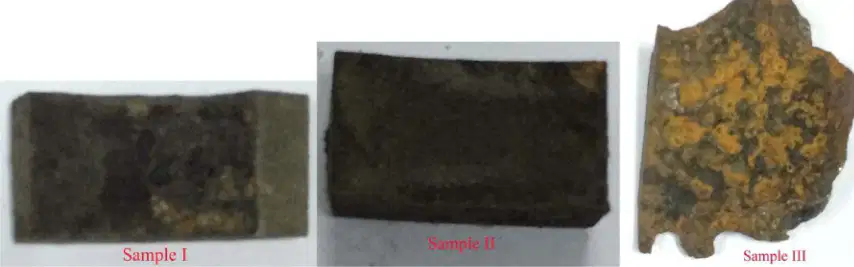
What is the typical microstructure of the failed tube as mentioned in the document?
Ferrite-pearlite structure
Austenitic structure
Martensitic structure
Bainitic structure
What is the primary cause of corrosion pits on the inner wall surface of the fire-facing side of the tube?
High oxygen concentration and high temperature
Low oxygen concentration and low temperature
High chlorine concentration
High silicon concentration
What is the effect of pearlite spheroidization on the mechanical properties of 20G steel at temperatures below 475 °C?
Significant degradation of mechanical properties
No significant degradation of mechanical properties
Complete loss of mechanical properties
Increase in mechanical properties
What is the iron-to-oxygen ratio comparison between the fire-facing side and the back side of the tube?
Higher on the fire-facing side
Lower on the fire-facing side
Equal on both sides
Not mentioned in the document
What is the chemical composition of carbon (C) in the failed tube as per the measurements?
0.17
0.18
0.24
0.37
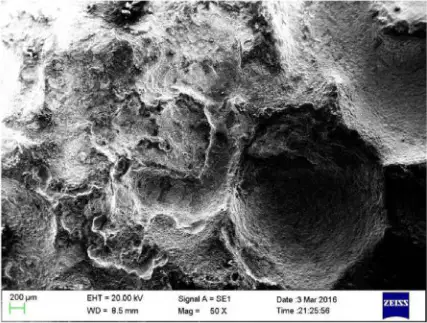
What is the primary cause of failure in the boiler water-wall tube as identified in the study?
Excessive pressure on the back side of the tube.
Significant localized wall thinning on the fire-facing side of the tube due to oxidation.
Poor material composition of the tube.
Excessive iron content in the tube material.
What is the relationship between the iron-to-oxygen ratio and the oxidation of the tube?
A higher iron-to-oxygen ratio indicates more oxidation.
A lower iron-to-oxygen ratio indicates more oxidation.
The iron-to-oxygen ratio has no impact on oxidation.
The iron-to-oxygen ratio is irrelevant to the study.
What is the recommended action to improve the operating environment of the boiler water-wall tube?
Increase the maximum temperature of the boiler.
Reduce the oxygen content in the water.
Use a different material for the tube.
Increase the iron content in the tube.
What is the composition of the tube material as identified in the study?
Ferrite and martensite.
Pearlite and ferrite.
Austenite and martensite.
Pearlite and austenite.
What is the effect of reducing the oxidation contents in the deaerated water?
It minimizes the fireside oxidation.
It increases the efficiency of the boiler.
It reduces the output of the boiler.
It has no impact on the boiler.
What is one method to slow down oxidation corrosion in boiler tubes?
Increasing the working pressure
Regular cleaning and wall thickness inspection
Reducing the temperature of the boiler
Using a different type of fuel
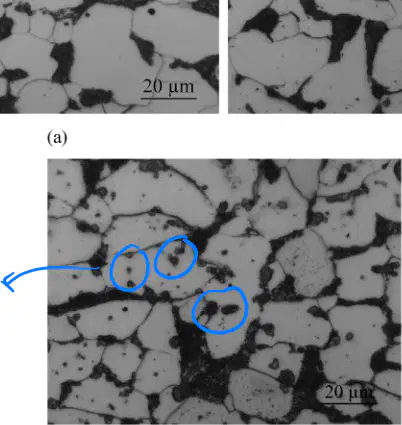
Which structural components are identified in the optical micrographs of the samples?
Austenite and martensite
Ferrite and pearlite
Cementite and bainite
Spheroidite and troostite

