
Font size
 Worksheets
Forensic Blood Testing Review Quiz
Total questions: 24
Worksheet time: 12mins

Imagine you are investigating a crime scene and need to determine if a red stain on a piece of fabric is blood. Select all procedural steps that are part of performing the Kastle–Meyer presumptive test on the stain. (Be sure to use proper forensic terminology in your response.)
Collect the stain with a swab, then add ethanol to the swab
Apply phenolphthalein reagent (reduced phenolphthalin) to the swab
Add hydrogen peroxide to the treated swab and observe for a color change
Heat the swab to boiling to activate the reagent
Spray luminol in a dark room and look for blue glow
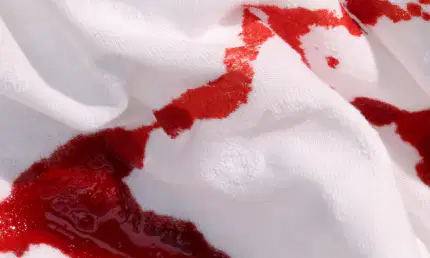
Imagine you are investigating a crime scene and need to determine if a red stain on a piece of fabric is blood. In the Kastle–Meyer presumptive test, which result indicates the presence of blood, and what is the chemical reason for this reaction? (Be sure to use proper forensic terminology in your response.)
A rapid pink color develops because hemoglobin catalyzes the oxidation of phenolphthalin to phenolphthalein
A green color develops because copper ions in blood form a complex with phenolphthalin
No color change occurs because phenolphthalin is already fully oxidized in the presence of blood
A blue glow appears because luminol reacts with iron to produce chemiluminescence
Which tests are used as presumptive tests to answer Is it blood?
Kastle-Meyer
Luminol
Hemastix
Precipitin Test
Which test answers Is it human blood? (confirmatory test)
Precipitin Test
Kastle-Meyer
Hemastix
Which methods can be used to associate a bloodstain with an individual?
DNA
A-B-O Blood Typing
Luminol
Presumptive tests for blood rely on which substance’s ability to catalyze the oxidation of certain reagents, usually resulting in a color change?
Hemoglobin
Plasma
Platelets
Antibodies
What is the usual oxidizing agent in presumptive tests for blood?
H2O2 (hydrogen peroxide)
H2O
O2
CO2
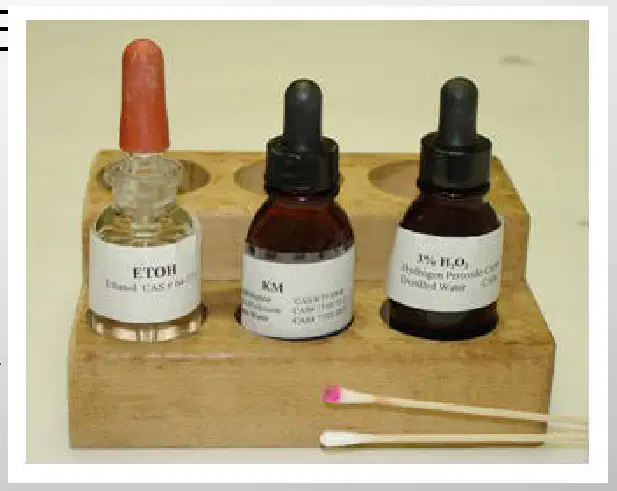
In the Kastle-Meyer test for visible stains, which color indicates the presence of blood?
Bright pink
Dark blue
Green
Yellow
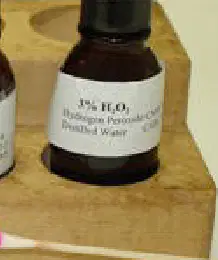
In the Kastle-Meyer test, which reagent is applied after phenolphthalein to a suspected blood stain?
Hydrogen peroxide
Luminol
Ethanol
Distilled water
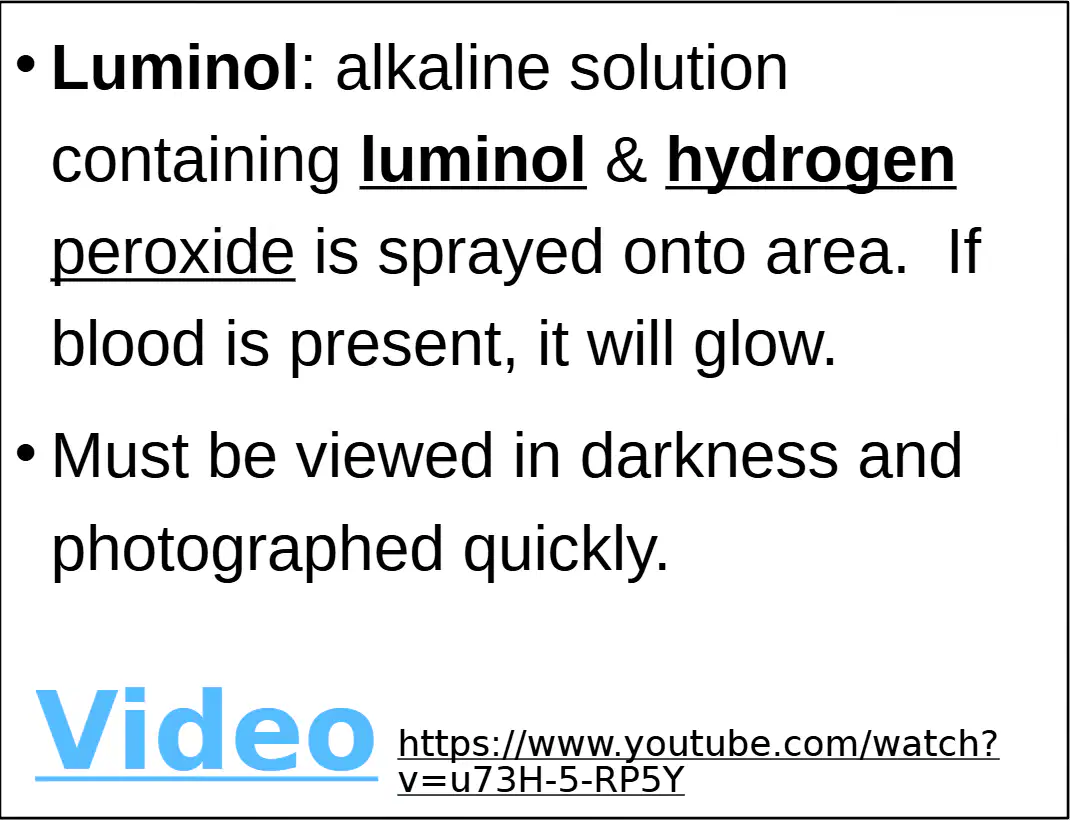
In a presumptive test for invisible stains, what must be applied to an area so blood, if present, will glow?
An alkaline solution containing luminol and hydrogen peroxide sprayed onto the area
Household bleach poured on the area
Direct exposure to bright sunlight
Warm water applied with a cloth
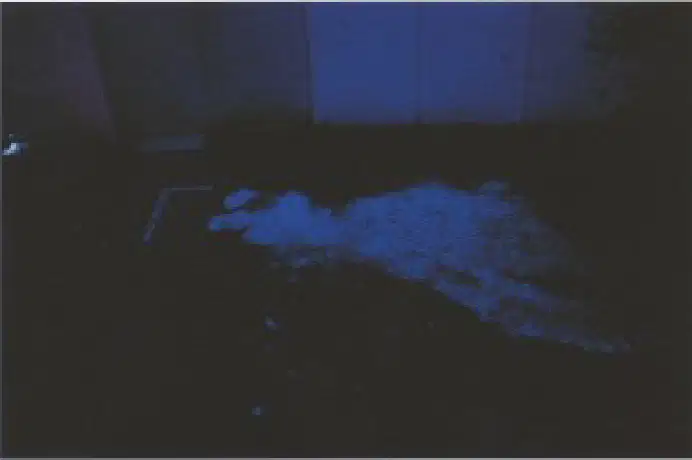
Under what conditions should luminol reactions be observed and recorded?
In darkness and photographed quickly
Under bright sunlight after the area dries
In normal room light several hours later
Only with an infrared camera
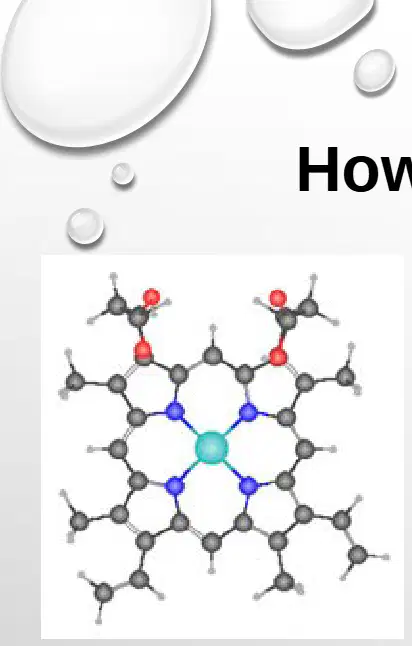
Which component in blood catalyzes the reaction that makes luminol glow?
Iron in the heme groups of hemoglobin
Sodium chloride in plasma
Calcium carbonate in bone
Nitrogen gas dissolved in blood
Which materials can produce false positive results with luminol? Select all that apply.
Household bleach
Some metals
Horseradish and potatoes
Distilled water
What must be done after a presumptive luminol test suggests a stain may be blood?
Confirm the result with a precipitin test
Immediately conclude a violent crime occurred
Discard the sample and move on
Rely on the color change alone
What does the precipitin test identify?
Proteins that are found only in human blood
DNA sequences unique to each individual
Levels of hemoglobin in any mammal
The presence of any liquid on a surface
Once a presumptive test indicates a stain may be blood, what is the serologist’s next objective?
Confirm that the stain is human blood
Determine the exact age of the bloodstain
Match the blood to a specific person
Photograph the stain and end testing
In the precipitin test procedure, which animal is usually injected with human blood to produce antibodies?
Rat or rabbit
Dog or cat
Mouse or guinea pig
Horse or sheep
According to the precipitin test procedure, what is injected into the animal to stimulate antibody formation?
Human blood
Saline solution
Animal antiserum
Plant extract
During the precipitin test procedure, what forms in the animal’s blood after injection?
Antibodies
Enzymes
Platelets
Hormones
In the precipitin test procedure, the harvested antibodies come from the animal’s blood serum that is referred to as what?
Antiserum
Plasma
Hemoglobin
Lymph
During the precipitin test, an extract from the suspected bloodstain is added to the antiserum in a test tube. What observation indicates the stain is human blood?
A precipitate forms where the two meet
The solution turns blue
Gas bubbles appear
No visible change occurs
In the test tube diagram of the precipitin test, antigens (soluble) move downward while antibodies move upward. In which region does the visible band form when they meet?
Zone of equivalence
Meniscus
Buffer layer
Sediment zone

In the photographic test tube image, a pale, opaque band is visible in the middle of the column. What does this band represent in the context of the precipitin test?
A precipitate formed by antigen–antibody reaction
A layer of plasma separating from cells
Air trapped during mixing
Evaporation residue
Why do forensic investigators use presumptive tests for blood?
To quickly screen stains and identify likely blood at a scene before confirmatory laboratory testing
To prove with absolute certainty on site that a stain is human blood
To generate DNA profiles in the field without lab equipment
To permanently remove stains so contamination cannot occur

