
 Worksheets
Introduction to Computational Thinking
Total questions: 31
Worksheet time: 16mins

Which statement best describes a benefit of computational thinking when solving everyday tasks?
It avoids planning by guessing solutions
It makes tasks slower but more detailed
It replaces all need for human decisions
It helps simplify complex steps into smaller parts
Which statement best describes a benefit of computational thinking when solving everyday tasks?
It avoids planning by guessing solutions
It makes tasks slower but more detailed
It replaces all need for human decisions
It helps simplify complex steps into smaller parts
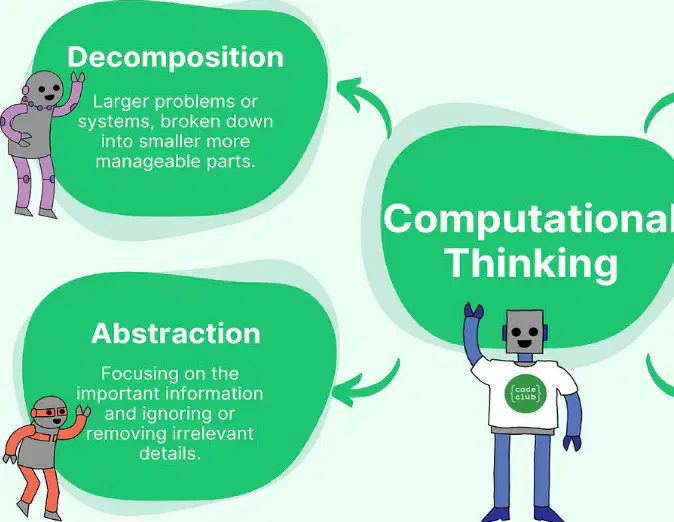
Which cornerstone of computational thinking is defined as breaking a large problem into smaller, manageable parts?
Algorithms develops a step-by-step solution
Patterns looks for similarities in problems
Decomposition breaks big problems into parts
Abstraction focuses on important information
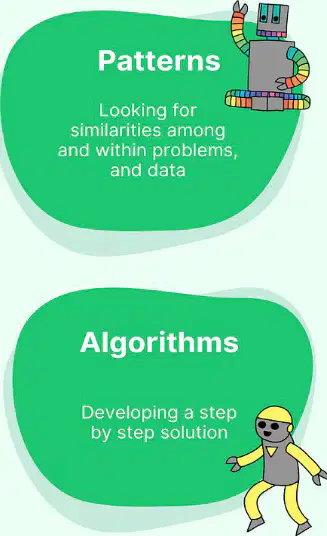
A robot needs to sort mixed books by subject. Which cornerstone should the robot use first to notice groups that repeat across the books?
Abstraction to remove unneeded book details
Algorithms to write detailed sorting steps
Decomposition to split the task into subtasks
Patterns to identify similarities among items
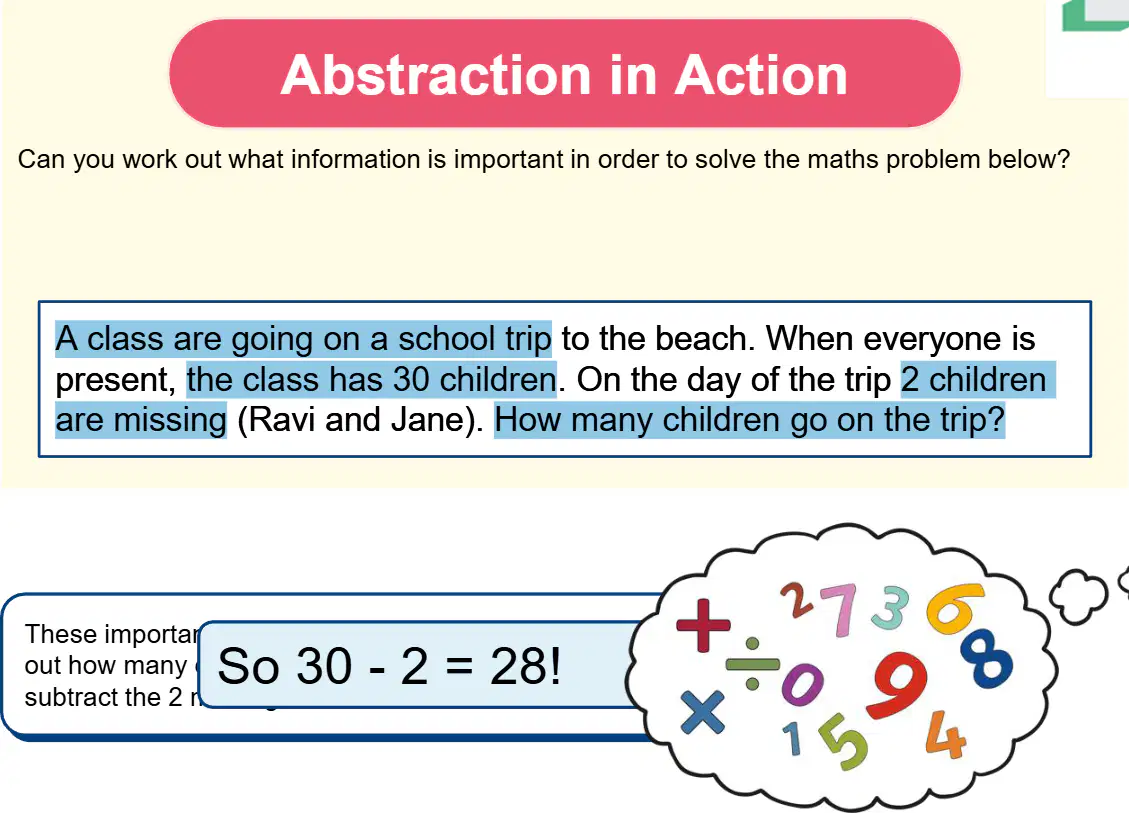
A class has 30 students but 2 are absent on trip day. What is the number going on the trip?
28 after subtracting absentees
26 after removing four more
30 because class size stays
32 by adding missed names
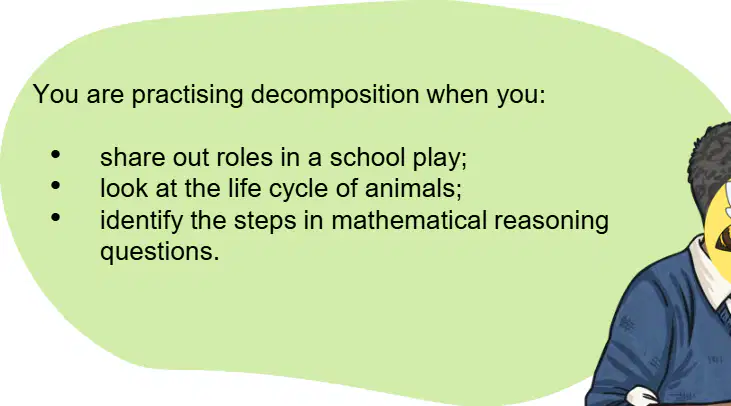
Which action best shows decomposition in a school play project?
Choose a bigger stage area
Share out roles among students
Invite more audience members
Buy new costumes for actors
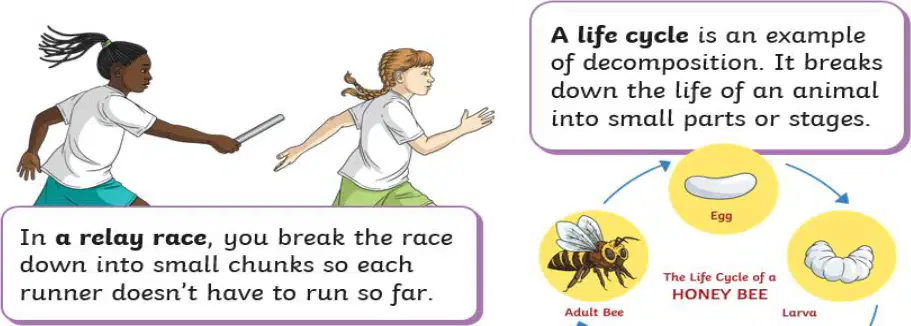
Which statement best describes decomposition in everyday tasks?
Solving everything in one large attempt
Breaking big problems into smaller steps
Repeating the same step many times
Ignoring parts to finish faster
Computers can think for themselves without any interaction.
Sometimes
True
False
Only with fast hardware
What is the first step among the cornerstones of computational thinking?
Debugging
Decompose
Algorithm
Pattern matching
Which statement best describes pattern recognition in computational thinking?
Ignoring details to focus on essentials
Writing step-by-step instructions to solve
Testing code to remove all errors
Breaking big problems into smaller parts
Finding similarities or trends in data
A table has four legs representing the four cornerstones of computational thinking. If one leg is missing, what is the most likely outcome for the table?
It probably collapses or falls over
It floats above the ground
It stays stable without any wobble
It becomes stronger and more balanced
On an analogue clock, each number represents a 5‑minute jump. If the minute hand points to the 7, how many minutes past the hour is it?
40 minutes past the hour
25 minutes past the hour
30 minutes past the hour
35 minutes past the hour
What is Computational Thinking?
Using a set of techniques and approaches to help to solve problems.
Thinking like a computer in binary.
Giving instructions to a computer.
Which of the following is NOT a computational thinking technique?
Pattern recognition.
Coding
Decomposition.
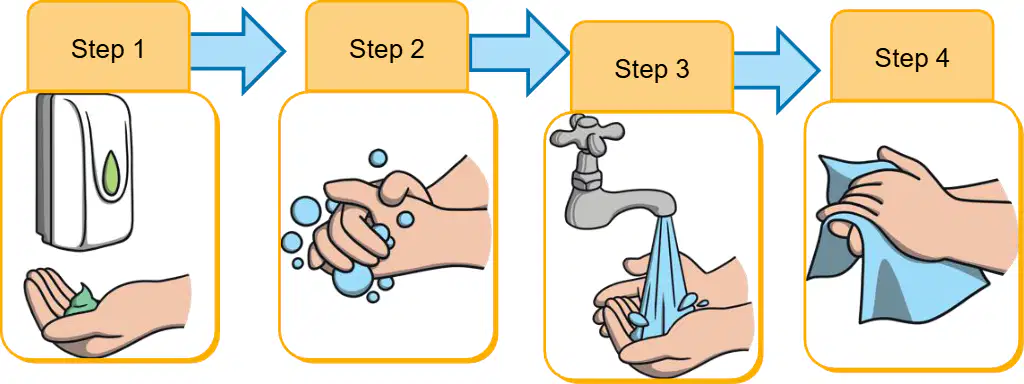
Look at the four-step handwashing diagram. Which answer best states the overall goal this algorithm achieves?
Remove dirt and germs safely
Keep the sink running longer
Dry the towel to be reusable
Make hands smell like soap
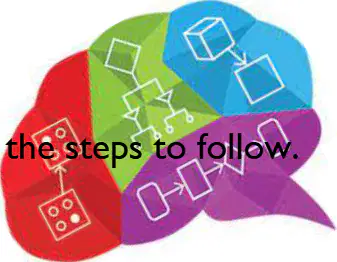
The slide says a recipe for making tea is an algorithm. Why is a recipe considered an algorithm?
It tastes good when finished
It uses pictures and colors
It lists steps to follow
It is written by chefs
Which statement best defines an algorithm in everyday life?
A list of step-by-step instructions to complete a task
A single rule that always gives the right answer
A random set of ideas used when solving problems
A picture that shows where things should be placed
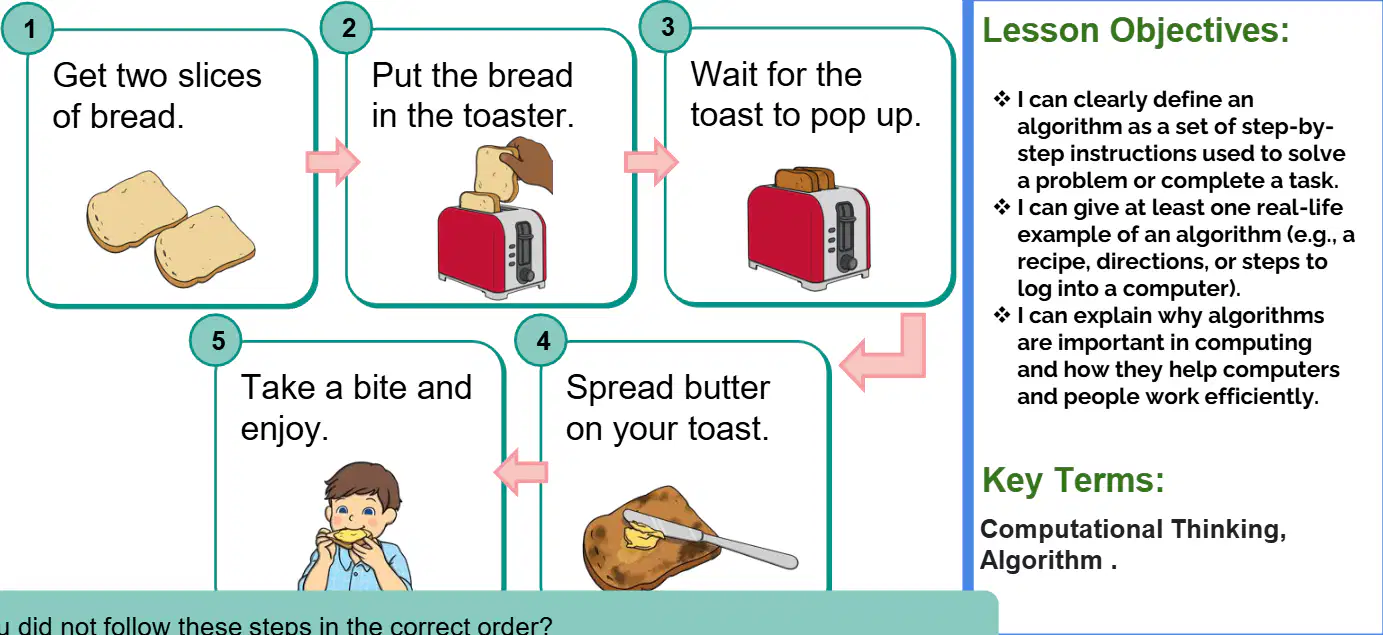
Put these steps for making toast into the correct order: 1) Spread butter, 2) Wait for toast to pop up, 3) Put bread in toaster, 4) Take a bite and enjoy. Which sequence is correct?
3, 2, 1, 4
2, 3, 1, 4
1, 3, 2, 4
3, 1, 2, 4
When searching the web for facts, which action helps an algorithm show useful results?
Enter no text and wait silently
Skip turning on the device first
Type clear keywords into the search bar
Click random links without reading
What is an algorithm?
A set of instructions to complete a task
A kind of hardware used by computers
A language for writing stories and poems
A tool that edits photos and videos
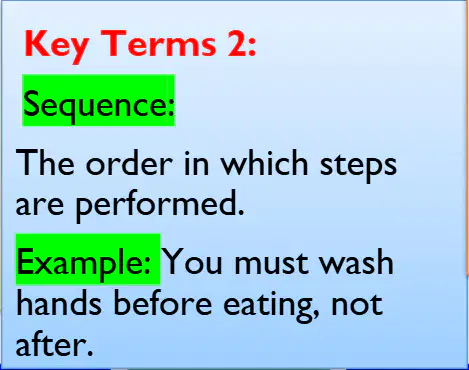
Which example best shows the idea of sequence in an algorithm?
Wash hands whenever you feel bored
Wash hands after eating a meal
Wash hands before eating a meal
Wash hands only on weekends
Choose the correct order for basic algorithm steps in computing.
Output → Input → Process
Process → Output → Input
Input → Output → Process
Input → Process → Output
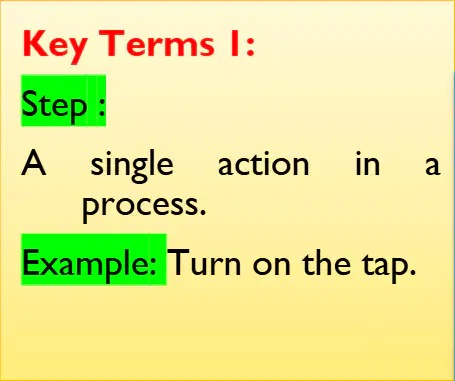
Which statement defines Step in algorithm vocabulary?
A list of tools for coding
The fastest way to solve any task
A single action in a process
The longest part of a program
If an algorithm takes too long to complete, what is the most likely issue?
The algorithm is perfect
The algorithm is inefficient
The algorithm is too fast
The algorithm is too simple
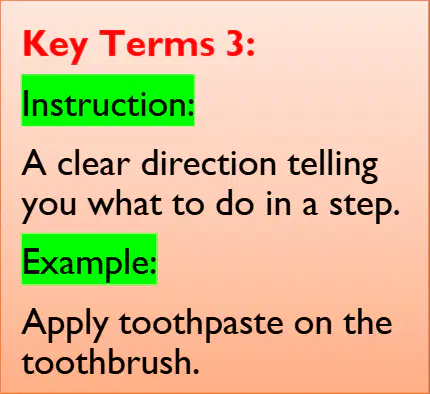
Which example best represents an Instruction in an algorithm?
Apply toothpaste on the toothbrush
Choose any color you like
Skip all steps to save time
Guess the next move randomly
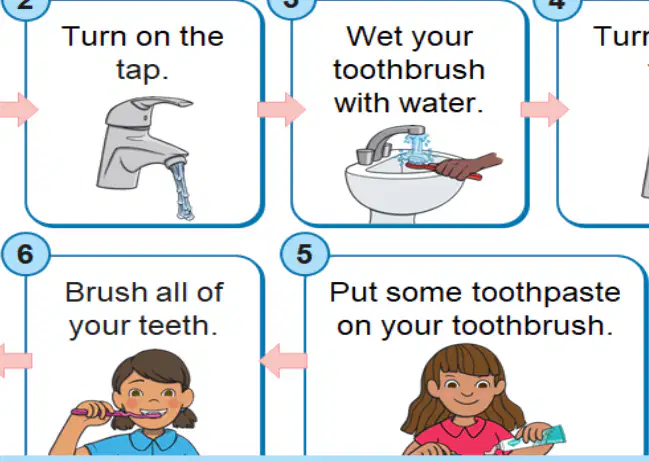
Which option shows the correct next step after turning on the tap when brushing your teeth?
Wet toothbrush with water
Put toothpaste on toothbrush
Brush all of your teeth
Turn off the tap
Which statement best defines an algorithm in computing?
A single action done repeatedly
A random list of possible actions
A set of step-by-step instructions
A picture of a finished result
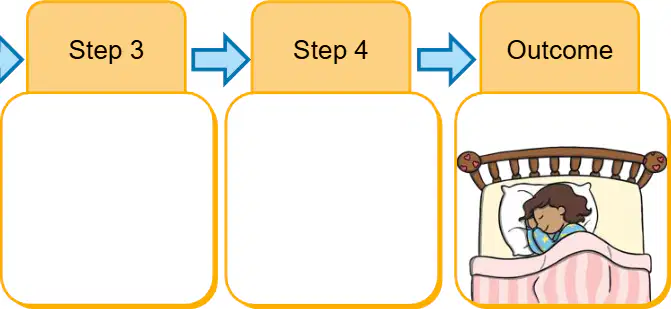
In an everyday bedtime routine, which is the most logical first step to reach the outcome of sleeping?
Brush your teeth
Get into bed
Change into pyjamas
Switch the light off
Why is the correct sequence of steps important when designing an algorithm?
It makes the algorithm look longer
It guarantees the program runs fastest
It allows skipping any steps
It makes the instructions make sense
Which flowchart symbol is used for a process step like "Apply toothpaste"?
Rectangle symbol
Oval symbol
Diamond symbol
Parallelogram symbol
You are creating an algorithm to make toast. Which sequence is logical and complete?
Insert bread → Eat toast → Toast bread
Spread butter → Toast bread → Eat toast
Toast bread → Spread butter → Eat toast
Eat toast → Insert bread → Toast bread

