
 Worksheets
Principles Plumbing materials — Tutor guidance notes
Total questions: 37
Worksheet time: 19mins
Answer the following questions. Why does the plumbing industry need agreed standards?
They reduce installation difficulty by ensuring consistent quality, materials, and sizes across manufacturers
They mainly increase product prices to protect brands
They eliminate the need for inspections and testing entirely
They allow every installer to create personal standards without coordination
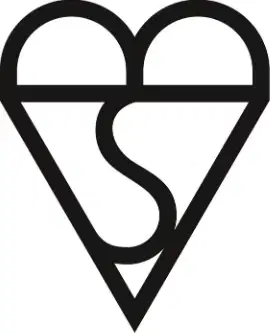
Refer to the symbol shown. What does this symbol represent?
BSI Kitemark
CE marking
ISO certification logo
WRAS approval badge
Which of the following are British Standards linked to plumbing? Select all that apply.
BS 1212 Float-operated valves
BS 1010 Taps and fittings for hot and cold water
BS 8558 Guide to the design, installation, testing and maintenance of services supplying water for domestic use within buildings
UK guidance that supports and complements BS EN 806
BS 6700 (withdrawn but still referenced) Design, installation, testing and maintenance of services supplying water for domestic use
What are Approved Codes of Practice (ACoPs)?
Practical examples of good practice developed after consultation to help businesses comply with legislation; widely used by specifiers; failure to follow is not an offence
Mandatory legal standards that must be followed or penalties apply
Marketing guidelines issued by manufacturers to promote products
Informal tips shared by tradespeople with no regulatory relevance
Which regulations cover water supplied to people’s homes and the materials that come into contact with that water?
The Water Supply (Water Fittings) Regulations 1999
BS EN 806 Water Supply Systems
Building Regulations Part P
Health and Safety at Work etc. Act 1974
What is the difference between BS and EN standards?
BS is set by the British Standards Institution for the UK; EN indicates products tested under European Quality Control schemes
BS and EN are identical and interchangeable without any testing differences
EN applies only to electrical products; BS applies only to plumbing
BS is voluntary guidance while EN is always criminal law
What is the role of the Water Regulations Advisory Scheme (WRAS) and what aid does it provide to plumbers?
It tests fittings and publishes a Water Fittings and Materials Directory listing approved fittings to help compliance with Water Regulations
It issues building permits and inspects construction sites
It manufactures pipes and fittings for domestic use
It sets European standards for water quality
Which material is described as durable, hygienic, corrosion‑resistant, and fully compliant when installed correctly, with examples including hot and cold water pipework in domestic dwellings and connections to taps, cylinders, and boilers?
Copper
Stainless steel
Plastic (PEX/Polybutylene/Multilayer Composite)
Brass (low‑lead/DZR)
Which material is highly resistant to corrosion and suitable where high hygiene standards are required, with examples including flexible tap connectors and pipework in commercial kitchens and healthcare settings?
Stainless steel
Copper
Plastic (PEX/Polybutylene/Multilayer Composite)
Brass (low‑lead/DZR)
Which material is lightweight, corrosion‑free, and WRAS‑approved products are compliant, with examples including domestic hot and cold water distribution and underfloor heating pipework (where approved for potable water)?
Plastic (PEX/Polybutylene/Multilayer Composite)
Copper
Stainless steel
Brass (low‑lead/DZR)
Which material is used for valves (e.g., service valves, ball valves) and tap bodies and fittings, with approved alloys that prevent lead contamination and resist dezincification?
Brass (low‑lead/DZR)
Copper
Stainless steel
Plastic (PEX/Polybutylene/Multilayer Composite)
The materials used for drinking water systems have many properties. Which property is identified as most essential across the listed materials?
Resistance to corrosion
Aesthetic appearance
Electrical conductivity
Low upfront cost
Which statement best defines hardness as a mechanical property?
Resistance to permanent or plastic deformation by scratching or indentation
Ability to return to original shape after stretching
Capacity to melt at a low temperature
Tendency to conduct electricity
Which statement best defines strength as a mechanical property?
The extent to which a material can withstand an applied force or load (stress) without breaking
The amount a material expands when heated
The degree of hardness in a metal produced by heat treatment
The ability of a metal to be worked without fracture
Which statement best defines elasticity as a mechanical property?
The ability of a material to be stretched and return to its normal shape
The exact opposite of elasticity — permanent deformation
A material’s ability to resist wear and tear
Resistance to being pulled apart
Match conversion — What does tenacity describe?
A material’s ability to resist being pulled apart
Ability to be drawn into a fine wire
Degree of hardness in a metal
Melting point when a solid changes to a liquid
Match conversion — What does malleability describe?
The ability of a metal to be worked without fracture
A material’s ability to resist wear and tear
The amount a material expands when heated
The ability to be drawn into a fine wire
Match conversion — What does durability describe?
The material’s ability to resist wear and tear
The exact opposite of elasticity — permanent deformation
Degree of hardness in a metal
Resistance to being pulled apart
Match conversion — What does plasticity describe?
The exact opposite of elasticity — a material that does not return to its original shape when deformed
The amount a material expands when heated
Ability to be worked without fracture
Melting point when a solid changes to a liquid
Match conversion — What does thermal expansion describe?
The amount a material expands when heated
Resistance to being pulled apart
Degree of hardness in a metal
Ability to be drawn into a fine wire
Match conversion — What does temper describe?
The degree of hardness in a metal
Melting point when a solid changes to a liquid
The exact opposite of elasticity
A material’s ability to resist wear and tear
Match conversion — What does fusibility describe?
The melting point of a material, i.e., when a solid changes to a liquid
The ability of a metal to be worked without fracture
The amount a material expands when heated
A material’s ability to resist being pulled apart
Match conversion — What does ductility describe?
The ability of a material to withstand distortion without fracture, such as metal that can be drawn out into a fine wire
A material’s ability to resist wear and tear
The amount a material expands when heated
The exact opposite of elasticity
What do R250 and R220 mean in relation to copper tube?
R250 (Table X) is half hard copper tube commonly used above ground for plumbing and heating installations; R220 (Table Y) is soft coil copper tube commonly used underground for water supply
R250 is a stainless‑steel grade and R220 is a brass alloy
R250 is the softest copper used underground; R220 is the hardest used above ground
R250 and R220 are WRAS approval codes for valves
What do Table W and Table Z mean?
Table W is soft coil copper used for micro-bore pipework; Table Z is R290 hard copper tube that cannot easily be bent.
Table W is R290 hard copper tube; Table Z is soft coil copper used for micro-bore pipework.
What is the other name for low carbon steel?
Mild steel
Stainless steel
Low carbon steel is available in three grades: light, medium and heavy. On site, how can you tell the light grade?
Thin walls, a large bore, colour coded brown
Medium walls, a medium bore, colour coded blue
What should you do if you find lead pipework in a property, and why?
Report it to your supervisor as it could cause lead poisoning.
Ignore it because lead piping is common and harmless.
What is a compound?
A mixture of two or more elements
A single pure element
Circle the correct answer. What does the abbreviation WRAS stand for?
Water Rules and Specifications
Well Regulations and Supply
Water Regulatory Action Standards
Water Regulations Advisory Scheme
Circle the correct answer. Lead is a very ‘malleable’ metal. What does malleable mean?
It has a high melting point.
It is easily worked without fracture.
It can be drawn out to form wire without fracture.
It resists being pulled apart.
Circle the correct answer. Which metal is used to galvanise low carbon steel?
Zinc
Chrome
Nickel
Boron
Circle the correct answer. Which type of plastic is used most frequently in the manufacture of plumbing materials?
Thermoplastic
Thermosetting
Technoplastic
Technosetting
Circle the correct answer. The following statement describes a thermoplastic and what it is suitable for: ‘Tough plastic with a relatively high melting temperature – it can be used to channel boiling water for short periods of time.’ Which thermoplastic does the statement apply to?
Polythene
u-PVC
Polypropylene
Polystyrene
Circle the correct answer. This material is made from sand and calcium carbonate, what is it?
China
Plastic
Glass
Low carbon steel
Circle the correct answer. What is brass made from?
Copper and tin
Copper and zinc
Copper and lead
Copper and magnesium
Circle the correct answer. What is bronze made from?
Copper and tin
Copper and zinc
Copper and lead
Copper and magnesium

