
 Worksheets
Page 1
Total questions: 39
Worksheet time: 20mins
According to the local anesthetics table, which drug has a slower onset of action but a longer duration, lasting about 3 to 5 hr?
Bupivacaine
Lidocaine
Mepivacaine
Proparacaine
Which drug in the table may be combined with epinephrine, has a 2-hr duration, and can cause tachycardia?
Lidocaine
Prilocaine
Bupivacaine
Proparacaine
Which drug listed provides 2 to 3 hr of local anesthesia and has risks of hypotension and respiratory arrest after epidural administration?
Mepivacaine
Prilocaine
Lidocaine
Bupivacaine
Which drug is indicated as a topical anesthetic for ophthalmic procedures and is provided as an ophthalmic solution?
Proparacaine
Bupivacaine
Mepivacaine
Prilocaine
Which drug in the table is listed for local and epidural anesthesia and has the trade name Carbocaine-V?
Mepivacaine
Bupivacaine
Lidocaine
Proparacaine
Select all common forms listed for lidocaine in the table.
Gel
Injectable
Patch
Ophthalmic solution
Match each drug name to the trade name shown in the table.
Bupivacaine
Marcaine
Lidocaine
Xylocaine
Mepivacaine
Carbocaine-V
Proparacaine
Alcaine

Which drug is combined with lidocaine to form a topical cream used to numb the skin before injections or catheterization?
Prilocaine
Bupivacaine
Mepivacaine
Proparacaine
Which drug provides short-lasting topical anesthesia for about 10 min?
Proparacaine
Lidocaine
Bupivacaine
Mepivacaine
Phenothiazines are described as having several clinical uses. Which use is explicitly listed?
Sedation
Anticonvulsant therapy
Diuresis
Antibiotic therapy
Which adverse effect is specifically listed for phenothiazines?
Hypotension
Hypertension
Polycythemia
Hyperthermia
The slide notes breed sensitivity to phenothiazines. Which group is identified as sensitive, requiring minimum dosage?
Boxers, sight hounds, and giant breeds
Toy breeds only
Only brachycephalic cats
Draft horses only
Which patient population is identified for precaution or caution when using phenothiazines?
Geriatric patients
Neonates only
Pregnant mares exclusively
Healthy adult dogs
Which specific prolapse is mentioned among the adverse effects of phenothiazines?
Prolapse of the 3rd eyelid
Prolapse of the 2nd eyelid
Uterine prolapse
Tracheal prolapse
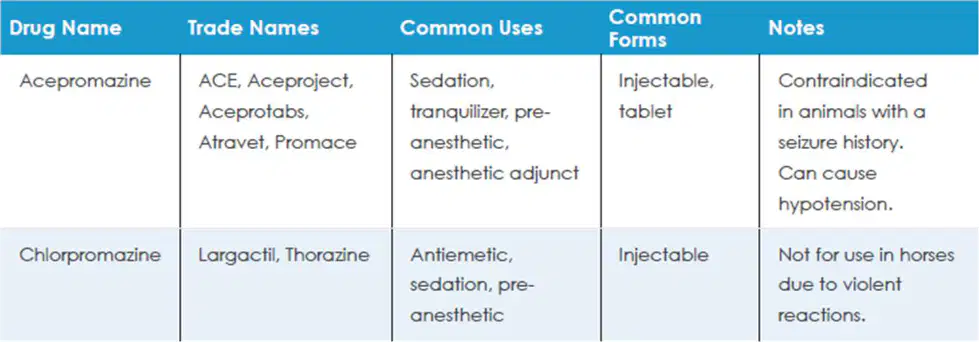
According to the table, which statement about acepromazine is correct?
Contraindicated in animals with a seizure history
Recommended for increasing seizure threshold in epileptic patients
First-line antibiotic for respiratory infections
Specifically indicated for treating hypertension
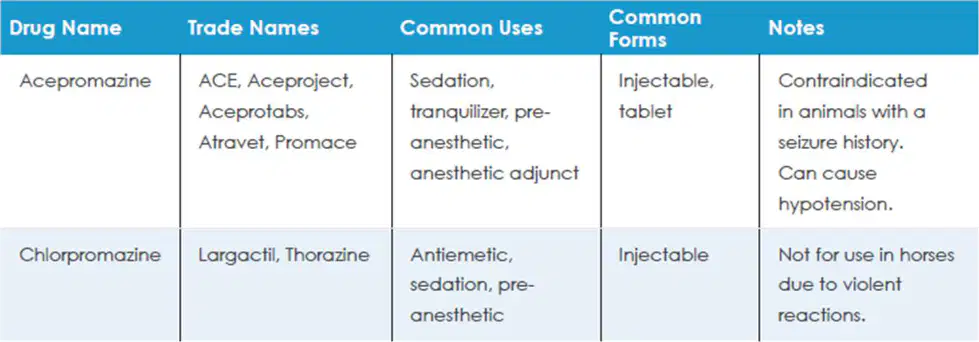
Which common forms are listed for acepromazine? Select all that apply.
Injectable
Tablet
Topical ointment
Transdermal patch
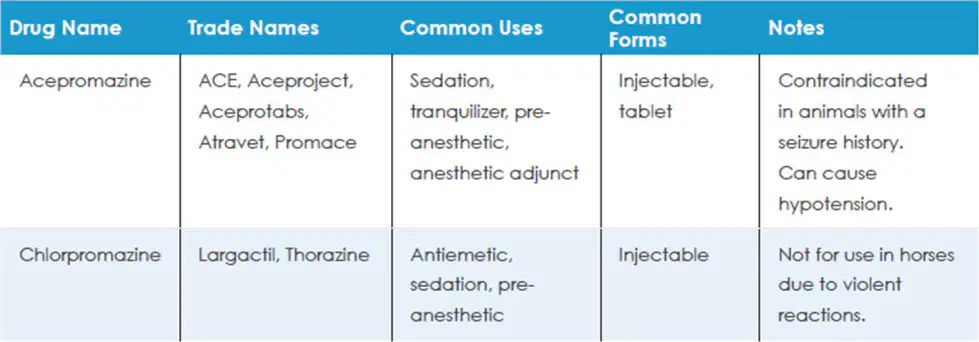
Which drug is listed with trade names Largactil and Thorazine?
Chlorpromazine
Acepromazine
Diazepam
Ketamine
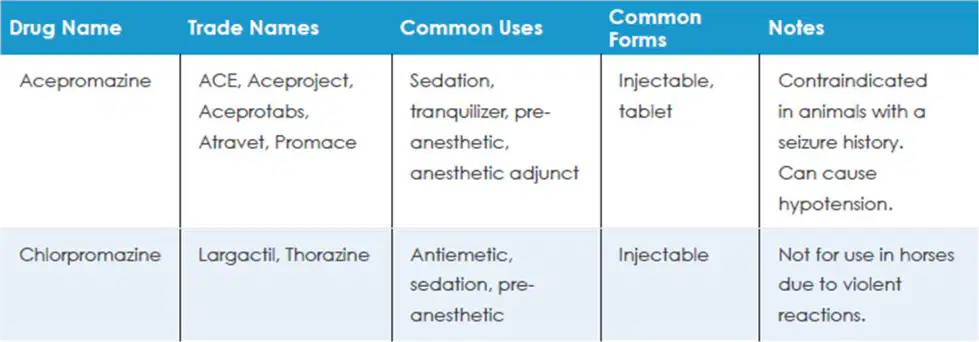
Which note is given for chlorpromazine use?
Not for use in horses due to violent reactions
Must be combined with an opioid at all times
Induces hypertension in cattle
Contraindicated in all sight hounds
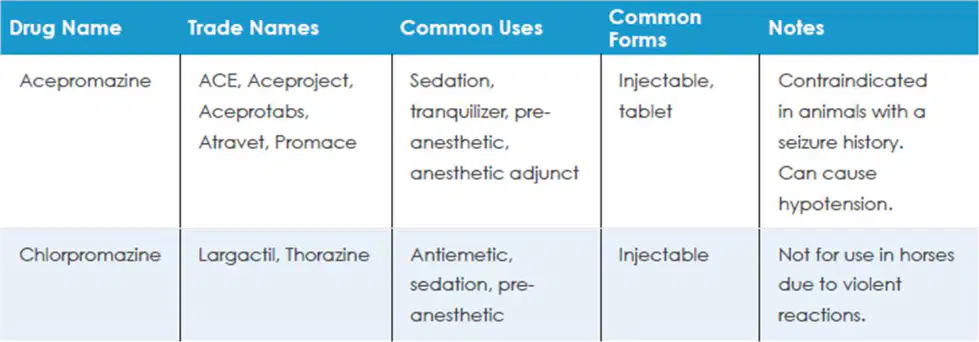
Which combination of common uses is listed for chlorpromazine?
Antiemetic, sedation, pre-anesthetic
Antibiotic, diuretic, anticonvulsant
Analgesic, bronchodilator, antiarrhythmic
Immunosuppressant, antineoplastic, laxative
Select all listed therapeutic effects of benzodiazepines.
Anticonvulsant
Muscle relaxant
Sedation
Anti-anxiety
When combined with ketamine (dissociative), diazepam produces which induction profile?
Slow IV induction
Rapid IM induction
Prolonged recovery
Increased blood pressure
Select all patient groups and conditions for which caution is advised when using benzodiazepines.
Geriatric animals
Pregnant animals
Hepatic disease
Renal disease
Which agent can reverse the effects of benzodiazepines?
Flumazenil
Naloxone
Atipamezole
Yohimbine
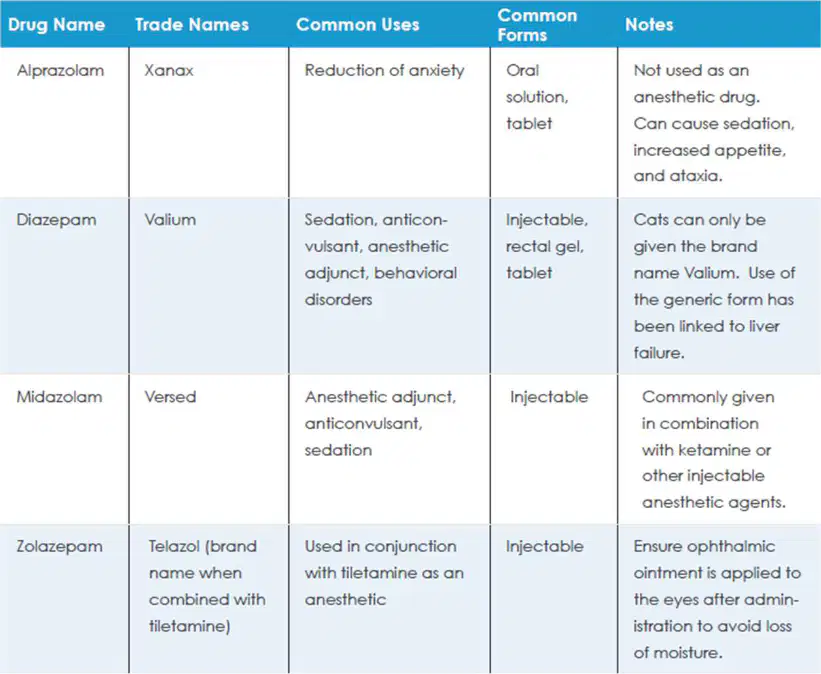
Match each benzodiazepine drug name to its trade name as shown in the table.
Alprazolam
Xanax
Diazepam
Valium
Midazolam
Versed
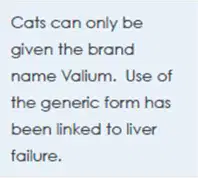
Which benzodiazepine has a note stating that cats should only be given the brand name Valium because use of the generic form has been linked to liver failure?
Alprazolam
Diazepam
Midazolam
Zolazepam
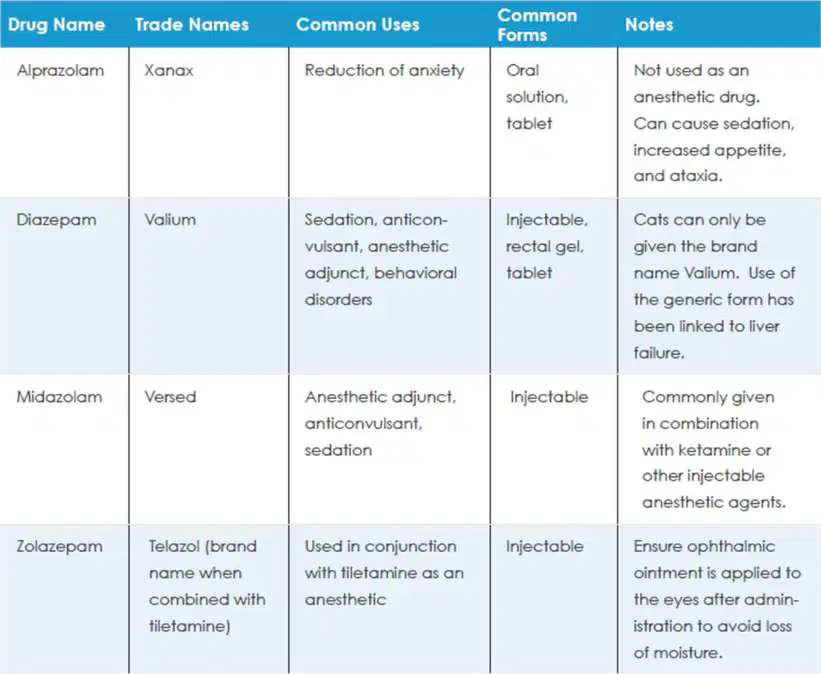
What common form is listed for midazolam in the table?
Oral solution
Rectal gel
Injectable
Transdermal patch
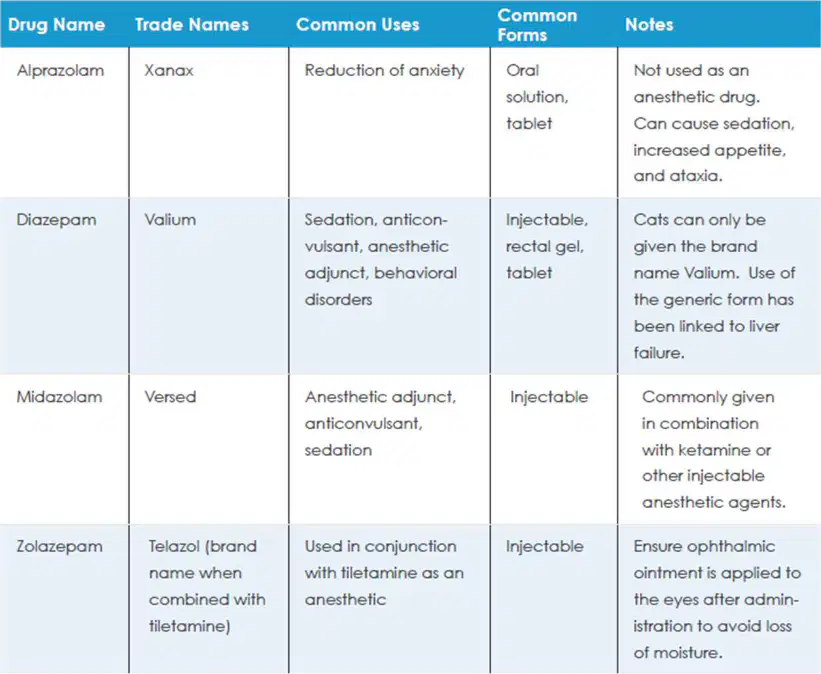
According to the table, what is the common use listed for alprazolam?
Reduction of anxiety
Anesthetic adjunct
Anticonvulsant
Appetite stimulant
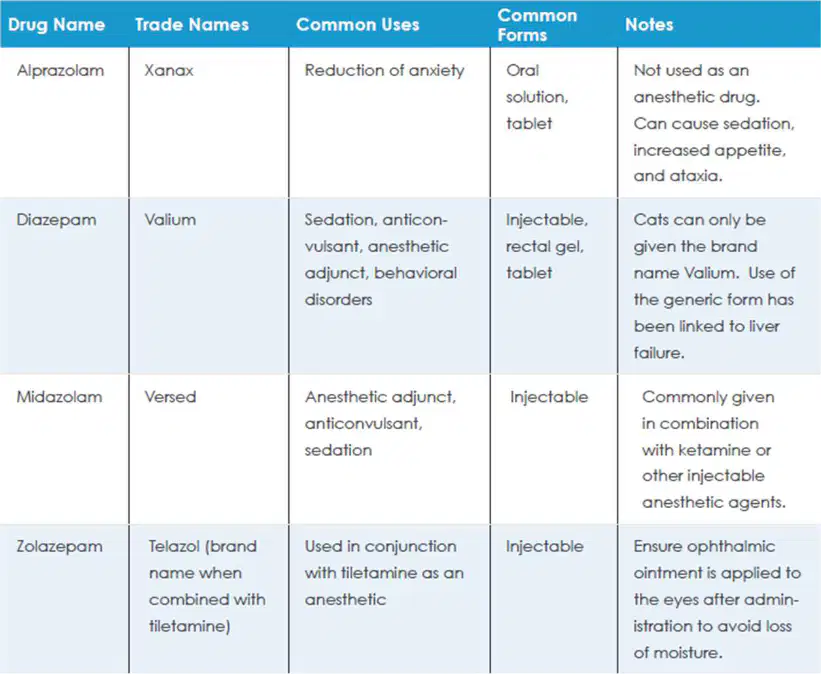
Zolazepam is indicated in conjunction with which agent as an anesthetic?
Ketamine
Tiletamine
Propofol
Dexmedetomidine
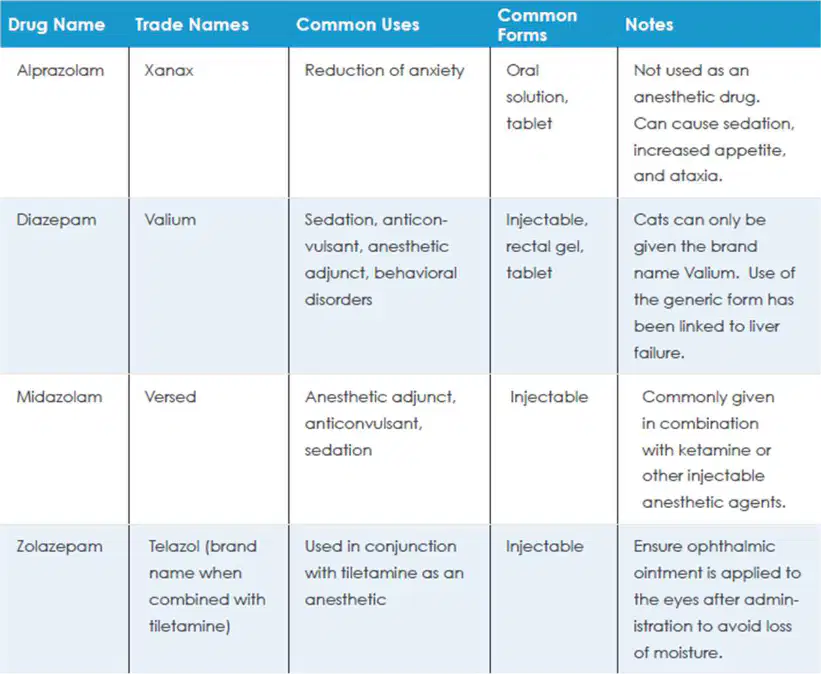
Which post-administration care measure is noted for zolazepam in the table?
Monitor liver enzymes
Apply ophthalmic ointment to the eyes to avoid loss of moisture
Provide oxygen supplementation for 10 minutes
Avoid oral feeding for 12 hours

According to Table 5.17: Alpha-2 Agonists, which drug also comes in an oral gel for horses?
Detomidine hydrochloride
Dexmedetomidine
Medetomidine hydrochloride
Romifidine hydrochloride

Which drug lists vomiting as a very common side effect?
Detomidine hydrochloride
Dexmedetomidine
Romifidine hydrochloride
Xylazine hydrochloride

Which drug requires careful monitoring of vital signs during administration because of the risk of cardiac depression?
Medetomidine hydrochloride
Dexmedetomidine
Xylazine hydrochloride
Detomidine hydrochloride

Which alpha-2 agonist has sedative effects that are the longest lasting among the drugs in the table?
Romifidine hydrochloride
Detomidine hydrochloride
Dexmedetomidine
Xylazine hydrochloride
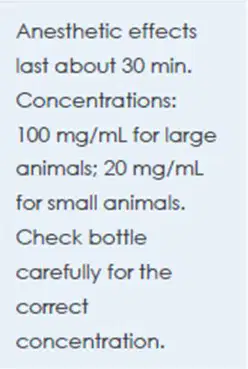
Which drug’s anesthetic effects last about 30 minutes and has bottle concentrations of 100 mg/mL for large animals and 20 mg/mL for small animals?
Xylazine hydrochloride
Romifidine hydrochloride
Detomidine hydrochloride
Medetomidine hydrochloride

Which drug is available in both injectable and transmucosal gel forms?
Dexmedetomidine
Detomidine hydrochloride
Romifidine hydrochloride
Xylazine hydrochloride

Which drugs have only Antipamezole listed as the reversal agent? Select all that apply.
Dexmedetomidine
Medetomidine hydrochloride
Detomidine hydrochloride
Xylazine hydrochloride

Which drugs can be reversed with either Yohimbine or Antipamezole? Select all that apply.
Detomidine hydrochloride
Romifidine hydrochloride
Dexmedetomidine
Xylazine hydrochloride

Which drug lists short-term sedation and analgesia as the common uses (rather than sedation, anesthetic adjunct, analgesia)?
Xylazine hydrochloride
Detomidine hydrochloride
Dexmedetomidine
Medetomidine hydrochloride

Match each trade name to its corresponding drug name from Table 5.17: Alpha-2 Agonists.
Dormosedan
Detomidine hydrochloride
Dexdomitor
Dexmedetomidine
Domitor
Medetomidine hydrochloride
Sedivet
Romifidine hydrochloride
Rompun
Xylazine hydrochloride

