
 Worksheets
Introduction and Assessment Standards
Total questions: 75
Worksheet time: 38mins

Which action best helps introduce and build rapport with a new patient?
Explaining procedures briefly without greetings
Starting care silently to avoid disturbing them
Using medical terms without polite phrases
Addressing the patient by their first and last name

What is the primary purpose of obtaining informed consent before care?
To allow procedures with adequate explanation
To protect staff from physical strain
To document grooming standards in records
To speed up workflow and reduce wait time
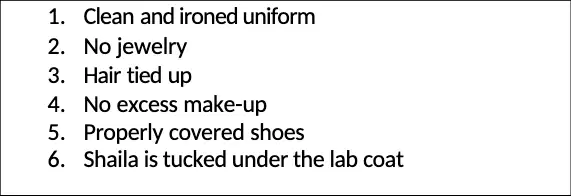
Which statement reflects professional grooming for clinical settings?
Keep hair tied up and minimal make-up
Leave shaila outside the lab coat
Use heavy perfume with covered shoes
Wear visible jewelry with clean uniform

During patient lifting, which ergonomic technique reduces injury risk?
Keep the back straight with bent knees
Bend from the waist while pulling
Stand far and extend arms fully
Place feet close together for balance
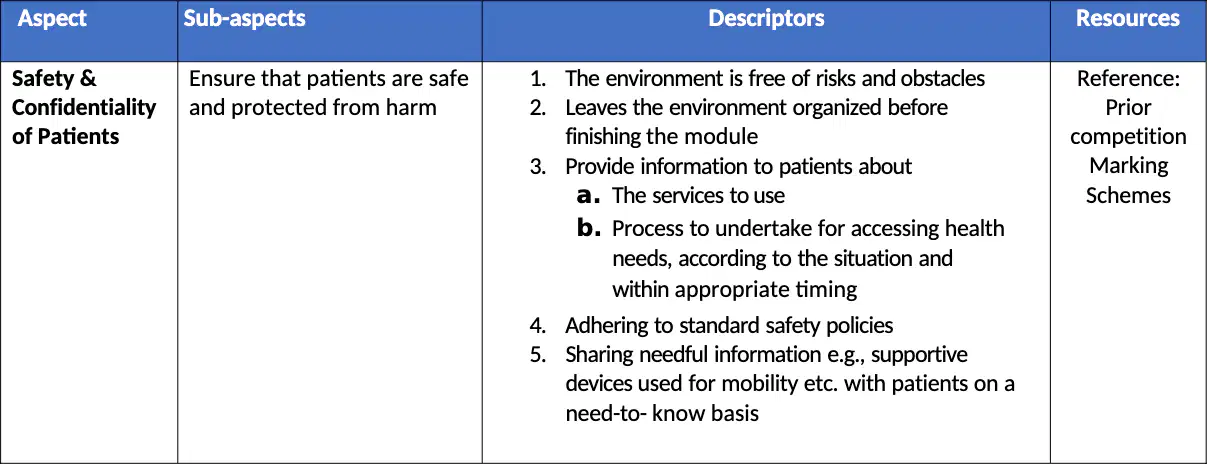
Which step supports safe patient care in the environment?
Organize only after finishing the day
Ask patients to move clutter themselves
Ensure area is free of risks and obstacles
Leave equipment where last used
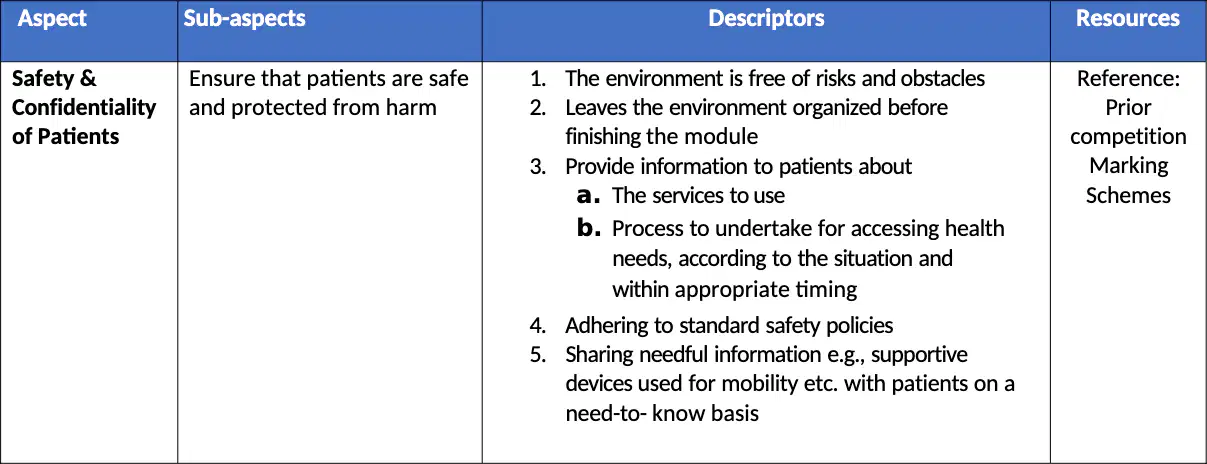
When finishing a module of care, what should be done before leaving?
Leave items ready for the next team
Organize the environment to a safe state
Ask the patient to tidy their space
Turn off lights and lock the door

Which communication builds trust and respect during care?
Speaking quickly without patient questions
Using only technical procedure names
Avoiding the patient’s preferred name
Using please, hello, thank you, goodbye

Which foot placement provides a stable base during transfers?
Wide stance with back rounded
One foot forward, weight on toes
Feet together with knees locked
Feet at comfortable distance, solid base

Which action aligns with standard safety policies and confidentiality?
Discuss a patient’s case in public areas
Store notes openly at the nurses’ station
Post updates to personal social media
Follow standard safety policies during care
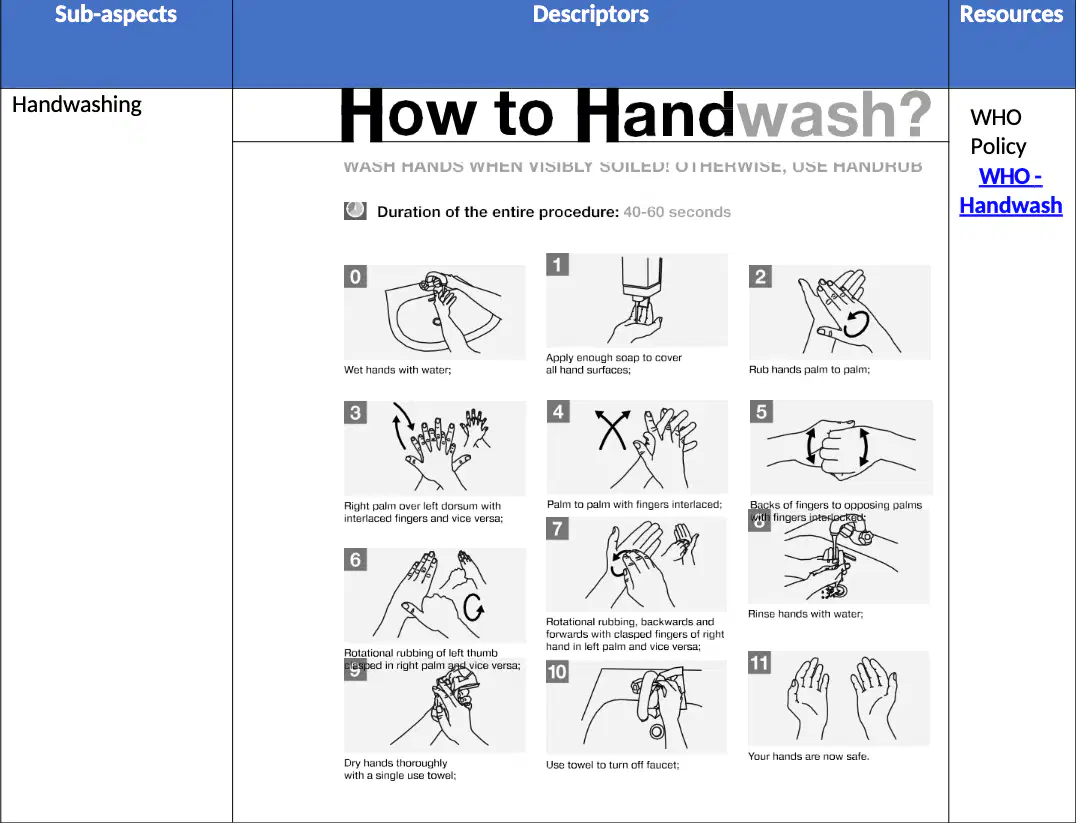
Look at the handwashing diagram step sequence. What is the recommended total duration for the entire handwashing procedure?
30–40 seconds
40–60 seconds
20–30 seconds
60–90 seconds
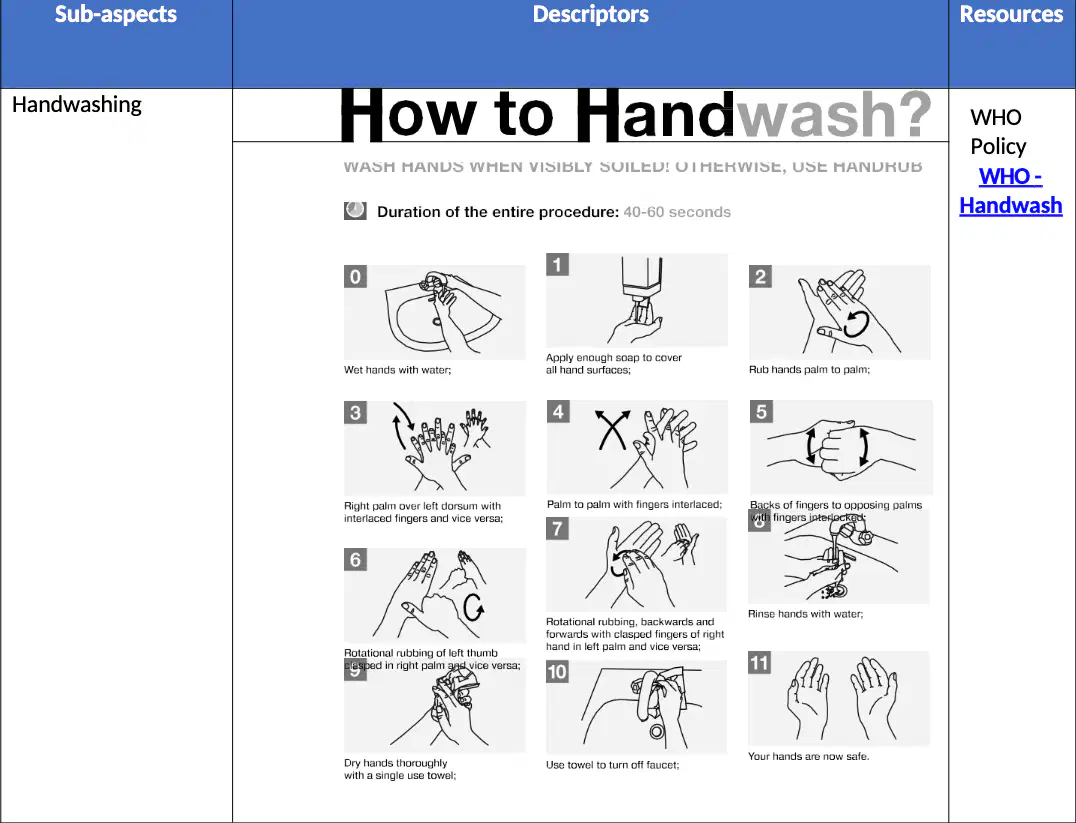
In the handwashing steps, which action comes immediately after wetting hands with water?
Apply enough soap to cover surfaces
Rinse hands with water
Rub hands palm to palm
Dry with single-use towel
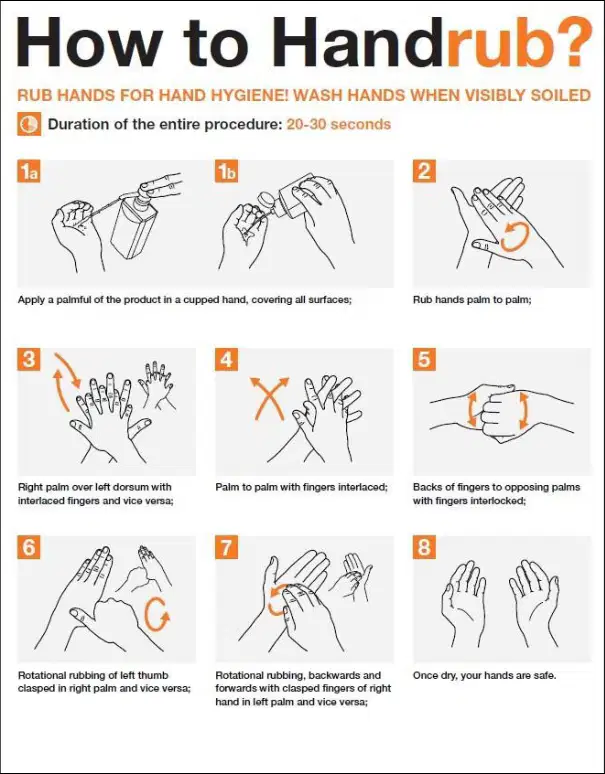
According to the hand-rub poster, what is the recommended duration for the alcohol-based hand-rub procedure?
10–15 seconds
15–20 seconds
20–30 seconds
30–45 seconds
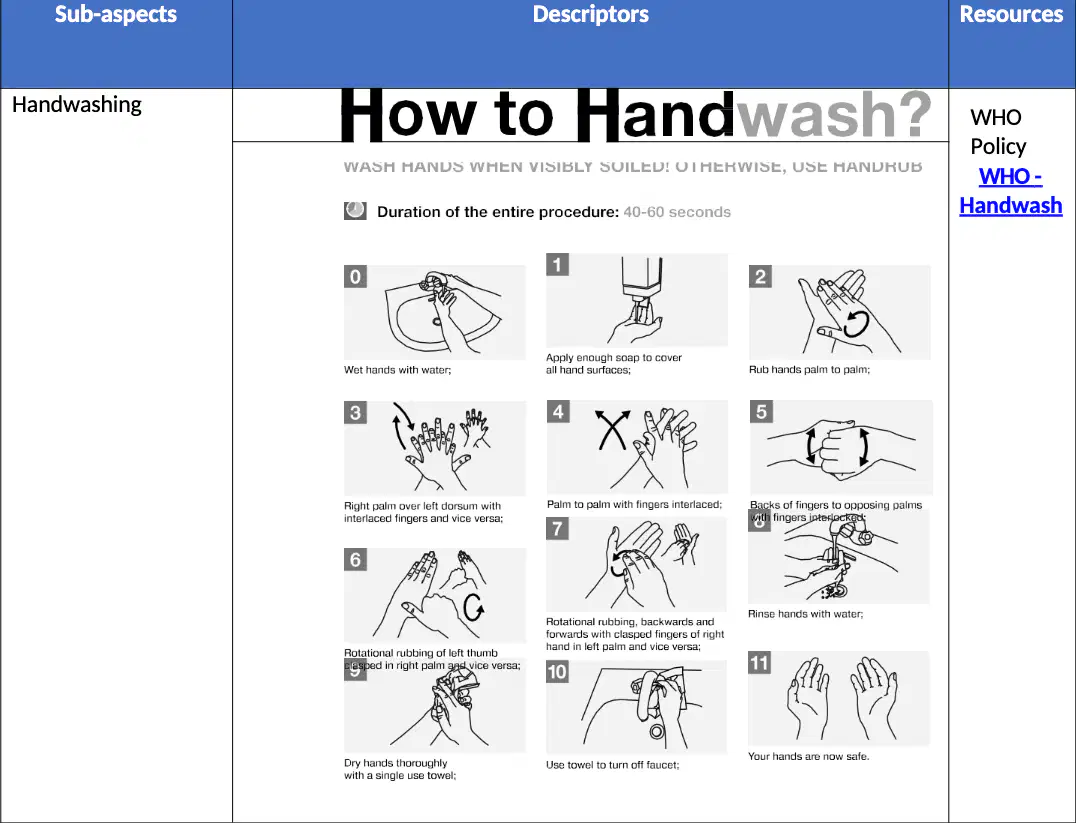
Which motion ensures cleaning of the thumbs during hand hygiene?
Rotational rubbing of clasped thumb
Palm to palm with fingers interlaced
Backs of fingers to opposing palms
Right palm over left dorsum
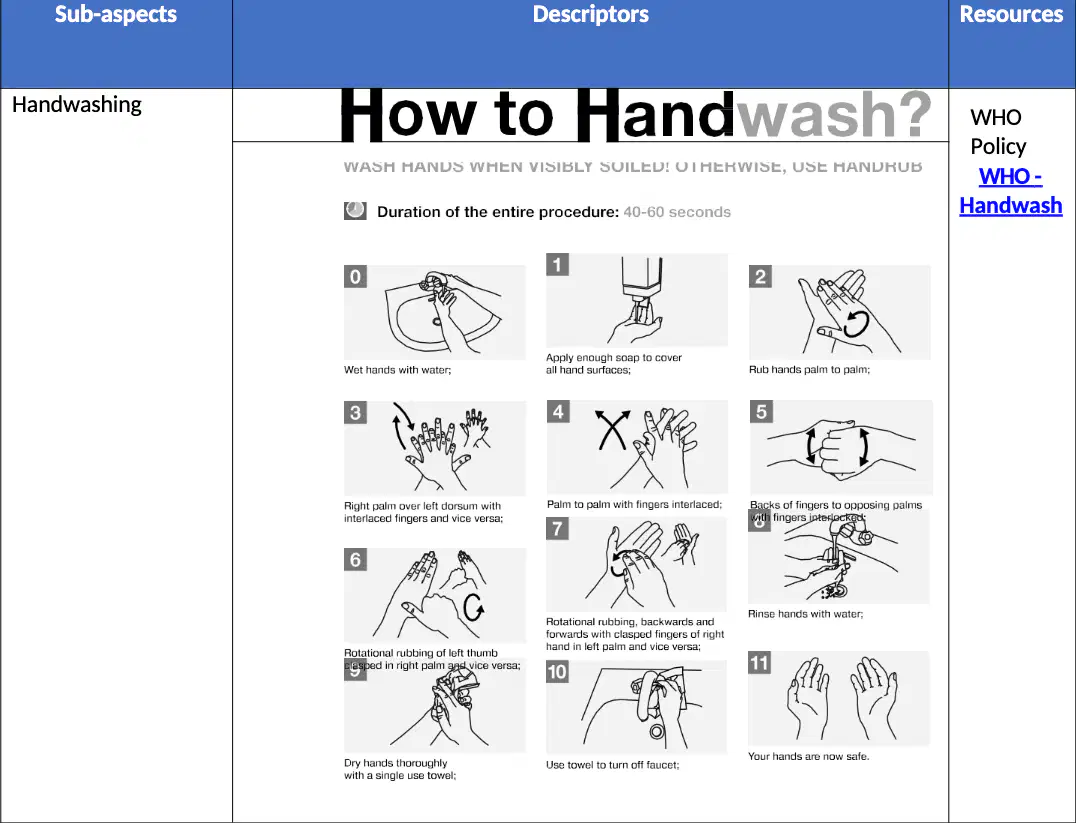
A nurse finishes lathering with soap and rubbing all surfaces. Which step must occur before drying the hands?
Repeat palm to palm motion
Rinse hands with water
Apply more soap to fingertips
Use towel to turn off faucet

You are about to insert a peripheral IV line. Which ‘Five Moments for Hand Hygiene’ applies?
Before touching a patient
Before clean/aseptic procedure
After body fluid exposure risk
After touching patient surroundings
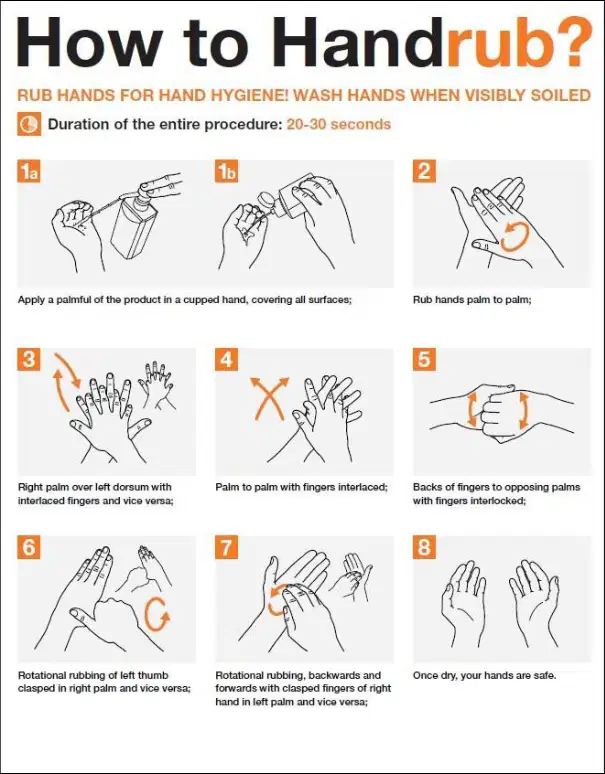
During hand-rub, what initial amount should be applied to the cupped hand?
A pea-sized drop
A palmful of product
Two fingertip-sized drops
Half a teaspoon only
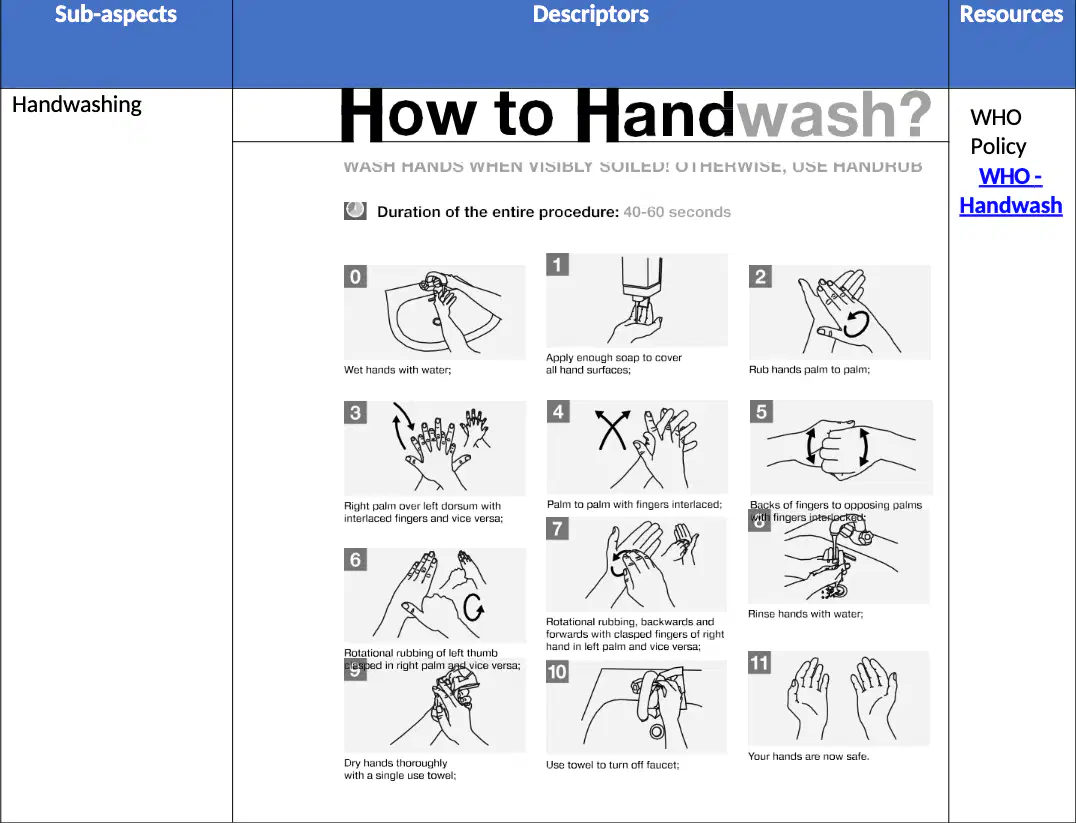
Which action reduces recontamination after drying in handwashing?
Turn off faucet with bare hand
Turn off faucet using towel
Wave hands to air dry faucet
Apply hand rub to the faucet
Which action should be done first before approaching a casualty with severe bleeding?
Introduce yourself to the casualty
Secure a compression pad first
Apply a tourniquet immediately
Check scene safety for hazards
When preparing to manage severe bleeding, which personal protective step is essential?
Remove bulky clothing
Loosen tight dressings
Wear gloves or PPE
Apply cold packs
Where should a tourniquet be placed relative to the bleeding site on a limb?
Directly on the wound
Two to three inches above
Centered over a joint
Below the nearest joint
Which statement about tourniquet placement is correct?
Place it over the elbow
Keep it visible at all times
Loosen it every ten minutes
Cover it fully with gauze
What indicates proper tightening of a tourniquet?
Skin turns mildly cool
Bleeding stops completely
Pulse becomes stronger
Bleeding slows slightly
During initial hemorrhage control without a tourniquet, what is the preferred first action?
Apply direct pressure to wound
Elevate the injured limb
Rinse with clean water
Apply a cervical collar
After bleeding has slowed under direct pressure, what is the next step to enhance control?
Massage the area gently
Apply ice to the site
Remove the dressing
Add a compression pad
How should pressure be applied over a compression pad?
Alternating fast and slow
Firm and consistent
Light and intermittent
Only during exhalation
Which communication approach supports the casualty during bleeding control?
Ask only yes/no questions
Use medical jargon rapidly
Reassure and explain actions
Remain silent to focus
Which step helps ensure circulation is not overly restricted by a dressing and pad?
Avoid checking for continued bleeding
Secure dressing without constricting
Tie knots as tight as possible
Place pad directly on bone
In team spinal immobilization, which role is prioritized first?
Applying leg straps
Maintaining manual in-line stabilization
Positioning chest strap
Setting up head blocks
Before immobilization steps like log roll or collar application, what should the team do?
Assign roles and verbalize plan
Move quickly without discussion
Apply straps immediately
Rotate leaders mid-procedure
Which assessment is performed before immobilizing a patient on a spine board?
Check PMS of limbs
Assess capillary refill in fingers only
Estimate total blood loss
Measure body temperature
During application of a cervical collar, what is a key caution?
Do not move the head
Remove manual stabilization early
Tilt head slightly forward
Ask the patient to assist
Which statement best describes the log roll in spinal care?
Roll first, then discuss plan
A solo maneuver by the leader
Lift or roll while maintaining alignment
Rapid turn to the stronger side
Which step should be done first before splinting an ankle fracture?
Position the limb correctly
Perform hand hygiene and gloves
Check PMS before splinting
Explain the procedure calmly
What does PMS stand for when assessing an injured limb?
Pain, mobility, stiffness
Perfusion, motion, stability
Pressure, muscle strength
Pulse, movement, sensation
When securing an ankle splint, why use a figure-of-eight wrap at the ankle?
To reduce swelling quickly
To stabilize joint contours
To anchor padding firmly
To improve circulation flow
After applying an ankle splint, which action ensures it is fitted well?
Reassure the person calmly
Recheck PMS after splinting
Dispose waste and gloves
Add more padding if needed
During triangular bandage application for a shoulder sprain, which step helps position the patient correctly?
Assess pain and swelling
Ask what happened first
Fold and apply bandage
Support injured area effectively
When tying the triangular bandage for a shoulder sprain, where should the knot NOT be placed?
On the spine; tuck ends properly
On the clavicle; leave ends loose
On the scapula; ends outside
On the deltoid; knot visible
Which sequence best describes initial actions in the recovery position?
Remove glasses then check breathing
Check scene safety then PPE
Open airway then call for help
Assess responsiveness then airway
How long should you check breathing after performing head tilt–chin lift?
For 5 seconds only
For 10 seconds total
For 15 seconds minimum
Until help arrives
Which arm is positioned at a right angle during recovery position setup?
The far arm across chest
The nearest arm bent 90°
Both arms extended straight
The upper arm under head
While rolling a patient into the recovery position, where should your hand be placed to grasp and turn safely?
On far leg and shoulder
On near hip and ankle
On near arm and wrist
On far leg for leverage
Which action helps maintain airway patency once on the side in recovery position?
Press chin downward gently
Tilt head back slightly
Elevate shoulders slightly
Keep mouth tightly closed
What is the correct simple technique to open the airway in an unresponsive person without trauma?
Neutral head alignment only
Two-handed neck extension
Jaw thrust maneuver only
Head tilt–chin lift method
Which step best prevents further harm before treating a burn?
Identify burn type and location
Ask how the injury happened
Check scene safety before approaching
Introduce yourself and reassure calmly
How long should you cool a burn with running cool water?
Until the skin turns pale
Less than five minutes
At least ten to twenty minutes
Exactly thirty minutes
After cooling a burn, what is the correct next action?
Apply burn gel evenly to the area
Burst blisters to release fluid
Cover with adhesive cotton pads
Remove dressings to check frequently
Which item should be removed gently near a burn if safe to do so?
Scabs forming over the wound
Loose skin around blisters
Jewelry or tight items
Any sterile dressing
What dressing is appropriate for a cooled burn?
Non-stick sterile dressing or cling film
Warm compress and gauze pads
Alcohol swabs and paper tape
Cotton wool and adhesive bandage
During burn care, which action should be avoided?
Dispose of waste and gloves properly
Apply pressure over the wound
Maintain calm, confident sequence
Reassure the casualty throughout

For a nosebleed, what is the correct initial position?
Side-lying with pillow support
Standing straight, head tilted back
Sitting upright, head slightly forward
Lying flat with head back
Where should pressure be applied during a nosebleed?
Cheeks beside the nose
Upper lip under the nostrils
Soft part just below the bridge
Hard bony bridge of the nose
How long should continuous pressure be maintained for a nosebleed before checking?
Three minutes without pause
Fifteen minutes with breaks
Five minutes with quick checks
Ten minutes without checking
Which advice is correct during a nosebleed to reduce swallowing blood?
Hold cold compress inside the nostril
Breathe through the mouth calmly
Tilt the head backward slowly
Lie down and elevate the feet
When should medical help be sought for a nosebleed?
If a single tissue is soaked with blood
If bleeding doesn’t stop after twenty minutes
If the person feels thirsty
If bleeding stops within five minutes
For minor bleeding, which immediate action helps reduce blood flow if appropriate?
Loosen any bandage to allow air
Elevate the injured part carefully
Apply warm compresses firmly
Remove all debris with bare hands
What solution is appropriate for cleaning a minor wound?
Alcohol and cotton wool
Saline and sterile gauze
Hydrogen peroxide spray
Soap directly on the wound
What should be done after bleeding stops in a minor wound?
Burst blisters to prevent infection
Apply a clean dressing or bandage
Leave the wound uncovered to dry
Apply pressure for another hour
Which sign should the person be advised to monitor after minor bleeding care?
Increased thirst after cleaning
Signs of infection developing
Improved skin warmth quickly
Shortness of breath at rest
Which step best describes the purpose of PMS checks during a wrist sprain assessment?
Confirm only pulse strength in the injured wrist
Evaluate pulse, movement, sensation to ensure perfusion
Assess pain scale without touching the injured area
Check skin temperature to estimate swelling progression
When applying the RICE method for a wrist sprain, which action prevents skin damage while reducing swelling?
Use tight elastic tape for firm compression
Massage the wrist to improve circulation
Apply heat pack directly on the wrist
Place cold compress without direct skin contact

During figure-of-8 bandaging of the hand and wrist, what is the main goal of alternating loops?
Prevent removal of ice after 15 minutes
Create a secure "8" while maintaining even pressure
Cover the entire forearm to immobilize the elbow
Increase compression to limit blood flow
Which sequence best reflects safe early steps in managing a suspected wrist sprain?
Remove gloves, check temperature, tighten wrap
Ask about work history, apply heat, elevate
Hand hygiene, reassure, ask what happened
Elevate first, apply tight tape, check pain
Why should the hand be elevated above heart level after bandaging a wrist sprain when possible?
To keep the hand immobilized completely
To increase compression from the bandage
To improve pulse strength for PMS checks
To reduce swelling by aiding venous return
After applying compression and elevating the wrist, what is the correct follow-up action?
Re-check PMS after compression is applied
Ignore symptoms if pain increases later
Apply heat to counteract cold therapy
Remove bandage to allow full movement
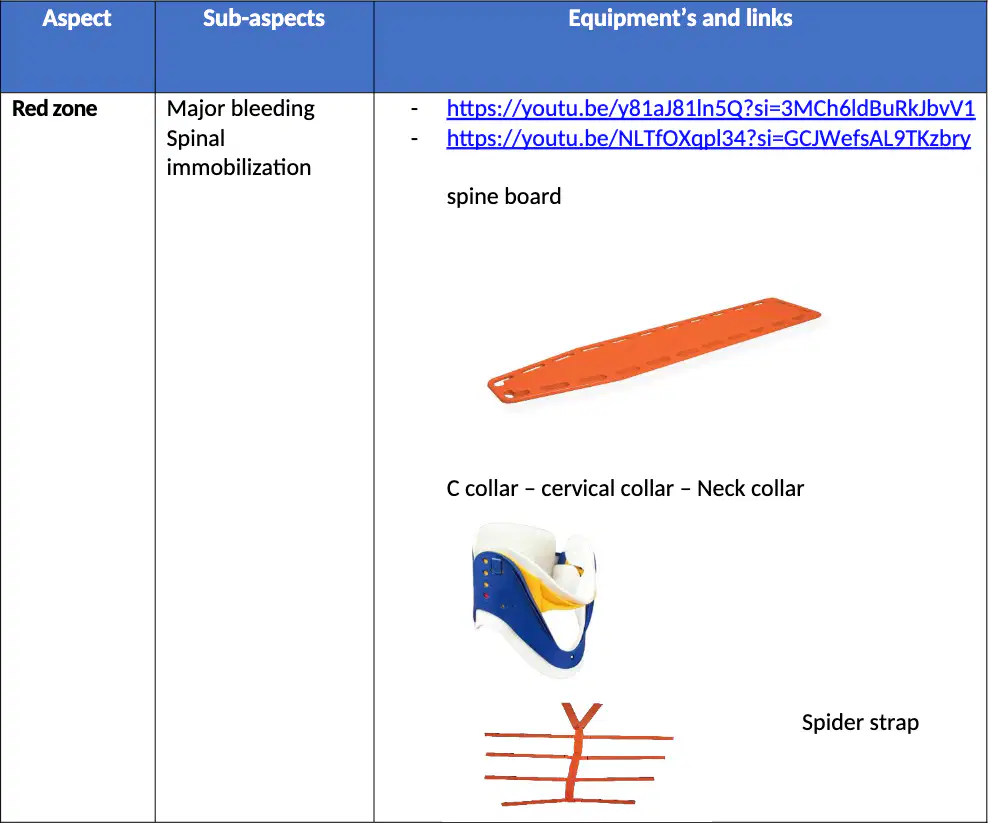
In the image showing the long orange device, what is its primary purpose during spinal emergencies?
Support limb fractures securely
Immobilize the entire spine safely
Provide padding under the patient
Lift patients using mechanical leverage
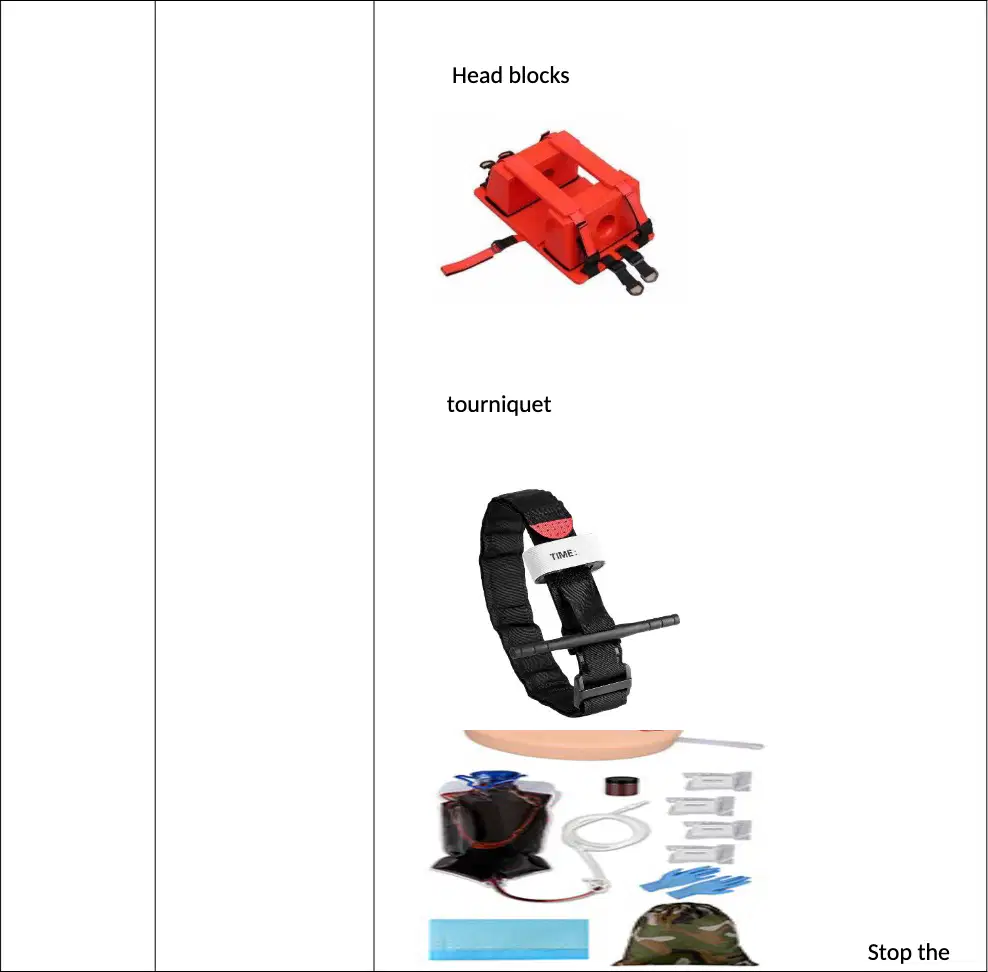
Which item is used with a spine board to restrict head movement, as shown in the red foam device?
Elastic bandage wraps for pressure
Burn gel packs for cooling
Head blocks for lateral support
Trauma pad wedges for cheeks
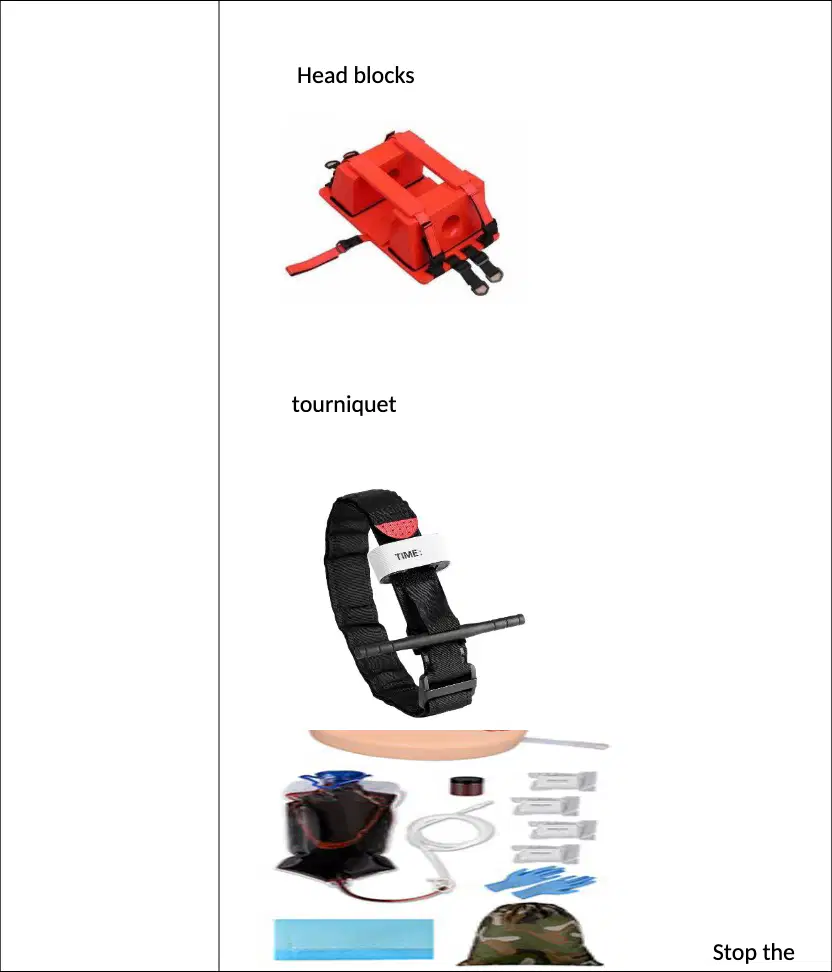
The black strap device with a windlass is indicated for which situation?
Preventing blisters from friction
Stabilizing a suspected neck injury
Severe limb bleeding not controlled by gauze
Minor cuts requiring light dressing
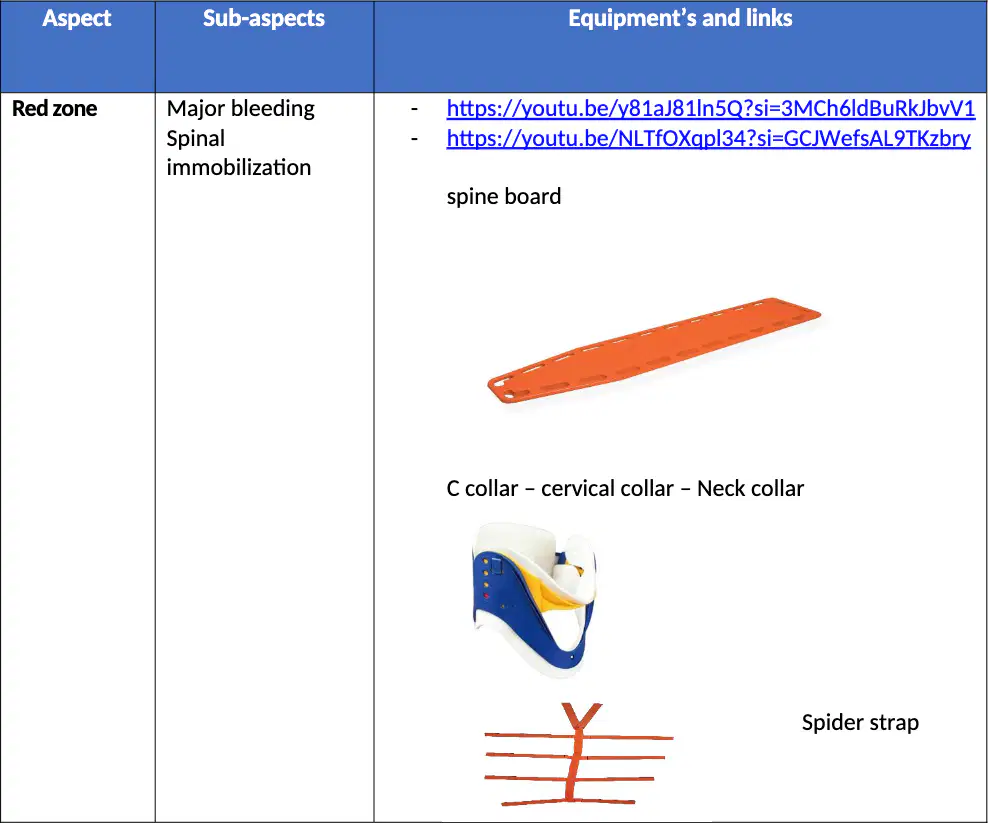
When placing a rigid cervical collar, what is the most appropriate sequence?
Lift patient, then fit collar later
Size the collar, align head, secure snugly
Apply collar, then assess airway
Secure chin first, then measure collar

Which material pictured is best for packing a deep wound to stop bleeding?
Adhesive tape strips in long lengths
Soft foam blocks for cushioning only
Sterile gauze swabs for direct pressure
Cooling gel pads for thermal burns

Which item shown is most appropriate for covering a large bleeding wound to absorb blood quickly?
Triangular bandage for limb support
Trauma pad for heavy bleeding control
Instant ice pack for swelling reduction
Normal saline for wound irrigation
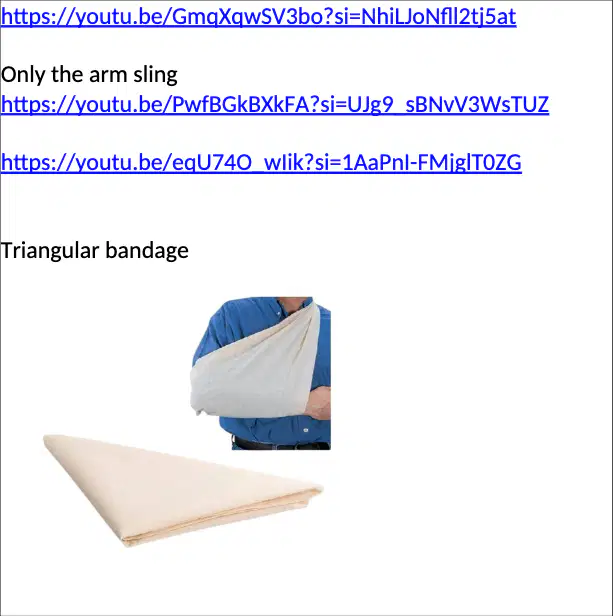
In the image of the triangular bandage used as a sling, what is its primary purpose during an ankle fracture scenario?
Cool the ankle to reduce inflammation
Clean debris from the ankle wound
Seal the ankle with an occlusive dressing
Immobilize and support the injured arm
Which resource is best used first to gently rinse a minor contaminated wound before applying a sterile dressing?
Instant ice pack for numbing the area
Normal saline for wound irrigation
Elastic wrap for joint compression
Triangular bandage for pressure application
You have an athlete with a mild wrist sprain and no open wound. Which item should you choose to manage swelling during the first 24 hours?
Triangular bandage to secure gauze
Normal saline to flush tissue
Instant ice pack for cold therapy
Trauma pad to absorb bleeding
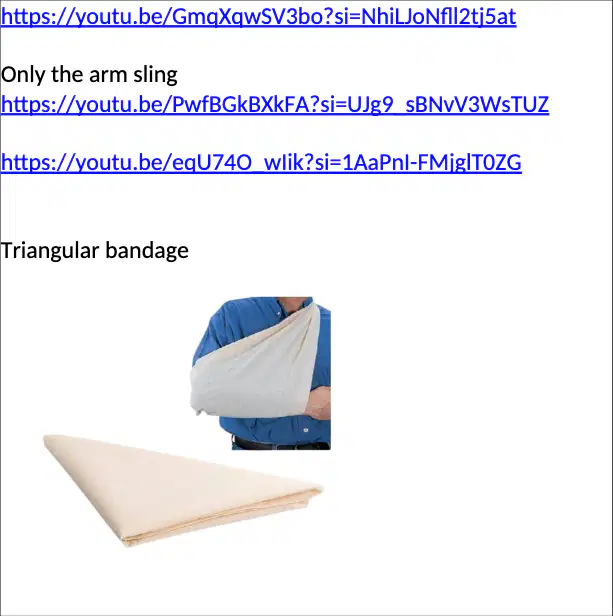
While preparing to transport a person with a suspected arm fracture, which step using the triangular bandage is most important to prevent further injury?
Apply a trauma pad over the shoulder
Irrigate the arm with normal saline
Place ice directly on exposed skin
Tie the sling behind the neck for support

