
 Worksheets
Introduction to Load Lines
Total questions: 59
Worksheet time: 30mins

What is the primary purpose of load lines on merchant vessels?
Mark positions for mooring and tug operations
Indicate safe maximum draft in varying conditions
Display ship registry and ownership information
Show recommended cruising speed for long voyages
Identify locations of ballast and fuel tanks
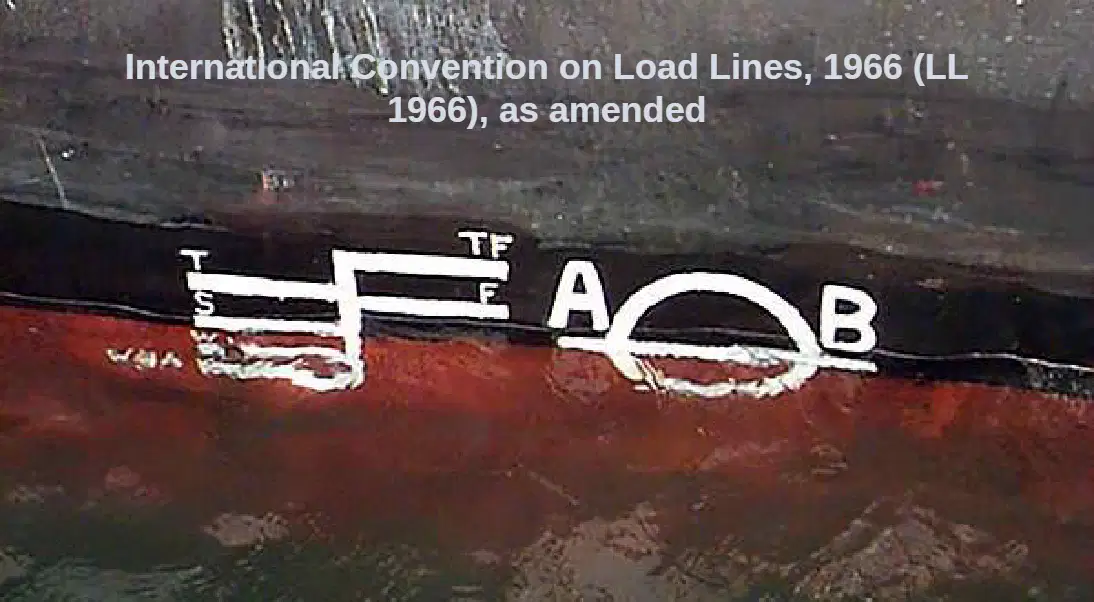
Which international instrument standardized modern load line practices in the twentieth century?
SOLAS Convention 1974, consolidated edition
International Convention on Load Lines 1966, as amended
MARPOL Annex I oil pollution prevention
UNCLOS 1982, Part XII on navigation
STCW 1978 training and certification rules
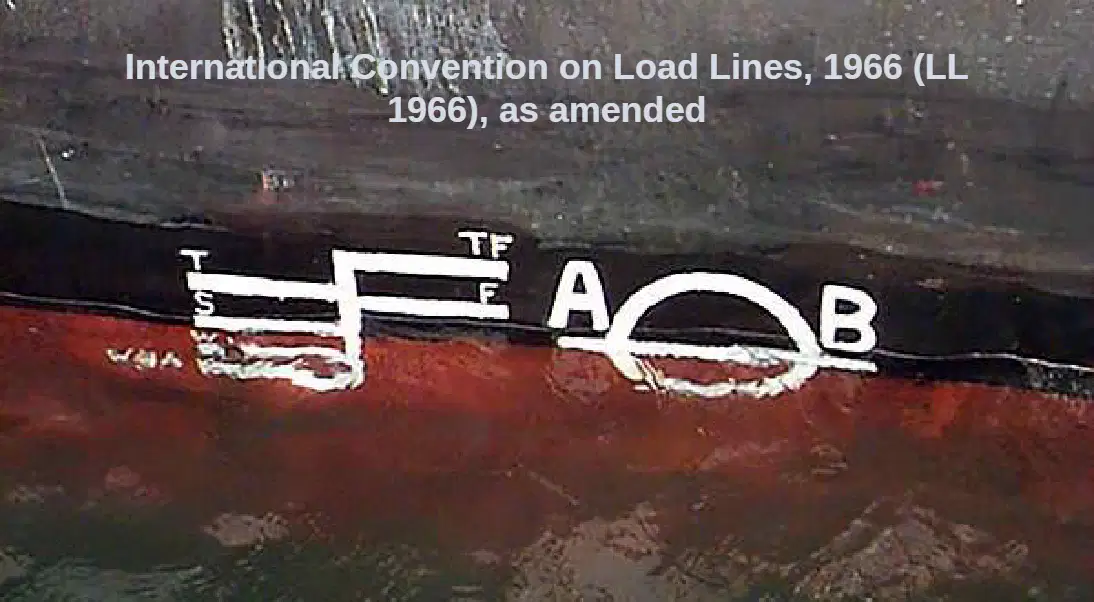
Why were Plimsoll marks historically introduced on ships trading from the United Kingdom?
To prevent vessel overloading and improve safety at sea
To reduce customs duties on exported cargoes
To increase average ship speed between ports
To standardize hull colors among shipowners
To optimize anchor handling during storms

Select all statements that correctly describe load lines.
They are marks punched into and painted on hull sides
They vary for freshwater and winter North Atlantic
They prescribe engine power for heavy weather routing
They show how low a ship may safely rest in water
They are required only on naval combatant vessels
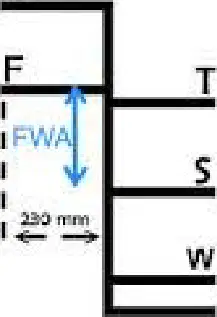
A vessel is preparing to load for a winter North Atlantic crossing. Which seasonal mark should not be submerged upon departure?
WNA mark indicating winter North Atlantic limit
TF mark indicating tropical fresh draft
F mark indicating freshwater summer draft
T mark indicating tropical seawater limit
S mark indicating summer seawater limit
Which outcome followed Samuel Plimsoll’s long campaign that culminated in 1876?
Abolition of private ship ownership across Britain
Creation of international load line conventions at IMO
Passage of the Merchant Shipping Act in Parliament
Introduction of diesel propulsion standards for ships
What authority did the Merchant Shipping Act grant regarding vessel overloading?
Power for the Department of Trade and Industry to inspect
Authority for insurers to set mandatory cargo limits
Exclusive rights for shipowners to self-certify loading
Responsibility transferred to port pilots for load lines
Which statement best describes Samuel Plimsoll’s later contributions to seafarer welfare?
He established a private classification society branch
He drafted the first SOLAS Convention articles
He founded the International Maritime Organization
He led the Sailors and Firemens Union as president
Which statement best describes the purpose of the 1988 Protocol to the 1966 Load Lines Convention?
To establish regional rules for inland waterways only
To harmonize survey and certification with SOLAS and MARPOL
To replace SOLAS chapters on ship construction entirely
To abolish international freeboard standards worldwide
Where and when was the 1966 International Convention on Load Lines signed, and when did it enter into force?
Geneva on 5 April 1966; 1 January 1967
Hamburg on 21 July 1968; 5 April 1970
London on 21 July 1968; 5 April 1970
London on 5 April 1966; 21 July 1968
Which items are correctly paired with the corresponding Annex I chapter of the Load Lines Convention?
Chapter III – Freeboards and associated tables
Chapter I – General provisions and definitions
Chapter V – Certification and radio communications
Chapter II – Conditions of assignment of freeboard
Chapter IV – Special requirements for timber freeboards
Annex II of the Load Lines Convention primarily addresses which subject?
Zones, areas and seasonal periods
Cargo handling and stowage procedures
Oil pollution prevention measures
Crew training and safe manning standards
Which document is issued under Annex III of the Load Lines Convention?
International Oil Pollution Certificate
International Tonnage Certificate
Safety Management Certificate
International Load Line Certificate
What was the main driver for revising the Load Lines Convention in 2003 following the 1988 Protocol?
Expansion of the Convention to fishing vessels only
Further alignment of survey and certification regimes
Removal of timber load line requirements entirely
Transfer of responsibilities to regional authorities
Which was the primary purpose of the 1988 Protocol to the Load Lines Convention?
Align survey and certification with SOLAS and MARPOL
Introduce new cargo port dimension standards worldwide
Replace all existing freeboard tables with unified ones
Mandate electronic certificates for flag administrations
Select all topics explicitly covered by the 2003 amendments’ technical regulations.
Intact stability and strength of ships
Positions of hatchways and ventilators
Ballast water exchange and treatment
Crew protection and safe passage means
When did the 1988 Protocol enter into force for the Load Lines Convention?
1 January 2005
3 February 2000
11 November 1988
23 November 1995
The 1995 amendments would enter into force 12 months after acceptance by what fraction of Contracting Governments?
Two-thirds of Contracting Governments
One-half of Contracting Governments
All Contracting Governments
Three-quarters of Contracting Governments
Which set of amendments superseded the 1995 amendments to the Load Lines Convention?
The 2010 code revision
The MARPOL Annex VI update
The 1988 Protocol
The 2003 amendments
Which of the following is NOT listed among areas addressed by the 2003 amendments?
Side scuttles, windows and skylights
Fuel sulfur limits for marine engines
Calculation of freeing ports and sheer
Minimum bow height and reserve buoyancy
Which document must a ship have before proceeding to sea on an international voyage under the Load Line Convention?
International Load Line Certificate or Exemption Certificate
Port State Control Inspection Acknowledgment
Classification society plan approval letter
Safety Management System compliance statement
Who is responsible for assigning a vessel’s loadline and issuing the corresponding certificate?
The classification society alone
The shipyard that built the vessel
The coastal State where it trades
The Marine Authority of the flag State
The load line survey must align with which regulatory framework?
ICLL 1966/1969, SOLAS 1988 Protocols, and MS(Survey and Certification) Regulations 2000
MARPOL Annex VI and Ballast Water Convention
STCW Code and ISM Code Part A
UNCLOS Articles on innocent passage and archipelagic routes
How are ships categorized when calculating freeboard and loadline position?
Type A vessels and Type B vessels
Open sea vessels and inland vessels
Short sea traders and ocean traders
Passenger vessels and cargo vessels
Which vessels are classified as Type A for load line assignment?
Vessels carrying mixed containerized cargoes
Vessels designed to carry only liquid bulk cargoes
Passenger ships with lifeboat enclosures
General cargo ships with tween decks
Which statement best describes Type B vessels for load line purposes?
Small vessels under 500 gross tonnage
Vessels certified under SOLAS passenger rules only
Only vessels carrying dry bulk cargoes exclusively
All other vessels not governed by the Type A definition
What is the validity period of a load line certificate, and what survey frequency maintains its conditions?
Indefinite validity with surveys on owner request
Valid five years with surveys every two years
Valid three years with biennial surveys
Valid five years with annual surveys required
Why do many vessels employ computer loading programs in cargo planning?
To determine cargo, ballast, and stores disposition with stability and stress data
To replace statutory surveys and class inspections entirely
To automate bridge navigation and collision avoidance tasks
To calculate crew wages and victualing budgets monthly
What are the standard dimensions of the deck line marking on a ship?
250 millimetres long and 30 millimetres broad
300 millimetres long and 25 millimetres broad
200 millimetres long and 25 millimetres broad
300 millimetres long and 50 millimetres broad
Where must the deck line be marked on a vessel?
Amidships on the port side only
Amidships on each side of the ship
At the bow on starboard side only
At the stern on both sides
Which document must indicate the location of the deck line?
Cargo Securing Manual
International Load Line Certificate
Safety Management Certificate
Tonnage Measurement Certificate
How is freeboard measured on a ship?
Vertically upwards at bow from freeboard deck to sheer line
Horizontally amidships from keel centerline to deck edge
Diagonally from stern to bow along the sheer strake
Vertically downwards amidships from deck line upper edge to related load line upper edge
Which statements correctly characterize the freeboard deck?
All side openings below it must have permanent watertight closing means
It is always the lowest continuous deck regardless of exposure
It must have permanent means of closing all openings in its weather part
It is normally the uppermost complete deck exposed to weather and sea
Which change would alter the assigned freeboard value if all else is constant?
Relocating the ship's name on the stern
Updating the cargo stowage plan only
Painting the deck line a different color
Raising the deck line marking higher relative to the hull
Which specification defines the outside diameter of the Load Line ring on a ship’s side?
300 millimetres outside diameter
250 millimetres outside diameter
300 millimetres inside diameter
350 millimetres outside diameter
What is the width of the Load Line ring and the intersecting horizontal line?
25 millimetres for ring only
30 millimetres for horizontal line
20 millimetres for both
25 millimetres for both
Where is the centre of the Load Line ring positioned relative to the deck line?
Aft at a vertical distance equal to winter freeboard above deck line
Amidships aligned with the lower edge of the deck line
Forward at a horizontal distance equal to assigned summer freeboard from deck line
Amidships at a vertical distance equal to assigned summer freeboard below upper edge of deck line
What length is specified for the horizontal line that passes through the centre of the Load Line ring?
400 millimetres in length
540 millimetres in length
230 millimetres in length
450 millimetres in length
Why were load line rules introduced for ships?
Because anchors interfered with freeboard measurements
To reduce shipbuilding steel consumption globally
To standardize paint colours used for load marks
Ships were being loaded so heavily that they were foundering
How is the vertical line associated with the load line mark specified and located?
20 millimetres in breadth, parallel to deck, 540 millimetres aft of ring centre
30 millimetres in breadth, at right angles, 230 millimetres forward of ring centre
25 millimetres in breadth, parallel to keel, 450 millimetres aft of ring centre
25 millimetres in breadth, at right angles, 540 millimetres forward of ring centre
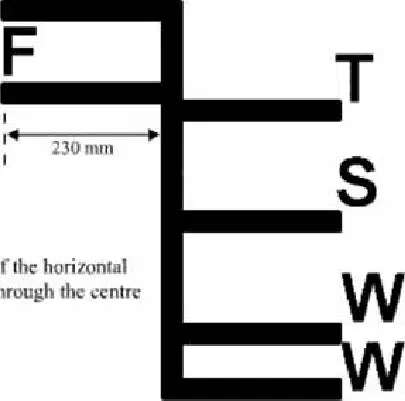
In the diagram of a ship’s load line marks, which pair correctly identifies the highest seasonal freeboard marks shown on the right-hand vertical?
F and T
T and S
W and WNA
TF and F
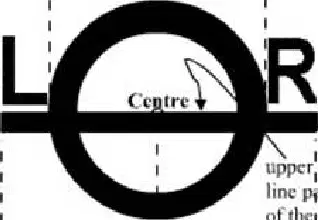
A surveyor must verify the horizontal distance from the deck line to the center of the Plimsoll circle. Based on the diagram, what dimension should be checked?
300 mm from deck line
230 mm from deck line
540 mm from deck line
450 mm from deck line
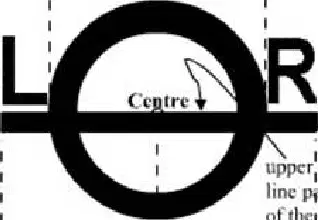
Which statement best describes the relationship between the diameter of the Plimsoll circle and the length of the horizontal line through its center in the diagram?
Both are 450 mm long
Circle diameter is 450 mm
Horizontal line length is 450 mm
Both are 540 mm long
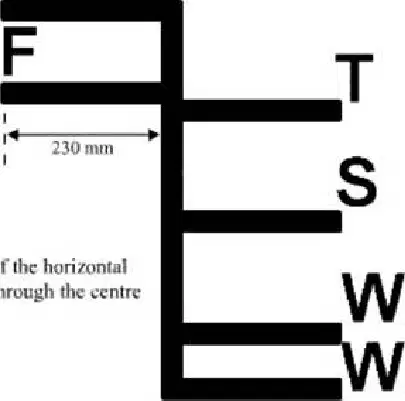
Multiple elements on the right-hand marks share a common offset dimension from the main vertical. Which elements and dimension are shown?
Deck line at 230 mm
W and WNA at 230 mm
T and S at 230 mm
TF and F at 230 mm
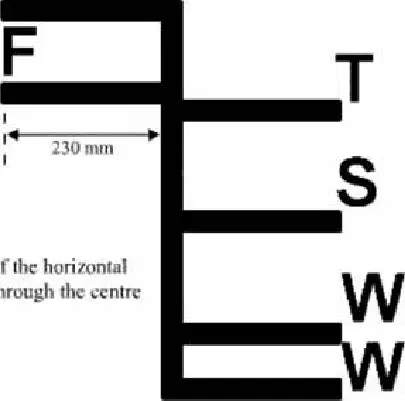
All strokes in the markings are specified to have the same thickness. What thickness must be used for every line?
30 mm thickness
20 mm thickness
22 mm thickness
25 mm thickness
Which abbreviation denotes the Winter North Atlantic Load Line on a vessel’s load line markings?
W
TF
F
WNA
T
What does the abbreviation TF indicate on a Plimsoll mark?
Tropical Fresh Water Load Line
Winter North Atlantic allowance
Winter Load Line in temperate seas
Tropical Load Line in salt water
Fresh Water Load Line in summer
Select all abbreviations that refer to fresh water conditions.
WNA
W
TF
T
F
The letter F on the load line grid most specifically represents which condition?
Fresh Water Load Line in winter
Fresh-tropical allowance at all seasons
Fresh water allowance in winter
Fresh Water Tropical allowance only
Fresh Water Load Line in summer
Which pair correctly matches each abbreviation with its meaning?
S – Summer Load Line; W – Winter Load Line
W – Tropical Load Line; S – Winter Load Line
T – Tropical Load Line; WNA – Winter North Atlantic
TF – Tropical Fresh Water; F – Fresh Water summer
WNA – Winter Load Line; T – Temperate Load Line
In practice, the difference between the Fresh Water Load Line in summer and the Summer Load Line primarily serves what purpose?
Allowance for ballast exchange in rivers
Allowance for tropical freeboard reduction
Allowance for seasonal hatch coaming height
Allowance for loading in fresh water at other lines
Allowance for icing in North Atlantic winter
Where may the mark of the Authority that assigns load lines be placed relative to the load line ring?
Alongside the ring near the horizontal line
Only below the ring and never above
On the bow away from the ring
Inside the ring replacing the center
How many initials are permitted to identify the Authority’s name in the mark of assigning authority?
Unlimited initials are acceptable
Not more than four initials allowed
At least three initials are required
Exactly five initials are required
What approximate dimensions should each initial of the Authority’s mark have?
75 mm high and 115 mm wide
115 mm high and 75 mm wide
100 mm high and 50 mm wide
150 mm high and 90 mm wide
Which statement best describes the horizontal line mentioned with the load line ring?
It passes through the centre of the ring
It replaces the ring entirely
It is drawn at the vessel’s keel
It is painted across the ship’s funnel
Select all correct placements for the Authority’s initials relative to the ring and horizontal line.
Inside the ring over the centerline
Alongside the ring above the horizontal line
Alongside the ring below the horizontal line
Both above and below the horizontal line
Which option violates the marking rule for identifying the assigning Authority?
Using six initials around the ring
Using four initials near the ring
Using three initials above the line
Using four initials below the line
Why are initials limited in number for the Authority’s mark?
To maintain clear identification and readability
To avoid interference with hull thickness
To satisfy paint supplier limitations
To comply with crew training routines
Which visibility practice aligns with the stated dimensions of the Authority’s initials?
Embossed lettering without paint for subtlety
Small stenciled lettering sized 30 mm by 10 mm
High-contrast lettering sized 115 mm by 75 mm
Camouflage lettering matching hull color exactly

