
Font size
 Worksheets
Transistors Worksheet Extraction
Total questions: 10
Worksheet time: 5mins
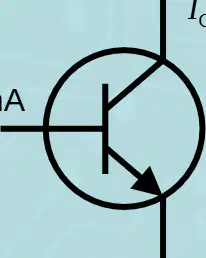
A transistor has Ic=150 mA and IB=0.75 mA . What is the forward current gain of this transistor?
150
100
200
250
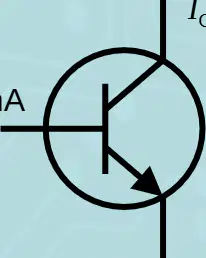
What is the forward current gain of this transistor?
150
100
200
250
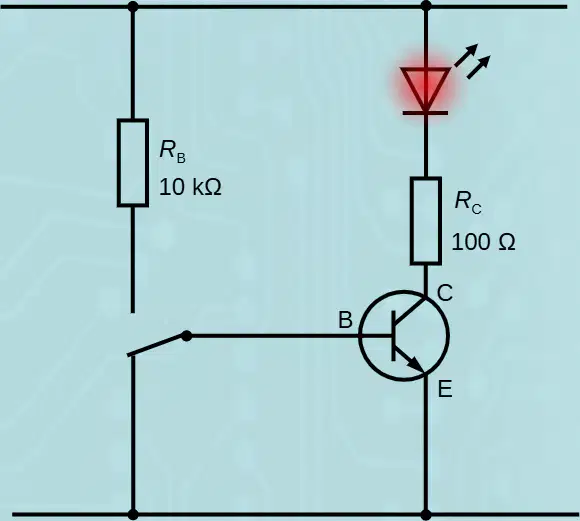
In the transistor switch circuit shown, the base is initially connected to the 0 V rail. According to the description, what operating mode is the transistor in at this initial condition?
Cut-off
Saturation
Active (forward-active)
Breakdown

When the switch in the circuit is moved so that a current flows into the base, what happens according to the description of the circuit’s operation?
The transistor enters saturation and the LED lights
The transistor remains in cut-off and the LED stays off
The transistor goes into breakdown and the LED burns out
The transistor operates in reverse-active and the LED blinks
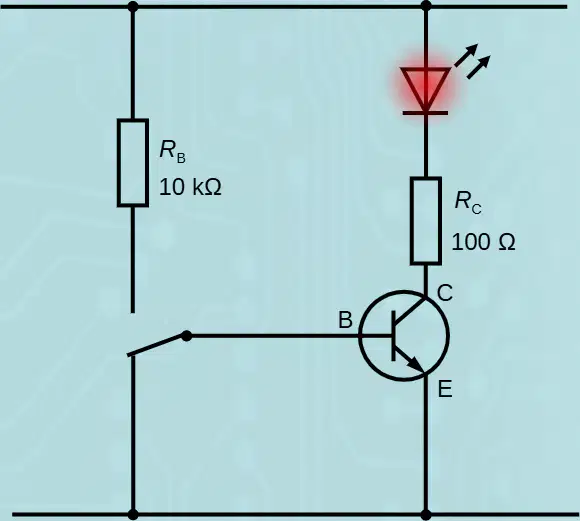
What is the stated purpose of choosing appropriate values for the two resistors in the transistor switch with an LED?
To limit currents and protect both the transistor and the diode
To maximize the LED brightness regardless of current
To ensure the base-emitter junction never conducts
To match the power supply’s internal resistance
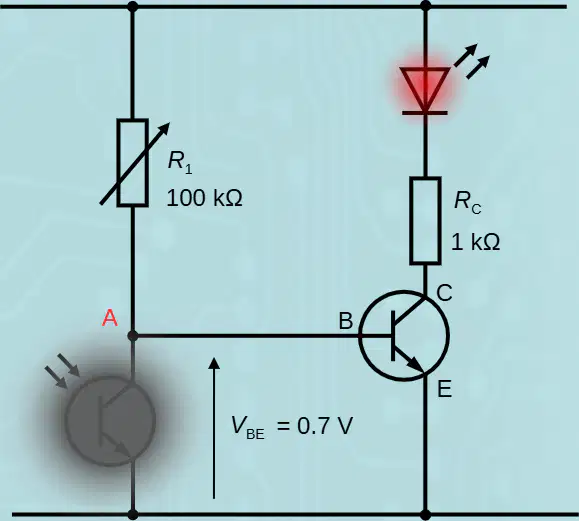
In the modified switch that includes a light sensor, what happens to the photodiode’s resistance when light levels fall?
It increases
It decreases
It remains constant
It becomes negative
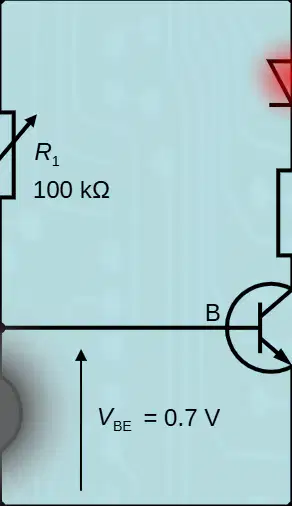
As the photodiode resistance increases in the light-sensitive switch, what is the described effect at point A and on the LED?
Voltage at A increases until the transistor activates and the LED lights
Voltage at A decreases, keeping the transistor off and the LED dark
Voltage at A oscillates, causing the LED to flicker
Voltage at A is clamped at 0 V and the LED cannot light
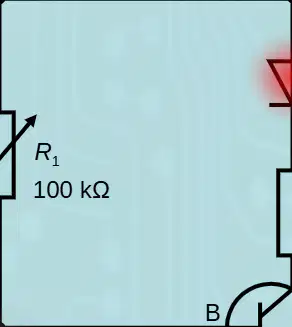
What adjustment does making R1 a variable resistor allow in the light-sensitive switch circuit?
Adjusting the sensitivity of the circuit
Increasing the LED’s forward voltage
Reversing the photodiode polarity
Eliminating the need for RC
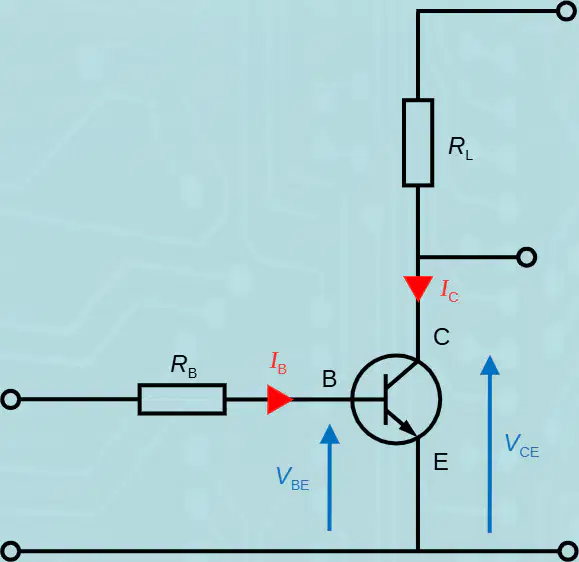
According to the basic transistor circuit description, which of the following quantities define transistor operation? Select all that apply.
VBE (base-to-emitter voltage)
VCE (collector-to-emitter voltage)
IB (base current)
IC (collector current)
VBC (base-to-collector voltage)
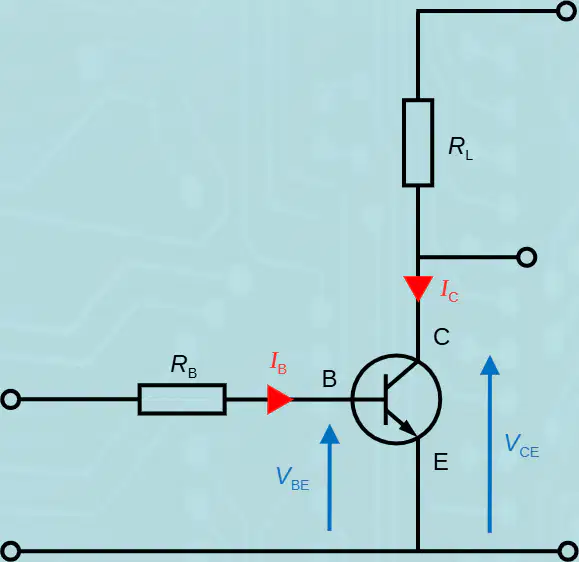
Match each named transistor characteristic to the variables it plots, as described.
Input characteristic
IB against VBE
Transfer characteristic
IC against IB
Output characteristic
IC against VCE

