

1st Grade Area Formulas Quizzes
Assess your Grade 1 understanding of area formulas with this interactive mathematics quiz designed to reinforce fundamental geometry concepts. Practice essential area calculation questions at your own pace while receiving instant feedback to strengthen your mathematical foundation.

17 questions
Formulas Shapes Area 2D Shapes

Quiz
•
1st Grade
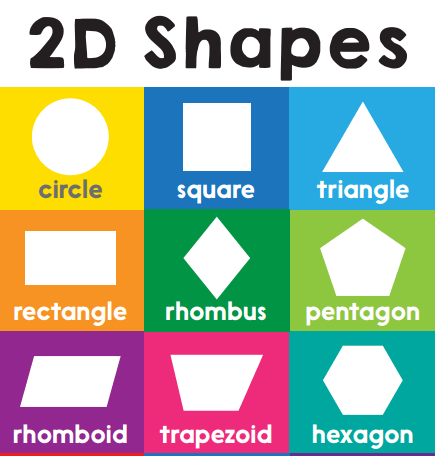
10 questions
Identify Shapes and Area Formulas 2D Shapes
Quiz
•
1st Grade
20 questions
Identify Shapes and Area Formulas 2D Shapes
Quiz
•
1st Grade

13 questions
Area of Squares and Rectangles
Quiz
•
1st - 5th Grade

20 questions
Area Formulas
Quiz
•
1st - 12th Grade
Explore 1st Grade Area Formulas Quizzes
Area formulas provide Grade 1 students with their first introduction to measuring two-dimensional space, establishing crucial foundational concepts for geometric understanding. Wayground's comprehensive collection of area formula quizzes offers young learners engaging practice questions that develop spatial reasoning and early measurement skills through interactive assessment activities. These carefully designed quizzes help students build understanding of basic area concepts using simple shapes and visual representations, providing immediate feedback that reinforces correct mathematical thinking. The practice questions focus on hands-on exploration of area through counting unit squares, comparing sizes of shapes, and recognizing that area represents the space inside a boundary, creating a solid foundation for more advanced geometric concepts in later grades. Wayground's extensive library contains millions of teacher-created area formula quizzes specifically designed for Grade 1 mathematics instruction, with robust search and filtering capabilities that help educators quickly locate resources aligned with their curriculum standards and learning objectives. The platform's differentiation tools allow teachers to customize quiz content and difficulty levels to meet diverse student needs, while flexible digital delivery formats enable seamless integration into classroom instruction, homework assignments, and assessment routines. These comprehensive features support educators in planning targeted geometry lessons, identifying students who need additional area concept remediation, and providing enrichment opportunities for advanced learners, while the immediate feedback mechanisms help reinforce proper understanding of spatial measurement concepts and strengthen students' confidence with fundamental geometric skills.
FAQs
How do I teach area to first-grade students?
Teach area as the amount of space a shape covers. Have students fill rectangles with equal-size tiles, check for gaps and overlaps, and compare the number of tiles before connecting the activity to unit-square pictures.
What exercises help first graders practice area?
Useful practice includes counting unit squares, comparing two tiled shapes, and drawing a shape that covers a given number of squares. Keep the focus on complete coverage rather than memorizing a formula.
What mistakes do first graders commonly make with area?
Students often count grid lines instead of squares or leave gaps while covering a shape. Some also compare shapes by height or length alone; matching each shape to equal-size tiles helps correct that shortcut.
How can I use these Grade 1 area quizzes?
The quizzes are available as printable PDFs and in digital formats, so teachers can assign paper practice or host the same work as a digital quiz on Wayground. Each quiz has a complete answer key; paper submissions can also be captured and graded through the Wayground for Teachers app.
How does Grade 1 area practice connect to Common Core math?
Common Core measurement work at this stage develops the idea that a surface can be covered with equal-size units. That foundation leads from comparing tiled regions to counting unit squares and, later, calculating rectangular area through multiplication.
How can I differentiate area quizzes for first graders?
Use larger text and wider spacing for students who have difficulty tracking rows of squares. For digital practice, Read Aloud can deliver directions while reduced answer choices can make comparison questions more manageable.
What area skills are appropriate for Grade 1?
First graders are ready to compare covered spaces, tile simple shapes, and count equal-size units. They are generally building the meaning of area, not expected to rely on length-times-width formulas.

Accessibility
Features
Wayground Super
School & District
Wayground for Business
Create a quiz
Create a presentation
Wayground AI
Subjects
Mathematics
Social Studies
Science
Physics
Chemistry
Biology
About
Our Story
Wayground Blog
Media Kit
Careers
Support
F.A.Q.
Help & Support
Privacy Policy
Terms of Service
Teacher Resources
2026 Wayground


Get our app

