
Resource Type


Subjects
7th Grade Arithmetic and Number Theory Quizzes
Test your Grade 7 Arithmetic and Number Theory skills with this comprehensive quiz designed to assess your understanding of fundamental mathematical concepts. Practice essential problem-solving techniques through targeted questions that provide instant feedback to strengthen your mathematical foundation.
Recommended topics for you

24 questions
Combine Like Terms & Distributive Property Practice

Quiz
•
7th Grade

15 questions
Solving Equations using the Distributive Property
Quiz
•
7th Grade

15 questions
Distributive property
Quiz
•
7th Grade

15 questions
Distributive Property, Combining Like Terms and Factoring
Quiz
•
7th Grade
19 questions
Add Linear Expressions Using Distributive Property
Quiz
•
7th Grade

20 questions
Distributive Property and Like Terms No Negatives
Quiz
•
7th Grade
12 questions
Combining Like Terms and Distributive Property
Quiz
•
7th Grade
17 questions
Distributive Property of Addition and Multiplication
Quiz
•
7th Grade
15 questions
Like Terms and Distributive Property
Quiz
•
7th Grade
21 questions
Combining Like Terms with Distributive Property
Quiz
•
7th Grade
12 questions
The Distributive Property
Quiz
•
7th Grade
12 questions
Math Distributive Property
Quiz
•
7th Grade
Explore 7th Grade Arithmetic and Number Theory Quizzes
Arithmetic and Number Theory forms the foundation of mathematical reasoning for Grade 7 students, encompassing essential concepts such as prime factorization, divisibility rules, greatest common factors, least common multiples, and properties of integers. These comprehensive quiz collections available through Wayground provide targeted assessment opportunities that strengthen students' computational fluency and conceptual understanding of number relationships. The practice questions systematically build proficiency in recognizing patterns within number systems, applying mathematical operations with integers, and solving problems involving rational numbers. Through immediate feedback and varied question formats, students develop confidence in manipulating numbers while deepening their appreciation for the logical structure underlying arithmetic operations and number theory principles. Wayground's extensive library contains millions of teacher-created arithmetic and number theory quiz resources specifically designed for Grade 7 mathematics instruction. The platform's robust search and filtering capabilities enable educators to quickly locate assessments aligned with curriculum standards and specific learning objectives, whether focusing on prime numbers, fraction operations, or integer arithmetic. Teachers can customize existing quizzes or create new assessments to support differentiated instruction, addressing individual student needs through targeted remediation or enrichment activities. The flexible digital delivery system accommodates various classroom environments and learning preferences, while detailed performance analytics help educators identify knowledge gaps and plan subsequent instruction that reinforces critical arithmetic and number theory skills essential for advanced mathematical study.
FAQs
How should I teach arithmetic and number theory in Grade 7?
Organize instruction around connections: prime factorization explains GCF and LCM, number lines clarify integer operations, and the distributive property links arithmetic to algebra. After modeling each connection, have students compare two solution methods and justify which is more efficient.
What exercises help seventh graders practice arithmetic and number theory?
Use integer computations, factor trees, divisibility tests, GCF and LCM applications, and problems that require expanding or factoring with the distributive property. Cube-root practice should include recognizing perfect cubes and checking an answer by cubing it.
What mistakes do Grade 7 students commonly make with number theory?
Common errors include treating negative signs as subtraction signs in every context, reversing integer-operation rules, and confusing GCF with LCM. Students may also assume that the cube root of a sum equals the sum of the cube roots or distribute a factor to only the first term in parentheses.
How can I assign a Grade 7 arithmetic and number theory quiz on Wayground?
Host it as a digital quiz on Wayground or download the printable PDF for paper-and-pencil work. Each quiz has a complete answer key; teachers choosing paper can grade captured or scanned submissions with the Wayground for Teachers app.
How does Grade 7 arithmetic and number theory follow the Common Core progression?
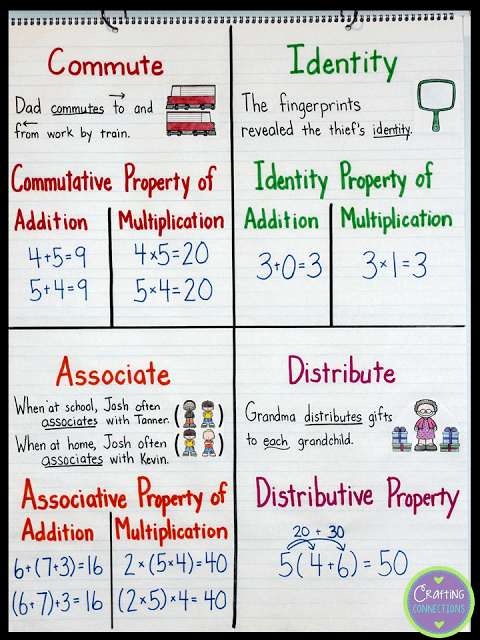
Common Core mathematics expects students to extend arithmetic from whole numbers to rational numbers and use operation properties to rewrite expressions. Work with the distributive property advances from numerical examples to forms such as 3(2x − 5), preparing students to solve equations and simplify expressions.
How can I differentiate Grade 7 arithmetic and number theory quizzes?
For students who lose track of signs or multi-step work, provide wider font spacing and extended time. Read Aloud can support students who understand the mathematics but need help accessing word problems, while classmates continue with the default settings.
What grade do students learn cube roots and advanced integer operations?
Integer operations are commonly developed across Grades 6–7, with Grade 7 emphasizing fluent use in rational-number problems. Cube roots are often introduced through perfect cubes in middle school and become more important when students study irrational numbers in Grade 8.

Accessibility
Features
Wayground Super
School & District
Wayground for Business
Create a quiz
Create a presentation
Wayground AI
Subjects
Mathematics
Social Studies
Science
Physics
Chemistry
Biology
About
Our Story
Wayground Blog
Media Kit
Careers
Support
F.A.Q.
Help & Support
Privacy Policy
Terms of Service
Teacher Resources
2026 Wayground


Get our app

