
Resource Type


Subjects
5th Grade Arrays: Rows and Columns Quizzes
Test your Grade 5 understanding of arrays with rows and columns through interactive practice questions designed to assess your multiplication skills. This self-paced quiz provides instant feedback to help you master organizing objects in rectangular arrangements and connecting them to multiplication facts.

15 questions
Arrays with Place Value Block: Multiply

Quiz
•
5th Grade

8 questions
Intro to Arrays
Quiz
•
4th - 5th Grade

12 questions
Arrays (ROWS AND COLUMNS)
Quiz
•
3rd - 5th Grade

12 questions
Multiplication (Arrays, fact families and facts)
Quiz
•
3rd - 5th Grade
20 questions
Division Equal Groups and Arrays
Quiz
•
3rd Grade

11 questions
Draw Rectangular Arrays
Quiz
•
2nd Grade
20 questions
Digit by Digit Multiplication Using Arrays
Quiz
•
4th Grade
15 questions
Math Arrays Multiplication
Quiz
•
3rd Grade
15 questions
Multiplying with Arrays
Quiz
•
4th Grade
20 questions
Arrays and Multiplication
Quiz
•
3rd Grade
20 questions
Array and Groups Division Multiplication
Quiz
•
3rd Grade
20 questions
Distributive Property with Arrays
Quiz
•
3rd Grade
Explore 5th Grade Arrays: Rows and Columns Quizzes
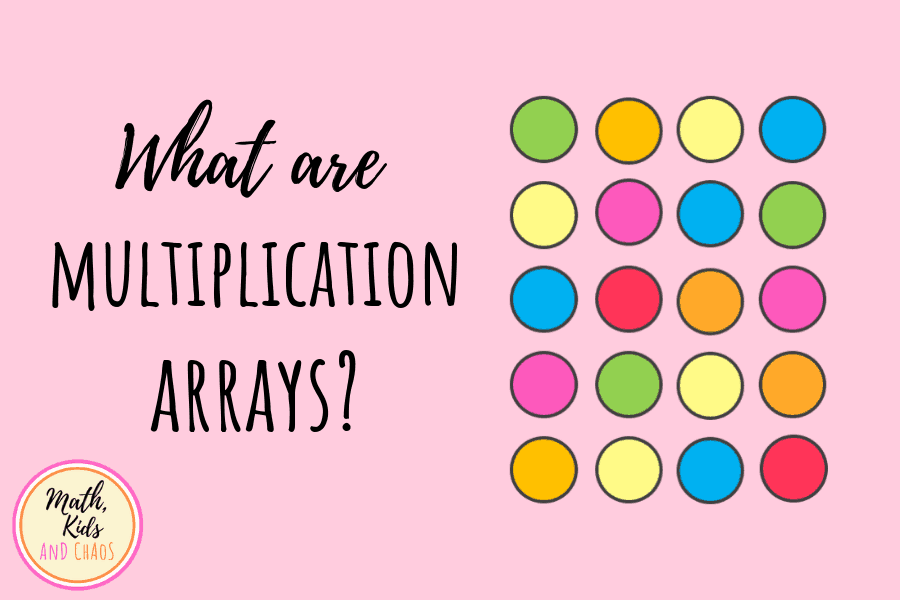
Arrays: Rows and Columns for Grade 5 represents a foundational mathematical concept that bridges visual representation with multiplication understanding. Wayground's comprehensive quiz collection provides targeted assessment opportunities that help students master the relationship between organized arrangements and mathematical operations. These practice questions systematically develop students' ability to identify, count, and calculate using rectangular arrangements of objects, fostering deeper understanding of how multiplication connects to real-world organizational patterns. The interactive feedback mechanisms guide learners through the process of recognizing rows and columns as equal groups, while reinforcing the commutative property of multiplication through visual and numerical representation. Wayground's extensive library of teacher-created resources offers educators powerful tools to customize array-based multiplication instruction for diverse learning needs. The platform's robust search and filtering capabilities enable teachers to locate standards-aligned quiz materials that specifically target Grade 5 multiplication benchmarks while supporting differentiated instruction through adjustable difficulty levels and varied question formats. Digital delivery formats provide immediate scoring and detailed performance analytics, allowing educators to identify knowledge gaps and plan targeted remediation strategies. These versatile assessment tools seamlessly integrate into lesson planning workflows, supporting both formative evaluation during initial concept introduction and summative assessment following skill consolidation, while offering enrichment opportunities for advanced learners ready to explore more complex array applications.
FAQs
How do I teach rows and columns in an array to fifth graders?
Begin with a physical or drawn rectangular arrangement. Have students count the rows and the objects in each row, then connect the model to an equation such as 4 rows × 6 columns = 24. Rotate the array to show why 4 × 6 and 6 × 4 have the same product.
What exercises help Grade 5 students practice multiplication with arrays?
Use tasks that ask students to label rows and columns, write a multiplication equation for a given array, and draw an array for a stated product. Missing-dimension problems, such as finding the number of columns when 5 rows contain 35 objects, also build division and factor reasoning.
What mistakes do students make when reading arrays?
Students often reverse rows and columns, count individual objects inaccurately, or add the two dimensions instead of multiplying them. Ask students to trace one complete row and one complete column before writing the equation, then verify the product by skip-counting.
How can I use these arrays quizzes in my classroom?
Assign a quiz as a digital quiz on Wayground or download the printable PDF for paper practice. Every quiz includes a complete answer key, and teachers can scan or capture completed paper submissions for grading with the Wayground for Teachers app.
How do arrays fit into the Common Core math progression?
Arrays build from earlier work with equal groups and basic multiplication facts. In Grade 5, they can support Common Core work with multi-digit multiplication by helping students decompose larger rectangles into smaller partial products, a bridge from visual models to the standard algorithm.
How can I differentiate array practice for a mixed-ability class?
Give students who struggle with dense visuals a version with wider font spacing or larger text, and use reduced answer choices in digital sessions when identifying the correct array equation. Students ready for enrichment can solve missing-dimension problems or create multiple arrays for the same product.
What grade level are rows-and-columns arrays taught at?
Arrays are introduced in the elementary grades as models for equal groups and multiplication. These Grade 5 quizzes revisit the model to strengthen factor relationships, division, and the transition to multi-digit multiplication strategies.

Accessibility
Features
Wayground Super
School & District
Wayground for Business
Create a quiz
Create a presentation
Wayground AI
Subjects
Mathematics
Social Studies
Science
Physics
Chemistry
Biology
About
Our Story
Wayground Blog
Media Kit
Careers
Support
F.A.Q.
Help & Support
Privacy Policy
Terms of Service
Teacher Resources
2026 Wayground


Get our app

