
Resource Type


Subjects
- Resource Library
- Math
- Multiplication
- Properties of Multiplication
- Associative Property of Multiplication
5th Grade Associative Property of Multiplication Quizzes
Test your Grade 5 understanding of the Associative Property of Multiplication with this interactive quiz featuring practice questions and instant feedback. Assess your knowledge of how grouping factors in different ways doesn't change the product through self-paced mathematical problems.

20 questions
Associative Property of Multiplication

Quiz
•
3rd Grade

15 questions
Associative Property of Multiplication
Quiz
•
3rd Grade

12 questions
Associative Property of Multiplication
Quiz
•
3rd Grade

12 questions
Associative Property of Multiplication
Quiz
•
1st - 5th Grade
20 questions
The Associative Property of Multiplication
Quiz
•
3rd Grade

12 questions
The Associative Property of Multiplication
Quiz
•
3rd Grade
20 questions
Associative Property of Multiplication
Quiz
•
3rd - 5th Grade
10 questions
Properties of Addition and Multiplication
Quiz
•
5th Grade
15 questions
Commutative and Associative Property of Multiplication
Quiz
•
5th Grade
13 questions
Distributive Property of Multiplication
Quiz
•
4th Grade
21 questions
Volume & Surface Area of Prisms
Quiz
•
5th - 7th Grade
15 questions
Commutative Property
Quiz
•
5th Grade
Explore 5th Grade Associative Property of Multiplication Quizzes
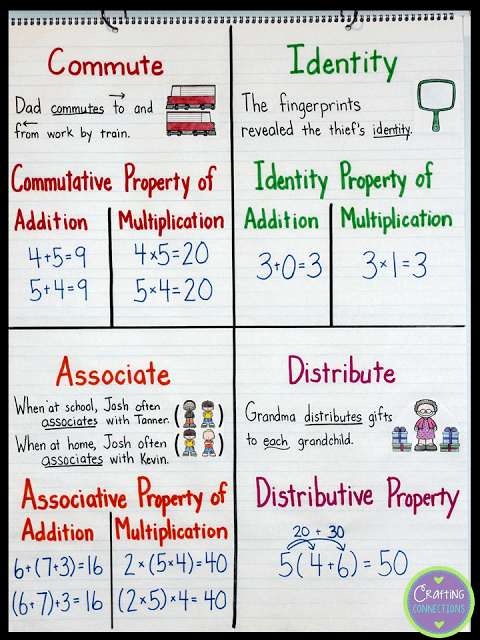
The Associative Property of Multiplication forms a cornerstone of mathematical understanding for Grade 5 students, establishing that the grouping of factors does not affect the final product in multiplication problems. Wayground's comprehensive quiz collection provides targeted assessment opportunities that help students master this fundamental concept through carefully designed practice questions that test their understanding of how (a × b) × c equals a × (b × c). These interactive quizzes offer immediate feedback to reinforce learning, allowing students to develop confidence in recognizing and applying the associative property across various numerical contexts, from simple whole number calculations to more complex multi-step problems that require strategic grouping for efficient computation. Wayground supports mathematics educators with millions of teacher-created quiz resources specifically designed to address Grade 5 multiplication concepts, including extensive coverage of the associative property through searchable, standards-aligned materials. Teachers can leverage robust filtering tools to locate quizzes that match their specific instructional needs, then customize content difficulty and question types to accommodate diverse learning levels within their classrooms. The platform's flexible digital delivery system enables seamless integration into both synchronous and asynchronous learning environments, while differentiation features allow educators to provide targeted remediation for struggling students and enrichment opportunities for advanced learners. These comprehensive tools support effective lesson planning and ongoing skill reinforcement, ensuring that students develop solid foundational understanding of multiplication properties essential for future mathematical success.
FAQs
How do I teach the associative property of multiplication in Grade 5?
Move beyond memorizing the rule and ask students to use regrouping as a calculation choice. For instance, in 8 × (25 × 6), students can regroup 8 × 25 first, then multiply 200 × 6. Follow with variables and word problems so they recognize the same structure in less familiar forms.
What exercises help fifth graders practice the associative property?
Mix three formats: rewriting expressions with different grouping, completing missing values in equivalent equations, and explaining why a chosen grouping simplifies a product. Word problems can then test whether students recognize when regrouping is useful rather than explicitly naming the property.
What errors do Grade 5 students make with the associative property?
A common error is treating parentheses as permission to rearrange or alter factors. Students may also regroup addition and multiplication within the same expression without respecting the operation signs. Have them label the operation being associated before rewriting anything.
How can I use this Grade 5 associative property quiz?
The quiz can be hosted as a digital quiz on Wayground or printed from a PDF for independent practice, homework, or a small-group lesson. Each quiz has a complete answer key, and the Wayground for Teachers app can scan and grade completed paper work.
How does the associative property support the Grade 5 Common Core progression?
Common Core builds on earlier work with multiplication properties as students handle more complex numerical expressions and prepare for algebra. In Grade 5, regrouping factors supports efficient whole-number and decimal calculations before students begin formal work with equivalent algebraic expressions.
How can I differentiate associative property practice for fifth graders?
Use wider spacing or a dyslexia-friendly font for students who find dense expressions difficult to track. In digital sessions, extended time can help students calculate and compare both groupings without rushing; enrichment students can work with variables or create their own equivalent expressions.
Why is the associative property still taught in Grade 5?
Grade 5 students use the property in more complex settings than simple multiplication facts, including variables, word problems, and multi-step calculations. This deepens the connection between arithmetic regrouping and later algebraic manipulation.

Accessibility
Features
Wayground Super
School & District
Wayground for Business
Create a quiz
Create a presentation
Wayground AI
Subjects
Mathematics
Social Studies
Science
Physics
Chemistry
Biology
About
Our Story
Wayground Blog
Media Kit
Careers
Support
F.A.Q.
Help & Support
Privacy Policy
Terms of Service
Teacher Resources
2026 Wayground


Get our app

