


8th Grade Cell Analogy Quizzes
Test your understanding of cell analogies with this comprehensive Grade 8 biology quiz featuring practice questions and instant feedback. Assess your knowledge of how cell organelles compare to familiar objects and systems through self-paced questions designed to reinforce key cellular concepts.

17 questions
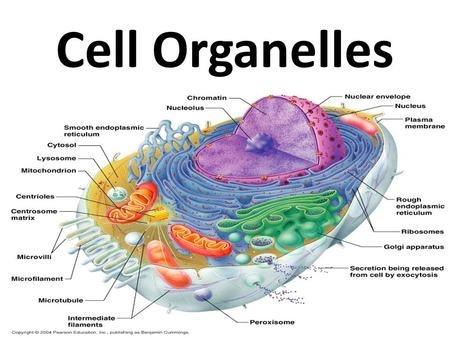
Cell Organelles

Quiz
•
8th Grade

15 questions
Cell Organelles
Quiz
•
8th Grade

10 questions
Cell Review
Quiz
•
8th Grade

29 questions
REVIEW: Cells
Quiz
•
8th Grade
36 questions
Cell Organelles and Their Functions
Quiz
•
6th - 8th Grade

13 questions
Cell Types & Organelles
Quiz
•
6th - 8th Grade
23 questions
Prokaryotic and Eukaryotic Cell
Quiz
•
6th - 8th Grade
25 questions
Cell Theory and Parts of Cells Practice Quiz
Quiz
•
6th - 8th Grade
19 questions
Plant and Animals Cells
Quiz
•
6th - 8th Grade
20 questions
Cell Organelle and Functions
Quiz
•
6th - 8th Grade
12 questions
Cell organelle project
Quiz
•
5th - 8th Grade
25 questions
Cell Analogy
Quiz
•
6th Grade
Explore 8th Grade Cell Analogy Quizzes
Cell analogy activities provide Grade 8 students with an innovative approach to understanding complex cellular structures and their functions through relatable comparisons. These assessment resources available through Wayground help students master the fundamental concept that cells operate like miniature cities or factories, where each organelle has a specific role similar to departments in a business or rooms in a house. The practice questions guide learners to identify parallels between cellular components and everyday objects, such as comparing the nucleus to a control center or the mitochondria to a power plant. This assessment methodology develops critical thinking skills while providing immediate feedback that reinforces understanding of how organelles work together to maintain cellular life processes. Wayground supports educators with millions of teacher-created quiz resources specifically designed for cell analogy instruction at the Grade 8 level. The platform's robust search and filtering capabilities enable teachers to locate assessments that align with state science standards while offering extensive customization tools to differentiate instruction based on individual student needs. These digital-first quiz formats can be deployed for formative assessment during initial concept introduction, summative evaluation following instruction, or as remediation tools for students requiring additional practice with cellular structure identification and function comparison. Teachers utilize these resources for skill reinforcement activities that help students transition from concrete analogical thinking to abstract understanding of cellular biology, supporting both enrichment opportunities for advanced learners and targeted intervention for students needing additional scaffolding in biological concept comprehension.
FAQs
How do I teach cell analogies to my students?
Teaching cell analogies works best when students first have a solid understanding of each organelle's function before attempting comparisons. Start by modeling one analogy together as a class — for example, comparing the nucleus to a city hall because both serve as the control center — then have students generate their own comparisons for remaining organelles. Encouraging students to justify why their chosen analogy works, not just name it, deepens conceptual understanding and builds critical thinking skills.
What exercises help students practice cell analogies?
Effective practice exercises ask students to do more than match organelles to objects — they should require written explanations of the functional similarities between each organelle and its analogy. Quizzes that prompt students to compare a cell to a real-world system, such as a city, school, or factory, and then explain the role each organelle plays within that system reinforce how cellular components work together as an integrated whole. Requiring students to justify their analogical reasoning is what separates meaningful practice from surface-level matching.
What common mistakes do students make when creating cell analogies?
The most frequent mistake is choosing analogies based on physical appearance rather than function — for example, comparing the cell membrane to a wall because both are boundaries, without addressing the membrane's selective permeability. Students also commonly confuse the roles of the nucleus and the cell membrane, or conflate the functions of mitochondria and chloroplasts when working with plant cells. Asking students to explicitly state what each organelle does before selecting an analogy helps prevent these errors.
How can I differentiate cell analogy quizzes for students at different ability levels?
For struggling learners, providing a word bank of organelles and a partially completed analogy chart reduces cognitive load while still requiring students to make functional connections. Advanced students benefit from open-ended prompts that ask them to design an entirely original analogy system and defend each comparison in writing. On Wayground, teachers can apply accommodations such as reduced answer choices, read aloud support, and extended time to individual students, so differentiation can be managed at the student level without disrupting the rest of the class.
How do I use Wayground's cell analogy quizzes in my classroom?
Wayground's cell analogy quizzes are available as printable PDFs for traditional classroom use and in digital formats for technology-integrated learning environments, giving teachers flexibility depending on their setup. Teachers can also host the quizzes as a quiz directly on Wayground, making it easy to assign, track, and review student responses. Each quiz includes a complete answer key, so teachers can use them for guided instruction, independent practice, or formative assessment without additional preparation.

Accessibility
Features
Wayground Super
School & District
Wayground for Business
Create a quiz
Create a presentation
Wayground AI
Subjects
Mathematics
Social Studies
Science
Physics
Chemistry
Biology
About
Our Story
Wayground Blog
Media Kit
Careers
Support
F.A.Q.
Help & Support
Privacy Policy
Terms of Service
Teacher Resources
2026 Wayground


Get our app

