


12th Grade Community & Cultures Quizzes
Test your Grade 12 understanding of Community & Cultures with this comprehensive social studies quiz designed to assess your knowledge through practice questions. Get instant feedback on key concepts while exploring cultural diversity, community structures, and social dynamics at your own pace.
Recommended topics for you

15 questions
Travel and Tourism Unit 1 spec

Quiz
•
12th Grade

10 questions
Cesar Chavez: A Legacy of Change
Quiz
•
12th Grade
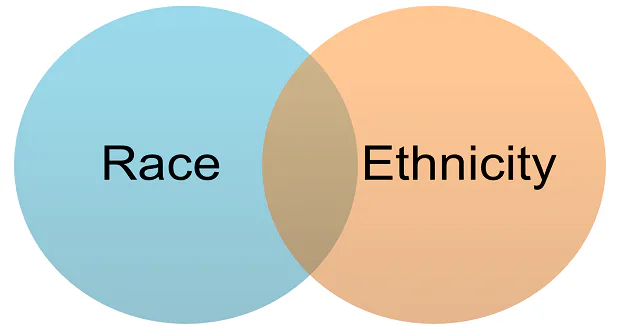
23 questions
Sociology: What is Race and Ethnicity
Quiz
•
12th Grade
51 questions
Sociology - Race and Ethnicity
Quiz
•
12th Grade

20 questions
Race and ethnicity
Quiz
•
12th Grade

15 questions
Christianity Review Live Quizizz
Quiz
•
12th Grade
5 questions
Cesar Chavez
Quiz
•
12th Grade
15 questions
Understanding Race and Ethnicity
Quiz
•
12th Grade
11 questions
Social and Community Studies Revision
Quiz
•
12th Grade
11 questions
Crash Course 34 Race and ethnicity
Quiz
•
12th Grade
18 questions
Lesson 1 and 2 Culture
Quiz
•
12th Grade
14 questions
The Counter Reformation
Quiz
•
12th Grade
Explore 12th Grade Community & Cultures Quizzes
Community & Cultures quizzes for Grade 12 provide comprehensive assessment tools that explore the complex relationships between societies, their traditions, and cultural practices across diverse global contexts. These Grade 12 Social Studies quizzes available through Wayground offer rigorous practice questions that challenge students to demonstrate understanding of cultural diversity, community structures, social institutions, and the dynamic interactions between different cultural groups. Students receive immediate feedback on their responses, enabling them to assess their comprehension of how communities form, evolve, and maintain their distinct cultural identities while navigating globalization and intercultural exchange. Wayground supports educators with millions of teacher-created Community & Cultures quiz resources that can be easily searched and filtered to match specific Grade 12 Social Studies curriculum requirements and learning objectives. The platform's robust standards alignment ensures that quiz content corresponds with academic benchmarks, while differentiation tools allow teachers to customize question difficulty and focus areas to accommodate diverse learning needs within their classrooms. These digital-first quiz collections offer flexible delivery formats that support both synchronous and asynchronous learning environments, making them invaluable for lesson planning, targeted remediation of cultural literacy gaps, enrichment activities for advanced learners, and systematic reinforcement of critical thinking skills related to community dynamics and cultural analysis.
FAQs
How do I teach community and cultures to elementary and middle school students?
Teaching community and cultures effectively starts with grounding students in what they know — their own family structures, local helpers, and familiar traditions — before expanding outward to global cultural practices. From there, teachers can use comparative activities that ask students to identify similarities and differences across communities, examine how geography shapes daily life, and explore how cultural celebrations reflect shared values. Pairing primary sources like images, maps, and interviews with structured quizzes helps students build analytical habits alongside cultural awareness.
What topics should a community and cultures unit cover?
A well-rounded community and cultures unit typically covers family structures and roles, community helpers and occupations, cultural celebrations and holidays, religious traditions, social constructs of race and ethnicity, and the relationship between geography and community development. Depending on grade level, units may also include diversity, indigenous traditions, immigrant experiences, and global civic concepts like peace studies and support systems. Covering both local and global perspectives helps students understand that communities are shaped by history, geography, and shared belief systems.
What quizzes help students practice cultural awareness and community concepts?
Quizzes that ask students to compare cultural celebrations, analyze family structures, label community helpers, or map local and global traditions are particularly effective for building cultural awareness. Activities like family tree diagrams, holiday comparison charts, and biography studies of figures such as Cesar Chavez or Mae Jemison give students concrete entry points into abstract social concepts. Practice problems that require students to connect geography, tradition, and community roles help reinforce the analytical thinking this subject demands.
What misconceptions do students commonly have about other cultures and communities?
A common misconception is that cultures are monolithic — students often assume that everyone within a cultural or religious group shares identical beliefs and practices. Another frequent error is conflating race, ethnicity, and nationality as interchangeable terms, when each refers to distinct social constructs. Students also tend to view their own community's norms as universal defaults, which is why intentional instruction on diversity, intersectionality, and social constructs of race and ethnicity is essential before students analyze unfamiliar communities.
How can I use community and cultures quizzes in my classroom?
Community and cultures quizzes on Wayground are available as printable PDFs for traditional classroom use and in digital formats for technology-integrated learning environments, which means they work equally well as take-home assignments, in-class activities, or self-paced digital tasks. Teachers can also host quizzes as interactive quizzes directly on Wayground, allowing for immediate feedback and engagement tracking. Answer keys are included with each quiz, supporting both independent student work and teacher-led review sessions.
How do I differentiate community and cultures instruction for diverse learners?
For students who need additional support, scaffolded quizzes that break complex cultural comparisons into step-by-step tasks help reduce cognitive overload. On Wayground, teachers can apply individual accommodations such as read aloud, extended time, and reduced answer choices to specific students without disrupting the rest of the class. Advanced learners can be challenged with enrichment activities that ask them to analyze cultural interactions, examine intersectionality, or research community structures across multiple societies.

Accessibility
Features
Wayground Super
School & District
Wayground for Business
Create a quiz
Create a presentation
Wayground AI
Subjects
Mathematics
Social Studies
Science
Physics
Chemistry
Biology
About
Our Story
Wayground Blog
Media Kit
Careers
Support
F.A.Q.
Help & Support
Privacy Policy
Terms of Service
Teacher Resources
2026 Wayground


Get our app

