


1st Grade Community Helpers Quizzes
Assess your Grade 1 students' understanding of community helpers with this interactive quiz featuring practice questions and instant feedback. Help young learners identify different community workers and their important roles through engaging, self-paced assessment activities.

10 questions
Community Helpers

Quiz
•
1st Grade

10 questions
Community Helpers
Quiz
•
1st Grade

11 questions
community helpers
Quiz
•
1st Grade

11 questions
Community Helpers
Quiz
•
1st Grade
15 questions
Community Helpers
Quiz
•
1st Grade

11 questions
Community Helpers
Quiz
•
1st Grade
5 questions
Community Helpers Quiz: The Pastor
Quiz
•
1st Grade
18 questions
Neighborhood Helpers
Quiz
•
1st Grade
23 questions
Community Helpers
Quiz
•
1st - 2nd Grade
20 questions
Community helpers
Quiz
•
1st - 2nd Grade
44 questions
Community helpers
Quiz
•
KG - 1st Grade
10 questions
Community Helpers
Quiz
•
KG - 1st Grade
Explore 1st Grade Community Helpers Quizzes
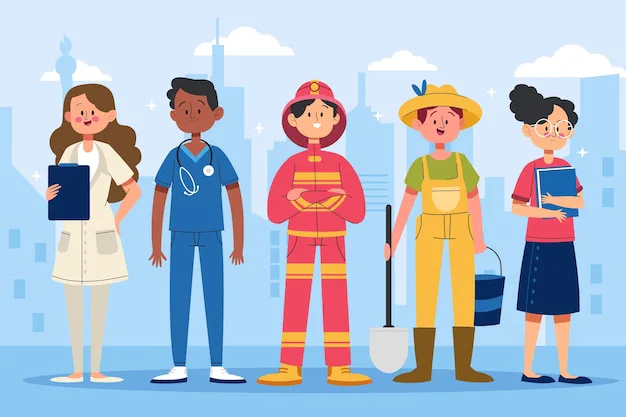
Community Helpers assessment resources for Grade 1 students provide comprehensive practice questions designed to build foundational understanding of the essential workers who serve our neighborhoods and towns. These interactive quizzes guide young learners through identifying different community helpers, understanding their roles and responsibilities, and recognizing the tools and locations associated with various professions such as firefighters, police officers, teachers, doctors, and mail carriers. Through engaging practice questions and immediate feedback, students develop critical thinking skills while strengthening their awareness of how community members work together to create safe, functioning societies. The assessment format encourages active participation and helps educators evaluate student comprehension of these important social concepts. Wayground's extensive collection of teacher-created Community Helpers quizzes offers educators access to millions of professionally developed resources with robust search and filtering capabilities to locate grade-appropriate content aligned with curriculum standards. The platform's differentiation tools enable teachers to customize quiz difficulty, question types, and delivery formats to meet diverse learning needs within Grade 1 classrooms. Digital delivery options support interactive learning experiences while maintaining flexibility for various instructional settings, allowing educators to seamlessly integrate these assessments into lesson planning, skill reinforcement activities, and targeted remediation efforts. These comprehensive quiz collections support both formative and summative assessment practices, enabling teachers to track student progress in understanding community roles while providing enrichment opportunities for advanced learners.
FAQs
How do I teach community helpers to young students?
Teaching community helpers works best when instruction connects abstract roles to students' real-world experiences. Start by introducing a few helpers at a time, using visuals of uniforms, tools, and workplaces to build recognition. Role-play activities, read-alouds about specific professions, and sorting tasks that match helpers to their responsibilities help students internalize the concept that communities depend on people working different jobs together.
What kinds of exercises help students practice identifying community helpers?
Effective practice exercises include matching community helpers to their tools or uniforms, fill-in-the-blank vocabulary activities using job-related words, and picture identification tasks where students name the helper based on visual context clues. Sorting activities that group helpers by where they work, such as hospitals, schools, or fire stations, also reinforce categorization skills while deepening understanding of each role's function.
What misconceptions do students commonly have about community helpers?
A common misconception is that community helpers are limited to highly visible roles like firefighters and police officers, causing students to overlook equally essential workers such as sanitation workers, postal carriers, and librarians. Students also sometimes confuse the tools or responsibilities of similar roles, for example mixing up what a nurse does versus a doctor. Quizzes that require students to match helpers specifically to their duties and equipment help address both of these error patterns directly.
How can I use community helpers quizzes to build vocabulary?
Community helpers quizzes build vocabulary by exposing students to profession-specific words tied to concrete, familiar contexts. Activities that ask students to label a firefighter's gear, complete sentences about a teacher's responsibilities, or read short passages about a mail carrier all reinforce new terms in meaningful ways. Repeated exposure through varied exercise formats, rather than isolated word lists, is what makes vocabulary instruction in this topic stick for early learners.
How do I use Wayground's community helpers quizzes in my classroom?
Wayground's community helpers quizzes are available as printable PDFs for traditional classroom use and in digital formats for technology-integrated or remote learning environments. Teachers can also host the content as an interactive quiz directly on Wayground, giving students immediate feedback as they work through identifying helpers, matching tools, and practicing related vocabulary. For students who need additional support, Wayground's accommodation settings allow teachers to enable features such as read aloud and reduced answer choices on an individual basis, so every learner can access the material at their level.
How do community helpers quizzes connect to civic education?
Community helpers quizzes lay an early foundation for civic education by helping students recognize that a functioning community depends on cooperation between many different professional roles. When students identify who keeps their neighborhood safe, healthy, and organized, they begin developing an understanding of civic responsibility and interdependence. This makes community helpers an ideal entry point for broader social studies conversations about how societies are structured and why each person's contribution matters.

Accessibility
Features
Wayground Super
School & District
Wayground for Business
Create a quiz
Create a presentation
Wayground AI
Subjects
Mathematics
Social Studies
Science
Physics
Chemistry
Biology
About
Our Story
Wayground Blog
Media Kit
Careers
Support
F.A.Q.
Help & Support
Privacy Policy
Terms of Service
Teacher Resources
2026 Wayground


Get our app

