


7th Grade Conservation of Mass Quizzes
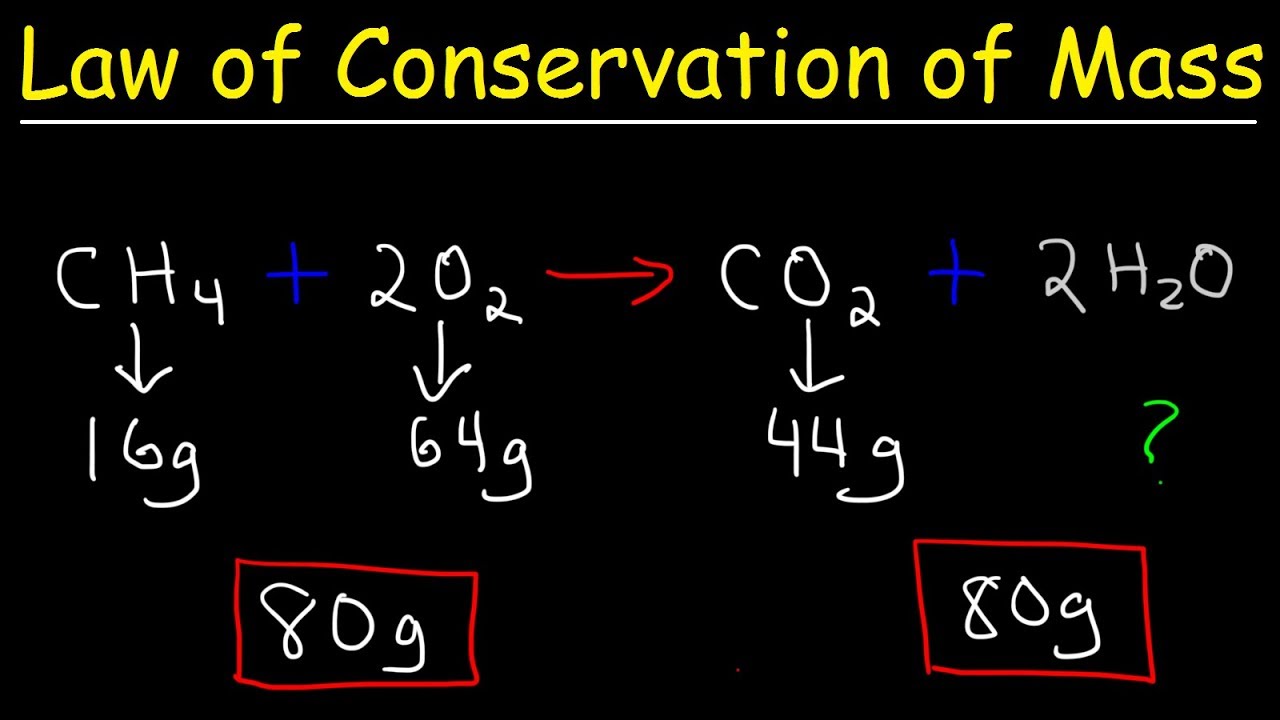
Test your Grade 7 understanding of Conservation of Mass with this interactive chemistry quiz designed to assess your knowledge through practice questions. Get instant feedback as you work through self-paced assessment problems covering the fundamental principle that matter cannot be created or destroyed in chemical reactions.

15 questions
Conservation of Mass (Crash Course)

Quiz
•
7th Grade

19 questions
Modeling Conservation of Mass
Quiz
•
7th Grade
15 questions
Modeling Conservation of Mass
Quiz
•
6th - 8th Grade

12 questions
Modeling Conservation of Mass
Quiz
•
7th Grade

12 questions
Conservation of Mass & Cellular Respiration/ Photosynthesis
Quiz
•
6th Grade

20 questions
Law of Conservation of Mass (week 1)
Quiz
•
7th Grade
56 questions
Law of Conservation of Mass
Quiz
•
6th - 8th Grade
15 questions
Law Of Conservation of Mass
Quiz
•
7th Grade
10 questions
Quiz Conservation of Mass
Quiz
•
7th Grade
23 questions
Conservation of Mass
Quiz
•
6th - 8th Grade
20 questions
Conservation of Mass
Quiz
•
7th Grade
26 questions
Conservation of Mass
Quiz
•
6th - 8th Grade
Explore 7th Grade Conservation of Mass Quizzes
Conservation of mass represents a fundamental principle in Grade 7 chemistry that establishes matter cannot be created or destroyed during chemical reactions, only rearranged into different forms. Wayground's comprehensive quiz collection provides targeted assessment tools that help students develop deep understanding of this critical concept through practice questions that examine mass relationships before and after chemical changes. These quizzes strengthen analytical skills by challenging students to apply conservation principles to balanced equations, predict outcomes of chemical reactions, and interpret experimental data that demonstrates mass preservation. The immediate feedback mechanisms built into these assessment resources allow students to identify misconceptions early and reinforce their grasp of how atoms rearrange without changing total mass during chemical processes. Wayground's platform empowers teachers with access to millions of educator-created quiz resources specifically designed to support conservation of mass instruction at the Grade 7 level. The robust search and filtering capabilities enable educators to locate quizzes aligned with specific curriculum standards while customization tools allow for differentiation based on individual student needs and learning objectives. Teachers can deploy these digital assessments flexibly across various classroom formats, from individual practice sessions to collaborative group activities, supporting both remediation for struggling learners and enrichment opportunities for advanced students. The platform's comprehensive question banks facilitate systematic skill reinforcement throughout the unit, enabling educators to monitor student progress in mastering this foundational chemistry concept while planning targeted interventions that address specific areas of difficulty in understanding mass conservation principles.
FAQs
How do I teach conservation of mass to students who struggle with the abstract idea that matter is never lost?
The most effective approach is to anchor the concept in a concrete, visible demonstration before introducing any equations. Start with a simple closed-system reaction — such as dissolving Alka-Seltzer in a sealed bag on a scale — so students can see the mass remain constant before and after the reaction. Once the physical intuition is established, move to atom-counting exercises with balanced equations to reinforce that every atom present before a reaction must appear in the products.
What kinds of practice problems best reinforce conservation of mass for chemistry students?
The most effective practice problems progress from basic atom-counting exercises to mass calculation problems and finally to stoichiometric applications. Students should first practice identifying reactants and products in word equations, then verify that molar masses balance on both sides, and finally apply those relationships to calculate unknown masses in a reaction. Mixing problem formats — including visual molecule diagrams, numerical calculations, and real-world scenarios — prevents rote pattern-matching and builds genuine conceptual understanding.
What mistakes do students most commonly make when applying conservation of mass?
The most common error is confusing conservation of mass with conservation of volume — students often assume that if a gas is produced and escapes, mass has been lost. A closely related mistake is failing to account for all products, particularly gaseous byproducts like carbon dioxide or water vapor. Students also frequently misbalance chemical equations by changing subscripts instead of coefficients, which violates the conservation principle at the molecular level and produces incorrect mass calculations.
How can I use conservation of mass quizzes to assess student understanding before a unit test?
Use a short quiz focused on balanced equation problems and mass calculation exercises as a formative check midway through the unit. Look specifically for whether students can identify what is conserved (mass and atoms, not necessarily moles of gas or volume) and whether they balance equations correctly. Students who change subscripts instead of coefficients, or who cannot account for all reactants and products, need targeted reteaching before summative assessment.
How do I use Wayground's conservation of mass quizzes in my classroom?
Wayground's conservation of mass quizzes are available as printable PDFs for traditional classroom use and in digital formats for technology-integrated environments, so they work equally well as in-class practice, homework assignments, or remediation sessions. Teachers can also host the quizzes as an interactive quiz directly on Wayground, allowing for real-time student responses and automatic grading. Each quiz includes a detailed answer key and step-by-step solutions, reducing prep time and supporting independent student review.
How can I differentiate conservation of mass instruction for students at different skill levels?
For students who are still building foundational skills, begin with visual atom-counting exercises using molecule diagrams before introducing numerical mass calculations. More advanced students can move directly into stoichiometric problems that require calculating unknown reactant or product masses. On Wayground, teachers can apply individual accommodations such as read-aloud support for students who need questions read to them, or reduced answer choices to lower cognitive load for students who need additional scaffolding, without disrupting the experience for the rest of the class.

Accessibility
Features
Wayground Super
School & District
Wayground for Business
Create a quiz
Create a presentation
Wayground AI
Subjects
Mathematics
Social Studies
Science
Physics
Chemistry
Biology
About
Our Story
Wayground Blog
Media Kit
Careers
Support
F.A.Q.
Help & Support
Privacy Policy
Terms of Service
Teacher Resources
2026 Wayground


Get our app

