


Cumulative Frequency Quizzes
Master cumulative frequency concepts with this comprehensive mathematics quiz designed to assess your understanding of data organization and frequency distribution analysis. Practice essential probability and statistics skills through targeted questions that provide instant feedback to strengthen your mathematical reasoning abilities.

44 questions
Histograms and Cumulative Frequency

Quiz
•
10th Grade

20 questions
Frequency, Cumulative Frequency, Relative Frequency
Quiz
•
11th Grade

9 questions
Cumulative Frequency
Quiz
•
11th - 12th Grade
15 questions
Cumulative Frequency
Quiz
•
9th Grade

10 questions
Cumulative Frequency curves practice quiz
Quiz
•
10th Grade

12 questions
Cumulative Frequency Table
Quiz
•
8th Grade
10 questions
Cumulative Frequency
Quiz
•
10th Grade
10 questions
Cumulative frequency
Quiz
•
8th - 10th Grade
10 questions
QUIZ 1 - Histograms & Cumulative frequency distributions
Quiz
•
10th Grade
22 questions
Cumulative Frequency Curves
Quiz
•
10th Grade
16 questions
Cumulative Frequency Graphs
Quiz
•
10th - 11th Grade
8 questions
IBMS-6H-Cumulative Frequency(per.2)
Quiz
•
9th - 12th Grade
Browse by grade
Explore Cumulative Frequency Quizzes
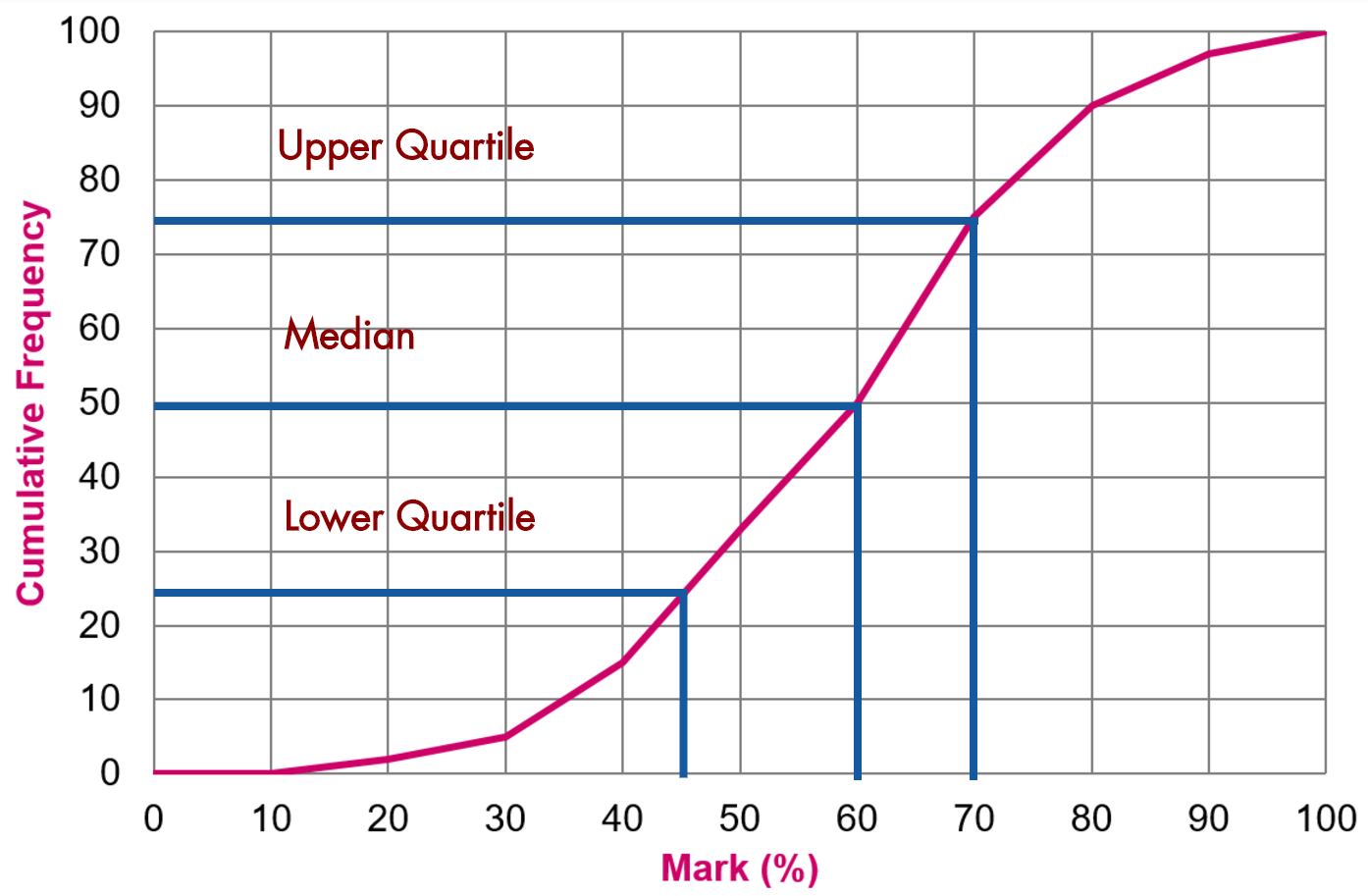
Cumulative frequency represents a fundamental concept in probability and statistics that builds upon basic frequency distribution analysis by showing the running total of frequencies up to each data point or class interval. These comprehensive mathematics quizzes available through Wayground provide targeted assessment opportunities for students to demonstrate their understanding of cumulative frequency tables, graphs, and real-world applications. The practice questions systematically evaluate essential skills including constructing cumulative frequency distributions from raw data, interpreting cumulative frequency curves, finding quartiles and percentiles, and using cumulative frequency to solve probability problems. Through immediate feedback and detailed explanations, students can identify knowledge gaps and strengthen their analytical abilities while developing confidence in statistical reasoning and data interpretation techniques that form the foundation for advanced mathematical concepts. Wayground's extensive collection draws from millions of teacher-created resources specifically designed to support cumulative frequency instruction across diverse learning environments and student ability levels. The platform's robust search and filtering capabilities enable educators to quickly locate quizzes aligned with curriculum standards and specific learning objectives, while customization tools allow teachers to modify questions, adjust difficulty levels, and create differentiated assessments that meet individual student needs. These digital-first quiz formats provide flexible delivery options for classroom instruction, homework assignments, and independent practice sessions, supporting comprehensive lesson planning that addresses remediation for struggling learners and enrichment opportunities for advanced students. The seamless integration of assessment data helps teachers track student progress in cumulative frequency concepts while reinforcing critical mathematical skills through targeted skill-building exercises that prepare students for more complex statistical analysis.
FAQs
How do I teach cumulative frequency effectively?
Begin with an ordinary frequency table, then have students build a running-total column by adding each frequency to the total above it. Connect every cumulative value to the phrase “up to and including,” and move from ungrouped data to class intervals before introducing cumulative frequency curves.
What exercises help students practice cumulative frequency?
Effective practice includes completing cumulative frequency tables, finding missing frequencies from running totals, and converting grouped data into cumulative distributions. Students should also construct and interpret cumulative frequency graphs, compare distributions, and answer real-world questions about how many observations fall below a given value.
What mistakes do students commonly make with cumulative frequency?
Students often record each individual frequency instead of a running total, skip a class interval, or subtract when they should add. On graphs, they may plot frequencies rather than cumulative frequencies or use the wrong class boundary; checking that the final cumulative total equals the number of observations catches many of these errors.
How can I use Wayground cumulative frequency quizzes in class?
Wayground quizzes are available as printable PDFs and digital formats, so teachers can host a digital quiz on Wayground or assign the quiz on paper. Every quiz includes a complete answer key, and printed submissions can be scanned or captured for grading with the Wayground for Teachers app; paper copies also provide focused offline practice when schools are reducing screen time.
How does cumulative frequency fit into the Common Core statistics progression?
Cumulative frequency practice supports the Common Core progression from organizing numerical data to describing and interpreting distributions. It builds on frequency tables and grouped data, then prepares students to reason about medians, quartiles, percentiles, and comparisons between distributions.
How can I differentiate cumulative frequency practice for mixed-ability classes?
Provide partially completed running-total tables or fewer class intervals for students who need scaffolding, while advanced learners can analyze grouped data and cumulative frequency curves. Wayground also supports extended time, Read Aloud, reduced answer choices, and reading mode, plus alternate quiz versions with adjusted spacing, larger text, a dyslexia-friendly font, or translation.

Accessibility
Features
Wayground Super
School & District
Wayground for Business
Create a quiz
Create a presentation
Wayground AI
Subjects
Mathematics
Social Studies
Science
Physics
Chemistry
Biology
About
Our Story
Wayground Blog
Media Kit
Careers
Support
F.A.Q.
Help & Support
Privacy Policy
Terms of Service
Teacher Resources
2026 Wayground


Get our app

