


Distance and Displacement Quizzes
Test your understanding of distance and displacement concepts with this interactive physics quiz featuring practice questions and instant feedback. Assess your knowledge of vector quantities, scalar measurements, and the key differences between distance traveled and displacement in motion problems.

22 questions
Intro to Motion Distance Displacement

Quiz
•
8th Grade

13 questions
Practicing Distance and Displacement
Quiz
•
8th Grade

15 questions
11.1 Distance and Displacement
Quiz
•
8th - 10th Grade

15 questions
Understanding Speed, Distance, and Displacement
Quiz
•
6th Grade
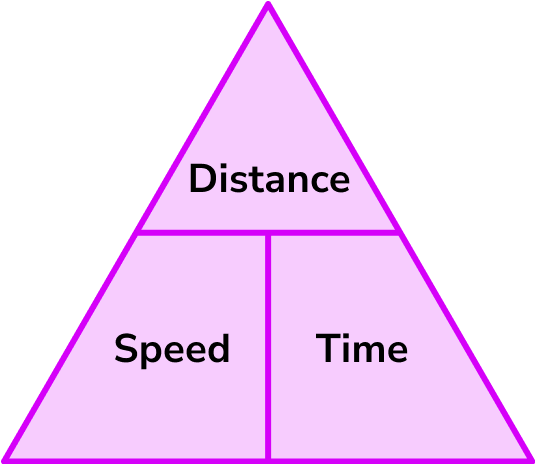
28 questions
Speed, Distance, and Time/ Distance and Displacement
Quiz
•
6th Grade

17 questions
Distance, Displacement, Speed, Velocity, and Acceleration
Quiz
•
6th - 8th Grade
89 questions
Velocity, Displacement, and Distance Problems
Quiz
•
7th Grade
16 questions
Distance and Displacement Basics
Quiz
•
7th Grade
18 questions
Part A, Unit 2 - L2: Distance & Displacement (7.7B)
Quiz
•
7th Grade
26 questions
Distance and Displacement
Quiz
•
8th Grade
15 questions
Distance Displacement Speed Velocity
Quiz
•
6th Grade
39 questions
Distance and Displacement
Quiz
•
6th - 8th Grade
Explore Distance and Displacement Quizzes
Distance and displacement concepts form the foundation of kinematics in physics, requiring students to distinguish between scalar and vector quantities that describe motion. Through comprehensive quiz collections available on Wayground (formerly Quizizz), students engage with targeted practice questions that assess their understanding of how distance measures the total path traveled while displacement represents the straight-line change in position from start to finish. These interactive assessments provide immediate feedback on problems involving magnitude, direction, and the mathematical relationships between these fundamental motion concepts, helping students develop critical analytical skills needed for advanced physics coursework. Wayground's extensive library contains millions of teacher-created quiz resources specifically designed to support physics instruction on distance and displacement topics. Educators benefit from robust search and filtering capabilities that align with physics curriculum standards, allowing them to quickly locate assessments that match their specific learning objectives and student needs. The platform's differentiation tools enable teachers to customize quiz difficulty levels and question types, while flexible digital delivery formats accommodate various classroom environments and learning styles. These comprehensive features support effective lesson planning, targeted remediation for struggling students, and enrichment opportunities for advanced learners, ensuring that all students can strengthen their conceptual understanding of fundamental motion principles through repeated practice and skill reinforcement.
FAQs
How do I teach students the difference between distance and displacement?
Start by grounding students in a concrete example: walking three blocks north then three blocks south results in a displacement of zero, but a distance of six blocks. Use directional diagrams and number lines before introducing vector notation so students can visualize why displacement requires both magnitude and direction while distance does not. Once the conceptual difference is clear, move students into calculation problems that involve multi-step paths so they must actively distinguish scalar from vector quantities.
What practice problems help students master distance vs. displacement calculations?
Effective practice problems progress from simple one-dimensional paths to multi-directional scenarios where students must apply the Pythagorean theorem to find resultant displacement. Problems should require students to draw path diagrams, identify starting and ending positions, and calculate both values for the same motion so the contrast is explicit. Mixing conceptual questions with numerical calculations ensures students understand the underlying principle, not just the formula.
What mistakes do students commonly make when calculating displacement?
The most common error is treating displacement as the total path length rather than the straight-line change in position from start to finish. Students also frequently ignore direction, reporting displacement as a positive scalar value instead of a signed or vector quantity. In multi-step problems, many students fail to account for motion in opposite directions canceling out, which leads to displacement values that are larger than the actual net change in position.
How can I use distance and displacement quizzes to differentiate instruction in my physics class?
Assign simpler one-dimensional problems to students who need foundational reinforcement while directing more advanced learners toward multi-directional scenarios requiring vector addition. On Wayground, teachers can apply accommodations at the individual student level, including reduced answer choices to lower cognitive load, read-aloud support for students who need it, and extended time settings, all without other students being notified. These settings are saved and reusable across future sessions, making differentiation practical rather than time-consuming.
How do I use Wayground's distance and displacement quizzes in my classroom?
Wayground's distance and displacement quizzes are available as free printable PDFs for traditional classroom use and in digital formats for technology-integrated environments, including the option to host them as a live quiz on Wayground. Teachers can use them for initial instruction, targeted remediation, or enrichment depending on where students are in their understanding. Each quiz includes a detailed answer key, supporting independent practice and self-assessment without requiring additional teacher preparation.
Are distance and displacement quizzes aligned to physics standards?
Yes, distance and displacement quizzes on Wayground are aligned to physics standards and include robust search and filtering capabilities so teachers can locate resources that match specific learning objectives. This alignment ensures that assigned practice directly supports required curriculum coverage, making quiz selection efficient during lesson planning. Teachers can filter by concept complexity to find materials suited to introductory or advanced physics courses.

Accessibility
Features
Wayground Super
School & District
Wayground for Business
Create a quiz
Create a presentation
Wayground AI
Subjects
Mathematics
Social Studies
Science
Physics
Chemistry
Biology
About
Our Story
Wayground Blog
Media Kit
Careers
Support
F.A.Q.
Help & Support
Privacy Policy
Terms of Service
Teacher Resources
2026 Wayground


Get our app

