
Filters
Resource Type


3rd Grade Division Strategies Quizzes
Master Grade 3 division strategies with this interactive quiz designed to assess your understanding of different approaches to solving division problems. Practice key division methods through self-paced questions and receive instant feedback to strengthen your mathematical skills.
Recommended topics for you

10 questions
Division Strategies

Quiz
•
3rd Grade

14 questions
Division as Repeated Subtraction
Quiz
•
3rd Grade

20 questions
Division Strategies
Quiz
•
3rd Grade

10 questions
Division as Repeated Subtraction/Sharing
Quiz
•
3rd Grade
13 questions
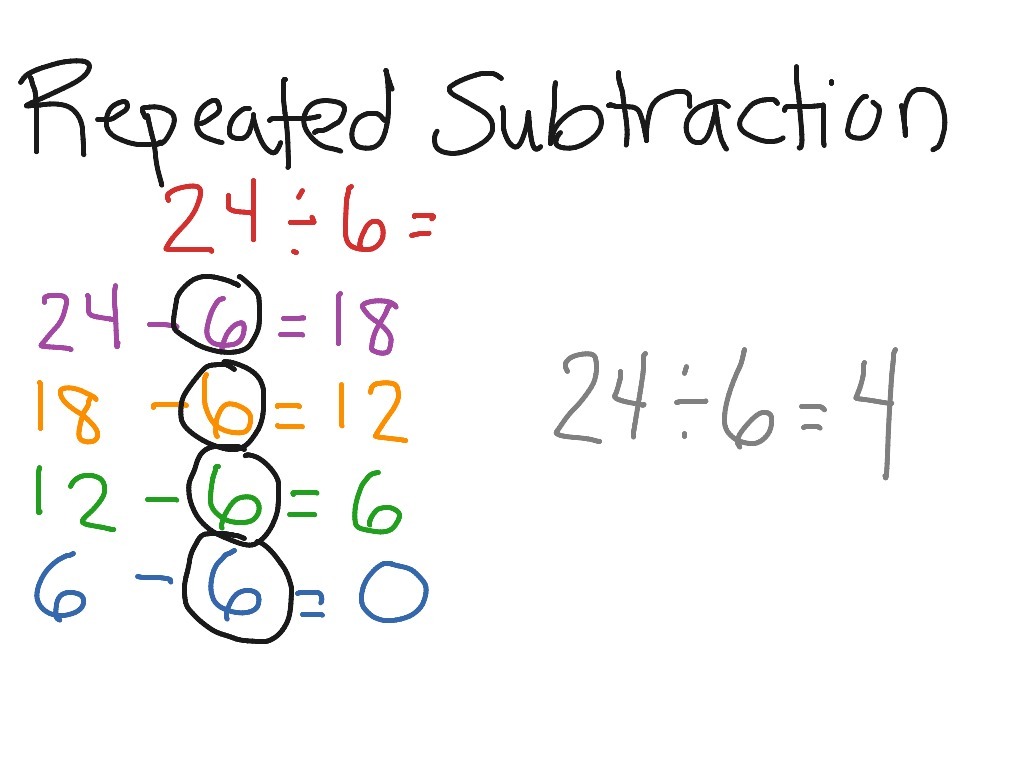
Division as Repeated Subtraction
Quiz
•
3rd Grade

10 questions
Division Strategies
Quiz
•
3rd Grade
15 questions
Division Strategies
Quiz
•
3rd Grade
20 questions
Division Strategies
Quiz
•
3rd Grade
17 questions
Division Strategies
Quiz
•
3rd Grade
11 questions
Division Strategies Quiz
Quiz
•
3rd Grade
40 questions
Grade 3 - Topic 4 Test (Division Strategies)
Quiz
•
3rd Grade
18 questions
Division Strategies
Quiz
•
3rd Grade
Explore 3rd Grade Division Strategies Quizzes
Division strategies for Grade 3 students encompass a comprehensive range of mathematical approaches that help young learners develop fluency with fundamental division concepts. Through Wayground's extensive collection of teacher-created quizzes, students engage with interactive practice questions that reinforce essential division methods including repeated subtraction, equal grouping, array models, and the relationship between multiplication and division. These targeted assessments provide immediate feedback to help students understand their progress while building confidence with various problem-solving techniques. The quiz format allows for systematic practice of division facts, word problems, and visual representations that align with third-grade mathematical expectations, ensuring students develop both computational skills and conceptual understanding of how division works in real-world contexts. Wayground's platform supports educators with access to millions of teacher-created division strategy resources, offering robust search and filtering capabilities that allow instructors to locate materials perfectly suited to their Grade 3 mathematics curriculum. The platform's standards alignment ensures that selected quizzes meet educational requirements while providing differentiation tools that accommodate diverse learning needs within the classroom. Teachers can customize existing assessments or create new ones, utilizing flexible digital delivery formats that support both individual practice and whole-class instruction. These comprehensive quiz collections enable educators to efficiently plan targeted lessons, identify students requiring additional support through detailed performance analytics, and provide enrichment opportunities for advanced learners, ultimately strengthening division strategy mastery through consistent skill reinforcement and varied practice opportunities.
FAQs
How do I teach division strategies to Grade 3 students?
Grade 3 is where division becomes a formal operation, so the teaching sequence matters. Start with equal grouping and arrays to anchor the concept, then use the multiplication-division relationship to help students see that knowing 6 × 7 = 42 means they already know 42 ÷ 6. Repeated subtraction and partial quotients come next as strategies for problems where the fact isn't immediately known. By the end of the year, students should be able to choose a strategy rather than defaulting to one by habit.
What exercises help third graders practice division strategies?
Fact family triangles are efficient for reinforcing the multiplication-division connection. For strategy practice specifically, give students a problem like 56 ÷ 8 and ask them to solve it two ways — repeated subtraction and using a known multiplication fact — then explain which was faster and why. That metacognitive step is what separates rote practice from the flexible thinking Grade 3 division standards are actually after.
What mistakes do third graders commonly make with division strategies?
The biggest one is treating division facts as isolated from multiplication — students who haven't internalized fact families will try to solve every problem through repeated subtraction, which works but is slow and error-prone with larger dividends. A second common error is mishandling remainders: students either ignore them or treat them as a separate, unrelated number rather than understanding what they mean in context. Word problems expose both errors quickly.
How do I use these Grade 3 division quizzes in my classroom?
Host them as digital quizzes on Wayground for instant submission and review, or print them as PDFs for independent practice or assessments. Every quiz includes a complete answer key. If you go the paper route, the Wayground for Teachers app lets you scan or capture student work for grading without manually entering every response.
How does Common Core approach division strategies in Grade 3?
Grade 3 is the entry point for division in Common Core. Students are expected to understand division as both equal sharing and equal grouping, connect it to multiplication through fact families, and apply these concepts within 100. The emphasis at this grade is on meaning — students should be able to explain why a strategy works, not just execute it. That's why multiple strategies (arrays, repeated subtraction, the inverse relationship with multiplication) are all in scope: the goal is understanding the operation from several angles before any single algorithm takes over.
How can I differentiate division strategies practice for my Grade 3 class?
For students who need scaffolding, Wayground's reduced answer choices option narrows the decision space during digital quizzes — useful when a student understands the concept but gets overwhelmed choosing among many options. For students with reading challenges, the Read Aloud feature handles word problems so the barrier is the math, not the text. Students working above grade level can tackle the same quiz without any accommodations; settings are applied per student and don't affect the rest of the class.

Accessibility
Features
Wayground Super
School & District
Wayground for Business
Create a quiz
Create a presentation
Wayground AI
Subjects
Mathematics
Social Studies
Science
Physics
Chemistry
Biology
About
Our Story
Wayground Blog
Media Kit
Careers
Support
F.A.Q.
Help & Support
Privacy Policy
Terms of Service
Teacher Resources
2026 Wayground


Get our app

