

9th Grade Ear Anatomy Quizzes
Test your knowledge of ear anatomy with this comprehensive Grade 9 biology quiz designed to assess your understanding of the structures and functions of the human ear. Practice identifying key components like the outer, middle, and inner ear through self-paced questions with instant feedback.

28 questions
Sound Waves and Ear Anatomy

Quiz
•
9th Grade

16 questions
Sound Waves and parts of the Ear
Quiz
•
9th Grade

47 questions
Eye and Ear Anatomy
Quiz
•
7th - 9th Grade

28 questions
Ear/Eye Anatomy Quiz
Quiz
•
9th - 12th Grade
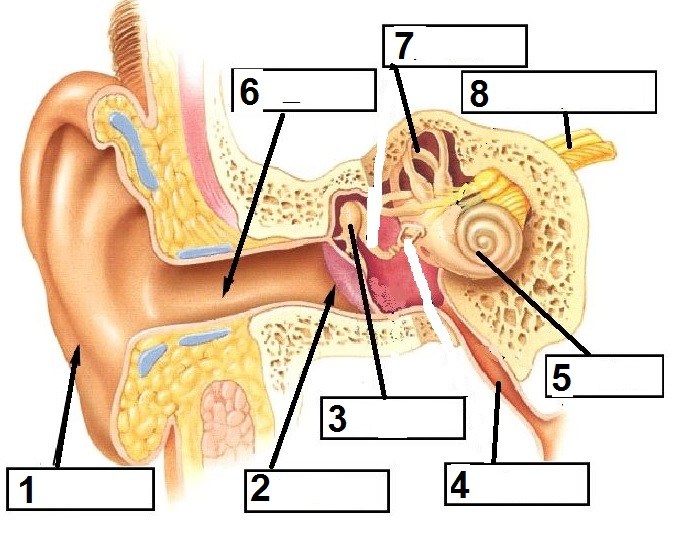
10 questions
Ear and sound
Quiz
•
1st - 12th Grade

25 questions
Eye and Ear Anatomy
Quiz
•
8th Grade
15 questions
Eye and Ear Anatomy
Quiz
•
8th Grade
15 questions
Eye and Ear Anatomy
Quiz
•
8th Grade
Browse by grade
Explore 9th Grade Ear Anatomy Quizzes
Ear anatomy forms a critical component of Grade 9 biology curriculum, requiring students to master the complex structures and functions of the human auditory system. These comprehensive quiz collections provide targeted assessment opportunities that help students develop deep understanding of the outer, middle, and inner ear components, including the intricate relationships between structures like the eardrum, ossicles, cochlea, and semicircular canals. Through carefully designed practice questions, students receive immediate feedback on their comprehension of how sound waves travel through the ear, how mechanical vibrations convert to neural signals, and how the vestibular system maintains balance. These assessments strengthen critical thinking skills while reinforcing anatomical vocabulary and physiological processes essential for advanced biology studies. Wayground's extensive library contains millions of teacher-created ear anatomy quizzes specifically aligned with Grade 9 science standards, offering educators powerful search and filtering capabilities to locate resources that match their exact instructional needs. Teachers can easily customize existing quizzes or differentiate content to accommodate diverse learning levels, ensuring that both struggling students and advanced learners receive appropriate challenge and support. The platform's flexible digital delivery formats enable seamless integration into classroom instruction, homework assignments, and review sessions, while comprehensive analytics help educators identify knowledge gaps for targeted remediation. These versatile quiz collections support effective lesson planning by providing reliable formative assessment tools that reinforce anatomical concepts, enhance retention of complex biological processes, and prepare students for summative evaluations through systematic skill development and concept reinforcement.
FAQs
How do I teach ear anatomy to students?
Teaching ear anatomy is most effective when you move systematically from outer to inner structures, helping students understand not just the names but the function each part plays in sound transmission and balance. Start with the pinna and ear canal before progressing to the tympanic membrane, ossicles, cochlea, and semicircular canals. Pairing labeled diagrams with explanations of physiological processes gives students a structural and functional framework simultaneously, which improves long-term retention.
What exercises help students practice identifying ear anatomy structures?
Labeling exercises using detailed anatomical diagrams are among the most effective practice tools for ear anatomy, requiring students to actively recall structure names and their locations rather than passively recognize them. Complementing these with sound transmission pathway questions challenges students to apply their knowledge by tracing how vibrations move from the outer ear through the ossicles to the cochlea. Combining identification tasks with short-answer questions about function deepens conceptual understanding beyond simple memorization.
What mistakes do students commonly make when learning ear anatomy?
One of the most frequent errors is confusing the roles of the three ossicles (malleus, incus, and stapes) or misremembering their sequence in the sound transmission chain. Students also commonly conflate the cochlea's role in hearing with the semicircular canals' role in balance, treating them as interchangeable when they serve entirely different functions. Reinforcing the distinction between sensory function and structural location through targeted practice questions can help correct these misconceptions early.
How can I use ear anatomy quizzes to support students who are struggling?
For struggling learners, quizzes with reduced complexity — such as fill-in diagrams with a word bank — lower the cognitive load while still requiring active recall. On Wayground, teachers can apply accommodations such as read aloud support, reduced answer choices, and extended time on a per-student basis without disrupting the experience for the rest of the class. These settings are reusable across sessions, making it easier to consistently support students with diverse learning needs.
How do I use ear anatomy quizzes from Wayground in my classroom?
Wayground's ear anatomy quizzes are available as printable PDFs for traditional classroom use and in digital formats for technology-integrated learning environments, giving teachers flexibility in how they assign and deliver the material. Teachers can also host quizzes as a quiz directly on Wayground, enabling real-time student responses and automatic grading. Each quiz includes a complete answer key, making them practical for independent practice, homework, or guided review sessions.
How does ear anatomy connect to broader biology topics students will study?
Ear anatomy sits at the intersection of several advanced biology topics, including sensory neuroscience, physiology, and cellular biology, since the cochlea's hair cells represent a key example of mechanoreception at the cellular level. Understanding how the auditory system converts mechanical vibration into electrical nerve signals also reinforces concepts in signal transduction and the nervous system. Building a strong foundation in ear anatomy prepares students for more advanced coursework in anatomy, physiology, and auditory science.

Accessibility
Features
Wayground Super
School & District
Wayground for Business
Create a quiz
Create a presentation
Wayground AI
Subjects
Mathematics
Social Studies
Science
Physics
Chemistry
Biology
About
Our Story
Wayground Blog
Media Kit
Careers
Support
F.A.Q.
Help & Support
Privacy Policy
Terms of Service
Teacher Resources
2026 Wayground


Get our app

