


9th Grade Endothermic and Exothermic Processes Quizzes
Test your Grade 9 understanding of endothermic and exothermic processes with this comprehensive chemistry quiz. Practice identifying energy changes in chemical reactions and receive instant feedback to assess your knowledge of heat absorption and release mechanisms.

15 questions
Endothermic and Exothermic Processes

Quiz
•
9th Grade

15 questions
Endothermic and Exothermic Processes
Quiz
•
9th Grade

25 questions
Endothermic and Exothermic Processes
Quiz
•
9th Grade
20 questions
Endothermic and Exothermic Reactions
Quiz
•
9th Grade

27 questions
Endothermic and Exothermic Processes Practice
Quiz
•
9th - 12th Grade
Browse by grade
Explore 9th Grade Endothermic and Exothermic Processes Quizzes
Endothermic and exothermic processes form a fundamental component of Grade 9 chemistry education, representing critical concepts that help students understand energy changes in chemical reactions. Wayground's comprehensive quiz collection provides targeted assessment tools that enable students to master the distinctions between reactions that absorb energy from their surroundings versus those that release energy. These practice questions systematically evaluate student understanding of temperature changes, energy diagrams, and real-world examples of both process types, offering immediate feedback that reinforces learning and identifies areas requiring additional study. The quizzes cover essential skills including analyzing reaction profiles, predicting energy changes based on chemical equations, and connecting theoretical concepts to everyday phenomena such as photosynthesis, combustion, and phase changes. Wayground supports chemistry educators through access to millions of teacher-created quiz resources specifically designed for Grade 9 endothermic and exothermic process instruction. The platform's advanced search and filtering capabilities allow teachers to locate quizzes aligned with curriculum standards while providing robust customization tools for differentiating instruction based on individual student needs. Teachers can modify existing assessments, adjust difficulty levels, and select from flexible delivery formats optimized for digital classroom environments, making these resources invaluable for lesson planning, targeted remediation, and enrichment activities. The extensive quiz library enables educators to reinforce key chemistry concepts through varied question formats, supporting comprehensive skill development while accommodating diverse learning styles and academic readiness levels within their Grade 9 science classrooms.
FAQs
How do I teach endothermic and exothermic processes to chemistry students?
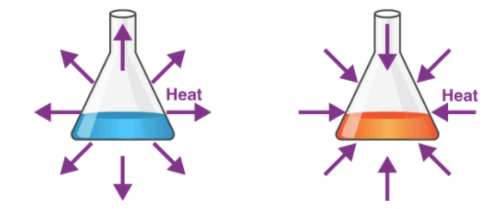
Start by grounding students in the direction of energy flow: endothermic processes absorb heat from the surroundings, causing a temperature drop, while exothermic processes release heat, causing a temperature rise. Concrete examples help — cold packs for endothermic and hand warmers for exothermic — before moving to reaction diagrams and energy profiles. Once students can connect observable temperature changes to molecular-level events like bond breaking and bond formation, they're ready to interpret enthalpy diagrams and classify reactions quantitatively.
What exercises help students practice identifying endothermic and exothermic reactions?
Effective practice includes classifying real-world scenarios by energy direction, interpreting energy profile diagrams to identify reactants, products, and activation energy, and calculating enthalpy changes from given data. Students also benefit from exercises that require them to predict whether a process will absorb or release energy based on bond energy values. Structured practice problems that progress from identification to calculation build the layered understanding chemistry standards require.
What misconceptions do students commonly have about endothermic and exothermic processes?
A frequent error is confusing the system and the surroundings — students often say an endothermic reaction 'gets cold' without understanding that the system is absorbing heat from the surroundings, causing the surroundings to cool. Another common misconception is assuming exothermic reactions always feel hot to the touch or happen instantly. Students also struggle to connect bond breaking (endothermic) and bond formation (exothermic) to the overall energy change of a reaction, often treating enthalpy as a single event rather than a net result.
How do I use Wayground's endothermic and exothermic quizzes in my classroom?
Wayground's endothermic and exothermic quizzes are available as printable PDFs for traditional classroom use and in digital formats for technology-integrated learning environments, including the option to host them as a quiz directly on Wayground. Teachers can assign quizzes as guided practice, independent work, or review activities, and each quiz includes a complete answer key so students can self-check or teachers can assess efficiently. The range of difficulty levels means a single set of materials can support introductory classification tasks and more advanced enthalpy calculations within the same unit.
How can I differentiate endothermic and exothermic instruction for students at different levels?
For students still building foundational understanding, focus on real-world classification and energy direction before introducing mathematical components. For advanced students, enthalpy calculations, Hess's Law applications, and analysis of energy profile diagrams provide meaningful challenge. On Wayground, teachers can apply accommodations such as read aloud for students who need audio support, reduced answer choices to lower cognitive load for struggling learners, and extended time settings — all configurable per student without affecting the rest of the class.
How do energy profile diagrams connect to endothermic and exothermic processes?
Energy profile diagrams show the relative energy of reactants and products, the activation energy required to start a reaction, and whether the overall process releases or absorbs energy. In an exothermic reaction, the products sit at a lower energy level than the reactants, and the energy difference is released to the surroundings. In an endothermic reaction, the products are at a higher energy level, meaning the reaction requires a continuous input of energy to proceed. Teaching students to read these diagrams accurately is essential for connecting symbolic chemistry to thermodynamic reasoning.

Accessibility
Features
Wayground Super
School & District
Wayground for Business
Create a quiz
Create a presentation
Wayground AI
Subjects
Mathematics
Social Studies
Science
Physics
Chemistry
Biology
About
Our Story
Wayground Blog
Media Kit
Careers
Support
F.A.Q.
Help & Support
Privacy Policy
Terms of Service
Teacher Resources
2026 Wayground


Get our app

