
Filters
Resource Type


Equal Ratios Quizzes
Test your mastery of equal ratios with our comprehensive collection of interactive quizzes designed to assess understanding through self-paced practice questions with instant feedback. These engaging equal ratios quizzes help students strengthen their proportional reasoning skills and build confidence in identifying equivalent ratios across various mathematical contexts.

10 questions
Ratio Tables to Find Equal Ratios

Quiz
•
6th Grade

20 questions
Identify Equal Ratios
Quiz
•
6th Grade
12 questions
Ratio Tables to Find Equal Ratios
Quiz
•
6th Grade

20 questions
Identify Equal Ratios
Quiz
•
7th Grade

20 questions
Ratio Tables to Find Equal Ratios
Quiz
•
6th Grade

20 questions
Identifying Equal Ratios
Quiz
•
6th Grade
15 questions
Ratio Tables to Find Equal Ratios
Quiz
•
6th Grade
12 questions
Identify Equal Ratios
Quiz
•
7th Grade
8 questions
Ratios & Equal Ratios
Quiz
•
6th - 7th Grade
14 questions
Ratios, Equivalent Ratios, Ratio Tables, Graphing Ratios
Quiz
•
6th Grade
20 questions
Ratio and proportion
Quiz
•
6th Grade
20 questions
Equivalent Ratios Parts and Wholes
Quiz
•
6th Grade
Explore Equal Ratios Quizzes
Equal ratios form a fundamental building block in mathematical reasoning, helping students understand proportional relationships and develop critical problem-solving skills. Through Wayground's comprehensive quiz collection, students engage with carefully designed practice questions that assess their ability to identify, create, and solve problems involving equivalent ratios. These interactive assessments provide immediate feedback as students work through various scenarios, from simple numerical comparisons to real-world applications involving recipes, maps, and scaling. The quizzes systematically build understanding by presenting ratio problems in multiple formats, ensuring students can recognize equal ratios whether expressed as fractions, decimals, or in word problems that require mathematical analysis and logical thinking. Wayground supports mathematics educators with access to millions of teacher-created equal ratios quizzes that can be easily discovered through robust search and filtering capabilities. Teachers can quickly locate resources aligned with specific mathematical standards and customize quiz content to match their students' varied learning needs and ability levels. The platform's flexible digital delivery system allows educators to assign quizzes for independent practice, use them during guided instruction, or deploy them as formative assessments to gauge student progress. These versatile tools prove invaluable for lesson planning, targeted remediation for struggling learners, enrichment activities for advanced students, and ongoing reinforcement of proportional reasoning skills that serve as prerequisites for algebra, geometry, and advanced mathematical concepts.
FAQs
How do I teach equal ratios?
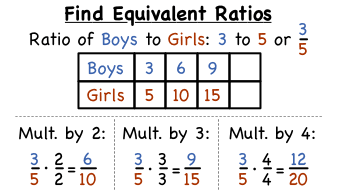
Start with concrete examples students already understand — comparing recipes, mixing paint, or scaling a map — before moving to abstract notation. The key idea to establish early is that multiplying or dividing both terms of a ratio by the same non-zero number preserves the relationship. Once students see that 2:3 and 4:6 describe the same relationship, ratio tables become a natural next step for building fluency before introducing cross-multiplication.
What exercises help students practice equal ratios?
The most effective practice moves through three stages: identifying whether two given ratios are equal, finding a missing value in an equivalent ratio pair, and completing ratio tables. Real-world word problems — unit pricing, speed, or ingredient scaling — push students to apply the concept rather than just recognize it. Mixing problem formats keeps practice from becoming mechanical.
What mistakes do students commonly make with equal ratios?
The most common error is adding the same number to both terms instead of multiplying — students see 2:3 and write 4:5 as an equivalent ratio. A close second is reversing the order of terms when setting up a comparison, which produces an incorrect proportion. Both errors usually signal that the student understands the surface procedure but hasn't internalized why the multiplicative relationship is what matters.
How do I use Wayground's equal ratios quizzes in my class?
Every quiz comes with a complete answer key, so it works equally well as a graded assignment or self-checking practice. You can host it as a digital quiz on Wayground for instant feedback, or download the printable PDF and distribute it on paper — a good option for schools managing screen time. If you go the paper route, the Wayground for Teachers app lets you scan or capture student work to grade submissions without re-entering anything manually.
How does Common Core sequence equal ratios in the math curriculum?
Common Core introduces ratio concepts in Grade 6, where students learn to reason about ratios and use ratio language to describe relationships between quantities. Equal ratios sit at the center of this work — students use ratio tables, tape diagrams, and double number lines to find equivalent ratios before the concept expands into unit rates and proportional relationships in Grade 7. Mastering equal ratios at this stage is what makes the transition from additive to multiplicative thinking stick.
How can I differentiate equal ratios practice for mixed-ability classes?
For students who struggle with the abstract notation, Wayground's quiz-level tools let you increase font size or apply a dyslexia-friendly font so the format itself isn't a barrier. For students who need processing support during a digital session, the Read Aloud accommodation reads questions aloud, and reduced answer choices can lower cognitive load on multiple-choice items. Advanced students can be pushed toward the real-world application problems in the same quiz set without needing a separate resource.

Accessibility
Features
Wayground Super
School & District
Wayground for Business
Create a quiz
Create a presentation
Wayground AI
Subjects
Mathematics
Social Studies
Science
Physics
Chemistry
Biology
About
Our Story
Wayground Blog
Media Kit
Careers
Support
F.A.Q.
Help & Support
Privacy Policy
Terms of Service
Teacher Resources
2026 Wayground


Get our app

