


Eukaryotic Cell Quizzes
Test your knowledge of eukaryotic cell structures and functions with this comprehensive biology quiz. Practice identifying organelles, understanding cellular processes, and receive instant feedback to assess your mastery of eukaryotic cell biology concepts.

21 questions
Prokaryotic vs. Eukaryotic Cells

Quiz
•
9th Grade

20 questions
Cell Cycle & Cancer Review
Quiz
•
10th Grade
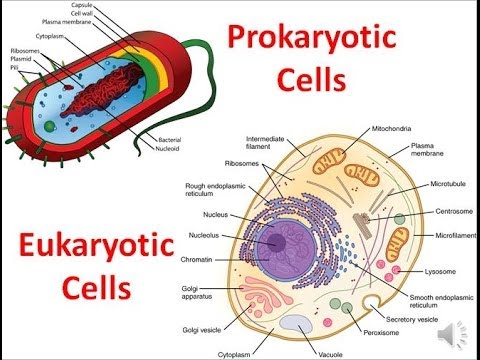
25 questions
Eukaryotic Cells
Quiz
•
6th Grade

26 questions
PRACTICE: Prokaryotic & Eukaryotic Cells
Quiz
•
9th - 12th Grade
21 questions
Eukaryotic Cell Organelle Quiz
Quiz
•
9th Grade

25 questions
Prokaryotic and Eukaryotic Cells
Quiz
•
6th Grade
25 questions
Eukaryotic Cell
Quiz
•
6th Grade
15 questions
Eukaryotic Cell Organelles Quiz
Quiz
•
9th Grade
25 questions
Prokaryotic and Eukaryotic Cells Review
Quiz
•
6th Grade
25 questions
Prokaryotic Cells and Eukaryotic Cells
Quiz
•
6th Grade
18 questions
Similarities & Differences in Prokaryotic & Eukaryotic cells
Quiz
•
6th - 9th Grade
25 questions
Eukaryotic Cells and Microorganisms Review
Quiz
•
11th - 12th Grade
Browse by grade
Explore Eukaryotic Cell Quizzes
Eukaryotic cell structure and function form the foundation of advanced biological understanding, and comprehensive quiz collections through Wayground provide educators with targeted assessment tools to evaluate student comprehension of these complex cellular systems. These carefully designed practice questions challenge students to demonstrate their understanding of organelle functions, membrane structures, cellular processes, and the intricate relationships between different cellular components. The quizzes offer immediate feedback mechanisms that help students identify knowledge gaps in areas such as mitochondrial respiration, nuclear organization, endoplasmic reticulum functions, and protein synthesis pathways, enabling them to strengthen their grasp of fundamental eukaryotic cell biology concepts through repeated practice and self-assessment. Wayground's extensive collection of millions of teacher-created eukaryotic cell quizzes provides educators with robust search and filtering capabilities to locate resources that align with specific curriculum standards and learning objectives. Teachers can easily customize existing assessments or modify question difficulty levels to support differentiated instruction, ensuring that both struggling learners and advanced students receive appropriate challenges in their study of cellular biology. The platform's flexible digital delivery system supports various classroom implementations, from individual student practice sessions to whole-class review activities, while comprehensive analytics help educators identify common misconceptions and plan targeted remediation strategies. These versatile quiz resources serve multiple instructional purposes, supporting initial concept introduction, ongoing skill reinforcement, pre-assessment evaluation, and comprehensive unit reviews that strengthen student mastery of eukaryotic cell biology principles.
FAQs
How do I teach eukaryotic cells to middle or high school students?
Start by contrasting eukaryotic cells with prokaryotic cells so students have a clear reference point before learning the details of each organelle. Use labeled diagrams to anchor vocabulary, then build understanding by connecting each organelle's structure to its specific function — for example, linking the folded inner membranes of mitochondria to their role in maximizing ATP production. Scaffolding from comparison to structure to function helps students build a coherent mental model rather than memorizing isolated facts.
What exercises help students practice identifying eukaryotic cell organelles?
Labeling diagrams of plant and animal cells is one of the most effective practice formats because it requires students to recall both names and locations simultaneously. Matching exercises that pair organelles with their functions reinforce vocabulary retention, while comparison tables highlighting differences between plant and animal cells develop analytical thinking. Practice problems that ask students to explain what would happen if a specific organelle were absent push deeper conceptual understanding beyond simple identification.
What are the most common mistakes students make when learning about eukaryotic cells?
Students frequently confuse the smooth and rough endoplasmic reticulum, often forgetting that the rough ER is associated with ribosomes and protein synthesis while the smooth ER handles lipid production and detoxification. Another common error is treating the cell membrane and cell wall as interchangeable, which matters especially when comparing plant and animal cells. Students also tend to memorize organelle names without understanding their interdependence — for example, missing the secretory pathway that connects the rough ER, Golgi apparatus, and cell membrane.
How do I help students understand the difference between plant and animal cells?
Focus instruction on the three structures exclusive to plant cells: the cell wall, chloroplasts, and a large central vacuole. Using a side-by-side diagram comparison during initial instruction, followed by a structured quiz where students categorize organelles as plant-only, animal-only, or shared, builds both accuracy and retention. Emphasizing the functional reason for each difference — such as why plant cells need chloroplasts for photosynthesis — prevents students from treating this as a pure memorization task.
How can I use eukaryotic cell quizzes from Wayground in my classroom?
Wayground's eukaryotic cell quizzes are available as printable PDFs, making them easy to distribute for in-class assignments, homework, or review sessions. They are also available in digital formats, which makes them suitable for technology-integrated classrooms or remote learning environments. Teachers can host these quizzes as a quiz directly on Wayground, enabling automated grading and instant feedback. Each quiz includes a complete answer key, supporting both teacher-led assessment and student self-checking.
How do I assess whether students truly understand eukaryotic cell functions rather than just memorizing names?
Move beyond simple labeling by using scenario-based questions — for example, asking students which organelles would be most active in a cell that secretes large amounts of protein, or what would happen if the mitochondria stopped functioning. Short written explanations requiring students to justify their answers reveal whether understanding is conceptual or purely surface-level. Comparing their responses against a detailed answer key helps teachers quickly identify students who need targeted reteaching on specific organelle functions.

Accessibility
Features
Wayground Super
School & District
Wayground for Business
Create a quiz
Create a presentation
Wayground AI
Subjects
Mathematics
Social Studies
Science
Physics
Chemistry
Biology
About
Our Story
Wayground Blog
Media Kit
Careers
Support
F.A.Q.
Help & Support
Privacy Policy
Terms of Service
Teacher Resources
2026 Wayground


Get our app

