


Factor Pairs Quizzes
Test your understanding of factor pairs with this interactive mathematics quiz designed to assess your knowledge through practice questions and instant feedback. Master the skill of identifying number pairs that multiply together to create products with self-paced assessment exercises.

10 questions
Factor Pairs #1

Quiz
•
3rd Grade

12 questions
Factor Pairs
Quiz
•
4th Grade

10 questions
Factors and Factor Pairs
Quiz
•
4th Grade
20 questions
Find Factor Pairs
Quiz
•
4th Grade

20 questions
Factor Pairs
Quiz
•
4th Grade

17 questions
Factor Pairs
Quiz
•
4th Grade
10 questions
Factor Pairs
Quiz
•
4th Grade
15 questions
Finding Factor Pairs
Quiz
•
4th Grade
15 questions
Factor Pairs: Lesson 1
Quiz
•
4th Grade
10 questions
Factor Pairs
Quiz
•
4th Grade
10 questions
Factor Pairs
Quiz
•
5th - 6th Grade
20 questions
Finding Factor Pairs
Quiz
•
4th Grade
Explore Factor Pairs Quizzes
Factor pairs form a fundamental component of multiplication mastery, representing the relationship between numbers that multiply together to produce a specific product. These comprehensive factor pair quizzes available through Wayground provide targeted assessment opportunities that help students develop critical number sense skills and deepen their understanding of multiplicative relationships. Through carefully designed practice questions, students explore how different number combinations create the same product, building the foundation for more advanced mathematical concepts like prime factorization, least common multiples, and greatest common factors. The immediate feedback provided in these assessments allows students to recognize patterns in factor relationships while strengthening their mental math capabilities and multiplication fluency. Wayground's extensive collection draws from millions of teacher-created resources, offering educators robust search and filtering capabilities to locate factor pair quizzes that align with specific curriculum standards and learning objectives. Teachers can easily customize these digital assessments to accommodate diverse learning needs, adjusting difficulty levels and question types to support both remediation for struggling students and enrichment opportunities for advanced learners. The platform's flexible delivery formats enable seamless integration into various instructional settings, whether used for formative assessment during guided practice, independent skill reinforcement, or comprehensive evaluation of student progress. These differentiation tools empower educators to provide targeted support that helps every student master the essential relationship between factors and products, ensuring solid preparation for future multiplication and division concepts.
FAQs
How do I teach factor pairs?
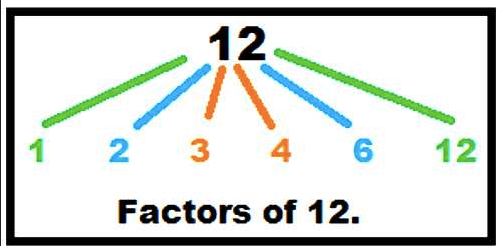
Start with arrays. Give students a number like 12 and ask them to build every rectangle they can with 12 square tiles — each unique rectangle reveals a factor pair (1×12, 2×6, 3×4). Once students see the visual logic, move to a systematic listing strategy: start at 1 and work upward, testing each divisor in order, so nothing gets missed. This two-step progression — concrete arrays first, then organized listing — prevents the random guessing that causes students to skip pairs.
What exercises help students practice finding factor pairs?
The most effective practice moves from structured to open-ended. Begin with guided tables where students fill in missing factor pairs for a given number, then progress to open problems where they must find all pairs independently. A good challenge exercise is the reverse: give students a factor pair and ask them to name the product, which reinforces the multiplicative relationship in both directions. Wayground's factor pairs quizzes cover this range, from single-digit combinations to multi-digit numbers.
What mistakes do students commonly make when finding factor pairs?
Two errors come up constantly. First, students stop too early — they find two or three pairs and assume they're done, missing pairs in the middle (for example, finding 1×24 and 2×12 for 24 but skipping 3×8 and 4×6). Second, they list the same pair twice in different order, counting 3×8 and 8×3 as separate pairs. Teaching a consistent low-to-high testing strategy fixes both: start at 1, stop when the two factors cross each other, and you'll catch every pair exactly once.
How do I use Wayground's factor pairs quizzes in my class?
You can run these quizzes as a digital quiz hosted on Wayground — students work through problems on their devices and results come back to you instantly. If you prefer paper, download the printable PDF and distribute it in class; every quiz includes a complete answer key, so grading is straightforward. For paper submissions, the Wayground for Teachers app lets you scan or capture student work to grade it without re-entering everything by hand.
How does Common Core sequence factor pairs in the math curriculum?
Common Core introduces factor pairs in fourth grade, where students are expected to find all factor pairs for whole numbers up to 100 and distinguish between prime and composite numbers. This builds directly on the multiplication fluency developed in third grade and sets the stage for fifth-grade work with greatest common factors and least common multiples. Factor pairs are the conceptual bridge between knowing multiplication facts and reasoning about number structure.
How can I differentiate factor pairs practice for mixed-ability students?
For students who struggle, Wayground's reduced answer choices accommodation limits the options displayed, which lowers the cognitive load while they're still building the concept. The quiz-level tools let you create an alternate version with a larger font size or dyslexia-friendly font for students who need it — same problems, more accessible format. For students who need a language support, the quiz translation feature means ELL students can engage with the math without being blocked by vocabulary.

Accessibility
Features
Wayground Super
School & District
Wayground for Business
Create a quiz
Create a presentation
Wayground AI
Subjects
Mathematics
Social Studies
Science
Physics
Chemistry
Biology
About
Our Story
Wayground Blog
Media Kit
Careers
Support
F.A.Q.
Help & Support
Privacy Policy
Terms of Service
Teacher Resources
2026 Wayground


Get our app

