
Resource Type


Subjects
7th Grade Factors of Production Quizzes
Test your Grade 7 understanding of factors of production with this comprehensive quiz featuring practice questions on land, labor, capital, and entrepreneurship. Assess your knowledge of how these essential economic resources combine to create goods and services through instant feedback and self-paced assessment.

15 questions
SS7E1, SS7E3 African Economies and Factors of Production

Quiz
•
7th Grade

20 questions
Factors of Production
Quiz
•
5th - 12th Grade

5 questions
Factors of Production
Quiz
•
6th - 8th Grade
10 questions
Four Factors of Production Quiz
Quiz
•
6th - 8th Grade

8 questions
Factors of Production
Quiz
•
6th Grade - Professional Development

20 questions
Factors of Production and Market Dynamics Quiz
Quiz
•
7th Grade
25 questions
Factors of Production
Quiz
•
4th - 8th Grade
13 questions
SS7E3 Factors of Production
Quiz
•
6th - 7th Grade
20 questions
Factors of Production
Quiz
•
6th - 8th Grade
11 questions
Factors of production
Quiz
•
6th Grade
6 questions
Factors of Production
Quiz
•
6th - 8th Grade
21 questions
Four Factors of Production
Quiz
•
6th - 8th Grade
Explore 7th Grade Factors of Production Quizzes
Factors of Production quizzes for Grade 7 students provide comprehensive assessment tools that help young economists understand the fundamental building blocks of economic systems. These carefully crafted practice questions guide students through the four essential factors—land, labor, capital, and entrepreneurship—while developing critical thinking skills about how resources combine to create goods and services. Through targeted assessment activities, seventh-grade learners gain deeper understanding of resource scarcity, opportunity cost, and the interdependent relationships between natural resources, human effort, physical capital, and innovative business leadership. The feedback-driven approach ensures students can identify knowledge gaps and strengthen their grasp of how different production factors influence economic outcomes in both local and global contexts. Wayground's extensive collection of teacher-created economics quizzes offers educators millions of resources specifically designed to support Grade 7 instruction on factors of production concepts. The platform's robust search and filtering capabilities allow teachers to locate standards-aligned materials that match their specific curriculum requirements, while differentiation tools enable customization for diverse learning needs within the classroom. These digital-first assessment resources support flexible delivery formats, allowing educators to seamlessly integrate quiz activities into both synchronous and asynchronous learning environments. Teachers can leverage these comprehensive tools for initial concept introduction, ongoing skill reinforcement, targeted remediation for struggling learners, and enrichment opportunities for advanced students, creating a complete instructional ecosystem that adapts to various planning needs and pedagogical approaches throughout their economics unit.
FAQs
How do I teach the four factors of production to students?
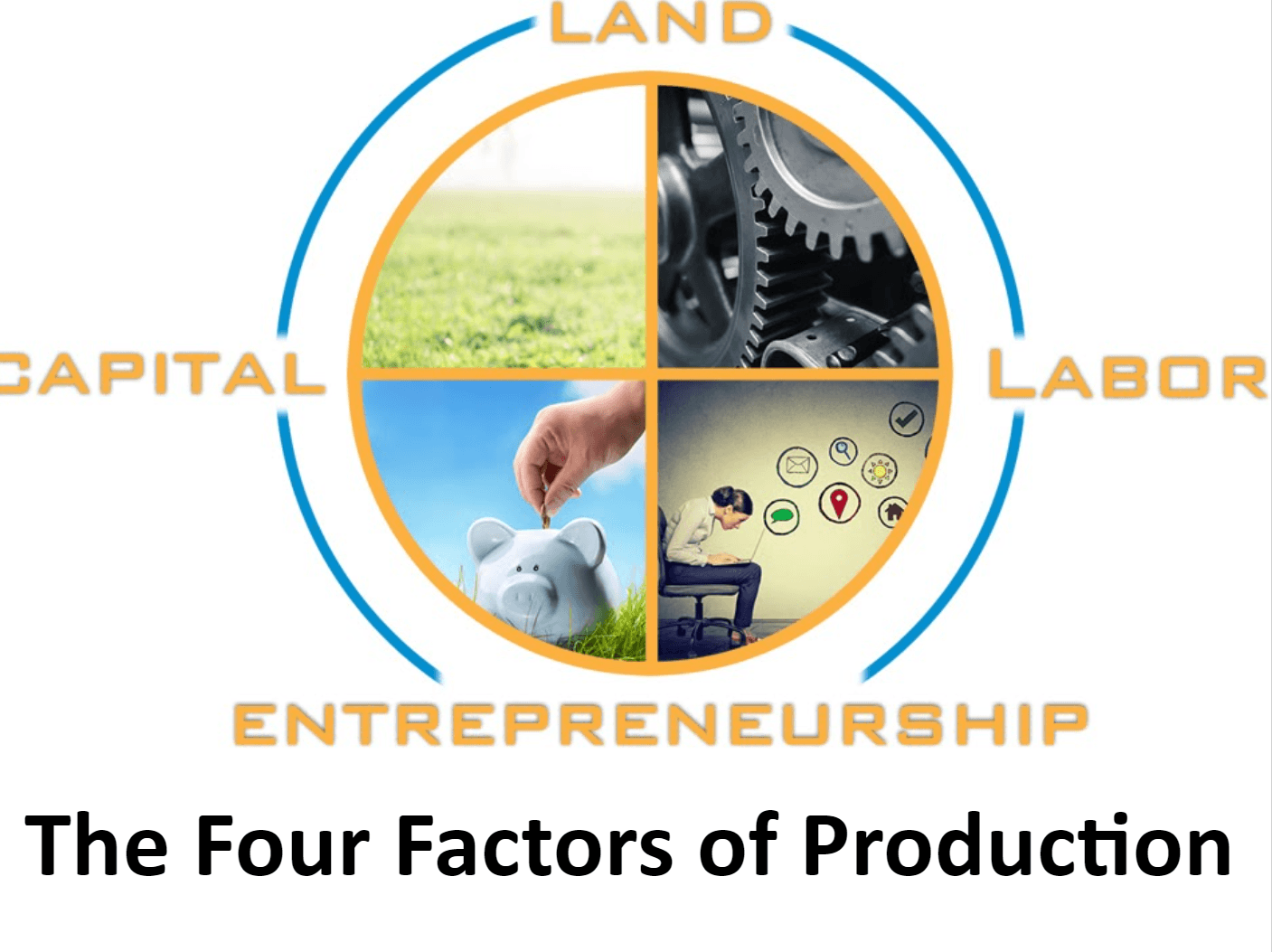
Start by anchoring each factor to a concrete, familiar example: land as the farm, labor as the farmer, capital as the tractor, and entrepreneurship as the person who started the farm business. Once students can identify each factor in isolation, move to scenarios where all four interact to produce a single good or service. This progression from recognition to analysis builds the conceptual fluency students need for more advanced economics topics like opportunity cost and resource allocation.
What exercises help students practice identifying factors of production?
Scenario-based categorization exercises are the most effective practice format for this topic. Give students a brief description of a production process and ask them to label each element as land, labor, capital, or entrepreneurship. Varying the industries covered, from agriculture to tech startups, prevents students from pattern-matching to a single context and builds genuine transferable understanding.
What mistakes do students commonly make when identifying factors of production?
The most frequent error is confusing capital with money. In economics, capital refers to manufactured tools, machinery, and equipment used in production, not financial capital or currency. Students also frequently misclassify entrepreneurship, either omitting it entirely or conflating it with labor. Targeted practice that explicitly distinguishes these factors in side-by-side comparisons helps correct both misconceptions before they solidify.
How do I explain entrepreneurship as a factor of production?
Entrepreneurship is the factor that organizes and takes on the risk of combining land, labor, and capital to produce goods or services. Unlike the other three factors, it is defined by decision-making and risk-bearing rather than a physical resource or human effort alone. Using real business founding stories, such as a student starting a lawn care service, makes this abstract factor concrete and distinguishable from labor.
How can I use factors of production quizzes to assess student understanding?
Use scenario-based quizzes as formative checks after initial instruction to identify which factor students consistently misclassify. Answer keys included with Wayground quizzes allow students to self-assess and immediately review errors, which supports retention. For a summative lens, look for whether students can explain why a given resource belongs to a specific category rather than simply labeling it correctly.
How do I use Wayground's factors of production quizzes in my classroom?
Wayground's factors of production quizzes are available as printable PDFs for traditional classroom use and in digital formats for technology-integrated environments, including the option to host them as a live quiz on Wayground. Teachers can assign them as in-class practice, homework, or review activities. For students who need additional support, Wayground's accommodation tools allow you to enable read aloud, extended time, or reduced answer choices for individual students without disrupting the rest of the class.

Accessibility
Features
Wayground Super
School & District
Wayground for Business
Create a quiz
Create a presentation
Wayground AI
Subjects
Mathematics
Social Studies
Science
Physics
Chemistry
Biology
About
Our Story
Wayground Blog
Media Kit
Careers
Support
F.A.Q.
Help & Support
Privacy Policy
Terms of Service
Teacher Resources
2026 Wayground


Get our app

