


Flat Shapes Quizzes
Master flat shapes with our comprehensive collection of geometry quizzes designed to assess understanding of 2D shapes through engaging practice questions. These self-paced assessments provide instant feedback to help students strengthen their knowledge of circles, squares, triangles, and other fundamental geometric forms.

20 questions
Flat Shapes and Patterns

Quiz
•
1st Grade

15 questions
flat shapes
Quiz
•
2nd - 3rd Grade

5 questions
FLAT SHAPES
Quiz
•
2nd Grade

17 questions
Flat Shapes
Quiz
•
KG - 1st Grade
9 questions
Flat and Solid Shapes/ Patterns
Quiz
•
KG

8 questions
Flat Shapes
Quiz
•
KG - 1st Grade
5 questions
Flat Shapes
Quiz
•
1st Grade
20 questions
Geometry Vocab Quiz - 2D
Quiz
•
5th Grade
13 questions
flat shapes
Quiz
•
3rd Grade
30 questions
Flat Shapes and Patterns
Quiz
•
2nd Grade
9 questions
Chapter Review: Flat Shapes
Quiz
•
KG - 1st Grade
7 questions
Features of flat shapes.
Quiz
•
1st Grade
Explore Flat Shapes Quizzes
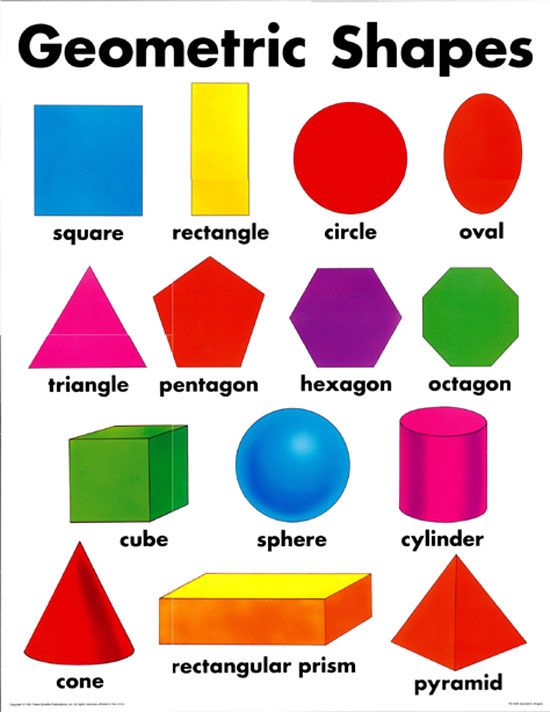
Flat shapes form the foundation of geometric understanding, representing two-dimensional figures that exist on a single plane without depth or thickness. These fundamental geometric concepts include circles, squares, rectangles, triangles, and other polygons that students encounter daily in their mathematical journey. Wayground's comprehensive quiz collection focuses specifically on flat shapes, offering targeted assessment opportunities that help students develop spatial reasoning skills and geometric vocabulary. Through carefully designed practice questions, learners can strengthen their ability to identify, classify, and analyze the properties of various two-dimensional figures while receiving immediate feedback to guide their understanding. Wayground supports educators with an extensive library of millions of teacher-created flat shapes quizzes that can be easily discovered through advanced search and filtering capabilities. Teachers can access standards-aligned content that matches their curriculum requirements while utilizing differentiation tools to customize assessments for diverse learning needs. The platform's flexible digital delivery system enables instructors to assign quizzes for independent practice, use them during live classroom sessions, or incorporate them into homework assignments. These versatile quiz resources prove invaluable for lesson planning, identifying areas requiring remediation, providing enrichment opportunities for advanced learners, and reinforcing essential geometric concepts throughout the academic year.
FAQs
How do I teach the basics of flat shapes?
Start by connecting abstract shapes to real-world objects. A classroom clock is a circle, a windowpane is a rectangle. Use physical manipulatives like pattern blocks or cut-outs to let students feel the sides and corners. Introduce vocabulary like 'side' and 'vertex' once they have a tactile understanding of the forms.
What exercises help students practice identifying flat shapes?
Effective practice moves from simple to complex. Start with quizzes that ask students to identify and name basic shapes like circles and squares. Progress to activities that require classifying polygons by the number of sides (triangles, quadrilaterals, pentagons) and eventually to calculating perimeter and area for regular shapes.
What are common misconceptions when learning about flat shapes?
Students often struggle with orientation, believing a shape is different if it's rotated. For example, they may not recognize a tilted square as a square. Another common issue is confusing similar shapes, such as squares and non-square rectangles, or failing to distinguish between 2D (flat) and 3D (solid) figures.
How can I use these flat shapes quizzes in my classroom?
These quizzes are designed for flexibility. You can host them as a digital quiz on the Wayground platform for interactive practice or print them as PDFs for hands-on activities. Every quiz includes a complete answer key to streamline grading and feedback.
How does the concept of flat shapes progress through the elementary curriculum?
In line with Common Core standards, students begin in kindergarten by identifying basic shapes by name. In first and second grade, they learn to describe and classify shapes by their attributes, like the number of sides and vertices. By third grade, this understanding is applied to calculate area and perimeter, connecting geometry to measurement.
How can I differentiate practice for students struggling with shapes?
For digital assignments, you can use Wayground's accommodation features to provide text-to-speech support with Read Aloud or reduce the number of answer choices. For printable quizzes, you can create alternate versions with larger fonts or a dyslexia-friendly font to improve readability for students with visual processing needs.

Accessibility
Features
Wayground Super
School & District
Wayground for Business
Create a quiz
Create a presentation
Wayground AI
Subjects
Mathematics
Social Studies
Science
Physics
Chemistry
Biology
About
Our Story
Wayground Blog
Media Kit
Careers
Support
F.A.Q.
Help & Support
Privacy Policy
Terms of Service
Teacher Resources
2026 Wayground


Get our app

