
Resource Type


Subjects
Math
More
1st Grade Greater Than Less Than Quizzes
Assess your Grade 1 students' understanding of greater than and less than concepts with this interactive math quiz. Practice comparing numbers through self-paced questions that provide instant feedback to reinforce number sense skills.

10 questions
Greater Than, Less Than

Quiz
•
1st Grade
20 questions
Comparing Greater Than Less Than
Quiz
•
1st Grade

15 questions
Greater Than, Less Than
Quiz
•
1st Grade

20 questions
Greater Than/Less Than
Quiz
•
1st Grade

12 questions
Greater Than/Less Than
Quiz
•
1st Grade

14 questions
Greater Than Less Than Rational Numbers
Quiz
•
1st Grade
20 questions
Greater Than Less Than Rational Numbers
Quiz
•
1st Grade
12 questions
Integers Greater Than Less Than
Quiz
•
1st Grade
6 questions
Greater, Less Than, Equal To
Quiz
•
1st Grade
11 questions
Greater than and Less than
Quiz
•
1st Grade
10 questions
1.2G Compare Numbers Using <, >, =
Quiz
•
1st Grade
10 questions
Greater Than, Less Than, or Equal To
Quiz
•
1st Grade
Explore 1st Grade Greater Than Less Than Quizzes
Greater than less than concepts form a foundational element of mathematical reasoning for Grade 1 students, helping young learners develop critical comparison and ordering skills. These interactive quizzes available through Wayground provide comprehensive assessment opportunities that guide students through systematic practice questions designed to strengthen their understanding of numerical relationships. The digital format delivers immediate feedback as students work through carefully structured problems involving symbol recognition, number comparison, and inequality concepts, allowing teachers to monitor comprehension in real-time while students build confidence with these essential mathematical foundations. Wayground's extensive collection draws from millions of teacher-created resources specifically designed to support Grade 1 mathematics instruction through targeted quiz-based learning experiences. The platform's robust search and filtering capabilities enable educators to quickly locate standards-aligned materials that match their specific curriculum requirements, while built-in differentiation tools allow for seamless customization based on individual student needs. Teachers can deploy these digital assessments across various classroom formats, from whole-group instruction to independent practice sessions, supporting comprehensive lesson planning that addresses remediation for struggling learners and enrichment opportunities for advanced students, ultimately ensuring consistent skill reinforcement throughout the academic year.
FAQs
What are the expectations for 1st graders with greater than and less than?
First graders are expected to compare two-digit numbers. They learn to use the formal mathematical symbols for greater than (>), less than (<), and equal to (=) to record their comparisons. The core of this skill is understanding place value—recognizing that the tens digit is more significant than the ones digit.
How do I teach 1st graders to compare two-digit numbers?
Teach them a systematic process: first, look at the digit in the tens place. If one is larger, that number is greater. If the tens digits are the same, then they must look at the digit in the ones place to determine which number is greater. For example, in comparing 42 and 29, the 4 in the tens place makes 42 greater.
What's a common error for 1st graders when comparing numbers?
A frequent mistake is reversing the > and < symbols, even when they know which number is larger. Another common error is only looking at the ones digit and ignoring the tens place, leading them to think 29 is greater than 31.
How can I use these Grade 1 quizzes for practice?
Wayground quizzes can be assigned as a digital quiz for immediate, automated feedback, or you can download the printable PDF for focused, offline practice. Every quiz comes with a complete answer key, which saves you time when grading.
How does this skill build on what students learned in kindergarten?
Following the Common Core progression, first grade formalizes the comparison skills learned in kindergarten. Students move from comparing small groups of objects to comparing abstract two-digit numbers, explicitly using place value reasoning and the standard <, >, and = symbols.
How can I help students who still confuse the < and > symbols?
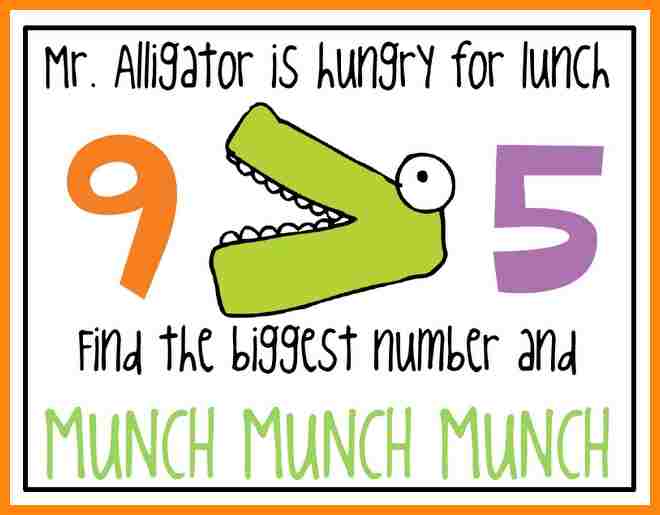
Use a visual anchor, like the "alligator mouth" that always "eats" the bigger number. You can also use a number line, showing that numbers to the right are greater and numbers to the left are lesser. Consistent verbal reinforcement—saying "seven is less than ten" while writing "7 < 10"—also helps.

Accessibility
Features
Wayground Super
School & District
Wayground for Business
Create a quiz
Create a presentation
Wayground AI
Subjects
Mathematics
Social Studies
Science
Physics
Chemistry
Biology
About
Our Story
Wayground Blog
Media Kit
Careers
Support
F.A.Q.
Help & Support
Privacy Policy
Terms of Service
Teacher Resources
2026 Wayground


Get our app

