

11th Grade Heart Dissection Quizzes
Test your understanding of heart anatomy and dissection procedures with this comprehensive Grade 11 Human Biology quiz. Practice identifying heart structures, blood flow patterns, and dissection techniques through interactive questions with instant feedback.

20 questions
Heart Dissection Quiz

Quiz
•
11th Grade

35 questions
Heart Dissection Quizizz
Quiz
•
11th Grade

33 questions
Heart Dissection PRE LAB QUIZ
Quiz
•
11th Grade
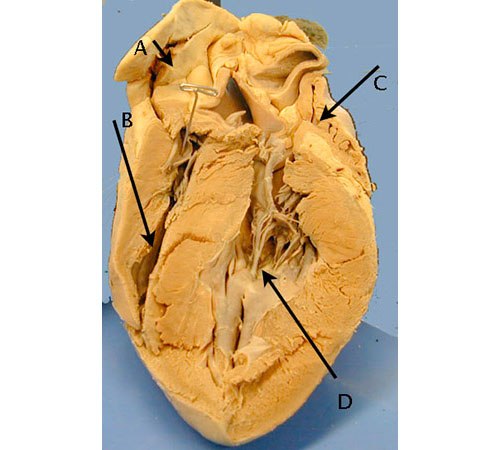
15 questions
The Heart Dissection
Quiz
•
11th - 12th Grade
15 questions
Pig heart dissection quiz
Quiz
•
11th - 12th Grade

16 questions
Heart Dissection Pre Lab
Quiz
•
11th - 12th Grade
21 questions
Heart Quiz
Quiz
•
10th - 12th Grade
20 questions
Heart Dissection Quiz
Quiz
•
9th - 12th Grade
20 questions
Dissection Class
Quiz
•
9th - 12th Grade
24 questions
Sheep Heart dissection
Quiz
•
9th - 12th Grade
15 questions
Sheep Heart dissection practical
Quiz
•
9th - 12th Grade
15 questions
PBS 1.2.5 Heart structure
Quiz
•
9th - 12th Grade
Browse by grade
Explore 11th Grade Heart Dissection Quizzes
Heart dissection activities for Grade 11 students provide essential hands-on learning experiences that complement theoretical understanding of cardiovascular anatomy and physiology. The comprehensive quiz collections available through Wayground offer detailed assessment opportunities covering cardiac chamber identification, blood vessel pathways, valve functions, and the intricate structural relationships within the mammalian heart. These practice questions enable students to test their understanding of anatomical terminology, trace blood flow patterns, and analyze the functional significance of different cardiac structures observed during laboratory dissections. The immediate feedback provided through these assessments helps students identify knowledge gaps and reinforces critical concepts about heart morphology, electrical conduction systems, and the relationship between cardiac structure and function. Wayground's extensive library contains millions of teacher-created heart dissection quizzes that support educators in delivering comprehensive cardiovascular education aligned with Grade 11 science standards. The platform's robust search and filtering capabilities allow teachers to locate resources that match specific learning objectives, whether focusing on comparative anatomy, human physiology, or laboratory technique assessment. Advanced customization tools enable instructors to modify existing quizzes or create differentiated versions that accommodate varying student readiness levels, from basic anatomical identification to complex physiological analysis. The flexible digital delivery formats support both classroom instruction and independent study, while comprehensive reporting features help teachers identify students requiring additional support with anatomical concepts or those ready for enrichment activities exploring advanced cardiovascular pathophysiology.
FAQs
How do I teach a heart dissection lab effectively?
An effective heart dissection lesson begins with pre-lab preparation that familiarizes students with cardiac anatomy before they handle a specimen. Use labeled diagrams to introduce the four chambers, major valves, and key blood vessels, then walk students through the dissection sequence systematically, pausing to identify structures as they are exposed. Post-lab reflection activities that ask students to trace the pathway of blood through the heart consolidate what they observed during the dissection.
What exercises help students practice identifying heart structures before a dissection lab?
Diagram labeling exercises are one of the most effective ways to build anatomical vocabulary before students encounter a real specimen. Practice problems that ask students to trace blood flow through the pulmonary and systemic circuits, match valve names to their locations, and distinguish oxygenated from deoxygenated blood pathways all reinforce the conceptual framework students need during hands-on dissection. Identification exercises paired with step-by-step dissection protocols give students a clear mental map of what to look for and in what order.
What mistakes do students commonly make when learning heart anatomy?
The most persistent misconception is confusing left and right orientation, since the heart's left and right sides are reversed relative to an observer's perspective. Students also frequently conflate the roles of the atria and ventricles, misidentifying which chambers receive blood and which pump it out. A related error is assuming that the right side of the heart carries oxygenated blood, which can be corrected by explicitly tracing the pulmonary versus systemic circuits during pre-lab instruction.
How do I support students with different learning needs during a heart dissection unit?
Differentiation in a dissection unit typically involves scaffolding anatomical vocabulary for students who need it and providing more open-ended observation prompts for advanced learners. On Wayground, teachers can apply individual accommodations such as Read Aloud for students who need questions and content read to them, reduced answer choices to lower cognitive load for struggling learners, and adjustable font sizes and themes through Reading Mode. These settings can be applied per student without notifying the rest of the class, making differentiation seamless within a single session.
How can I use heart dissection quizzes to prepare students for the lab?
Heart dissection quizzes work best as pre-lab tools when they walk students through the sequence of the dissection before they touch a specimen, using detailed diagrams and step-by-step protocols. Wayground's heart dissection quizzes are available as printable PDFs for traditional classroom preparation and in digital formats for technology-integrated environments, and teachers can also host them as a quiz directly on Wayground. Complete answer keys are included, allowing students to self-check their understanding of cardiac structures and blood flow pathways independently before the lab session begins.
What anatomical vocabulary should students know before a heart dissection?
Students should be comfortable with the names and functions of the four chambers (right atrium, right ventricle, left atrium, left ventricle), the four valves (tricuspid, pulmonary, mitral, and aortic), and the major vessels including the aorta, pulmonary artery, pulmonary veins, and vena cava. Understanding the distinction between systole and diastole and the directional terms anterior, posterior, superior, and inferior also helps students navigate the specimen accurately. Building this vocabulary through diagram identification exercises before the lab significantly reduces confusion during the dissection itself.

Accessibility
Features
Wayground Super
School & District
Wayground for Business
Create a quiz
Create a presentation
Wayground AI
Subjects
Mathematics
Social Studies
Science
Physics
Chemistry
Biology
About
Our Story
Wayground Blog
Media Kit
Careers
Support
F.A.Q.
Help & Support
Privacy Policy
Terms of Service
Teacher Resources
2026 Wayground


Get our app

