


7th Grade History of Life on Earth Quizzes
Test your Grade 7 understanding of the History of Life on Earth with this comprehensive biology quiz designed to assess your knowledge of evolutionary timelines and major life developments. Practice essential concepts through targeted questions that provide instant feedback to help you master this fundamental topic in life science.

14 questions
History of Life on Earth

Quiz
•
7th Grade

20 questions
History of Life on Earth Unit Quiz
Quiz
•
7th Grade
29 questions
LS U5 review- history of life on earth
Quiz
•
6th - 8th Grade
12 questions
The History of Life on Earth Review
Quiz
•
7th Grade

18 questions
History of Life on Earth
Quiz
•
7th Grade

23 questions
History of Life on Earth
Quiz
•
7th Grade
19 questions
The History of Life on Earth
Quiz
•
6th - 8th Grade
13 questions
The History of Life on Earth
Quiz
•
7th Grade
10 questions
History of Life on Earth
Quiz
•
6th - 8th Grade
20 questions
History of Life on Earth
Quiz
•
6th - 8th Grade
25 questions
History of Life on Earth
Quiz
•
7th Grade
10 questions
History of Life on Earth
Quiz
•
7th - 8th Grade
Explore 7th Grade History of Life on Earth Quizzes
History of Life on Earth quiz resources for Grade 7 students provide comprehensive assessment tools that explore the fascinating journey of life from its earliest origins to modern biodiversity. These carefully curated quizzes available through Wayground cover essential concepts including the formation of Earth's early atmosphere, the emergence of prokaryotic and eukaryotic cells, major evolutionary milestones, mass extinction events, and the development of complex multicellular organisms. Students engage with practice questions that develop critical thinking skills about geological time scales, fossil evidence, and evolutionary processes while receiving immediate feedback to strengthen their understanding of how life has changed and adapted over billions of years. Wayground supports educators with millions of teacher-created History of Life on Earth quiz collections that can be easily discovered through robust search and filtering capabilities aligned with science education standards. Teachers can customize existing assessments or create differentiated versions to meet diverse learning needs, utilizing flexible digital delivery formats that accommodate various classroom environments and learning styles. These comprehensive quiz resources enable educators to effectively plan lessons, provide targeted remediation for struggling students, offer enrichment opportunities for advanced learners, and reinforce key concepts about Earth's biological history through repeated practice and skill-building activities that support mastery of this foundational Grade 7 science content.
FAQs
How do I teach the history of life on Earth in a science class?
Teaching the history of life on Earth is most effective when you anchor instruction around geological time scales and use visual timelines to help students internalize the scale of billions of years. Start with the formation of Earth's early atmosphere and the emergence of prokaryotic cells before moving to eukaryotes, multicellular organisms, and mass extinction events. Connecting each major biological development to its environmental trigger — such as the Great Oxidation Event or the end-Cretaceous asteroid impact — helps students understand evolution as a response to changing conditions rather than a linear progression.
What are common student misconceptions about the history of life on Earth?
One of the most persistent misconceptions is that evolution is a slow, uninterrupted process — students often struggle to reconcile this with the concept of mass extinctions and rapid adaptive radiation. Many students also confuse the age of the Earth with the age of complex life, not realizing that prokaryotes dominated for roughly 2 billion years before eukaryotic cells appeared. Another common error is misreading evolutionary trees as ladders of progress rather than branching diagrams showing shared ancestry.
What types of practice problems help students understand evolutionary timelines and the fossil record?
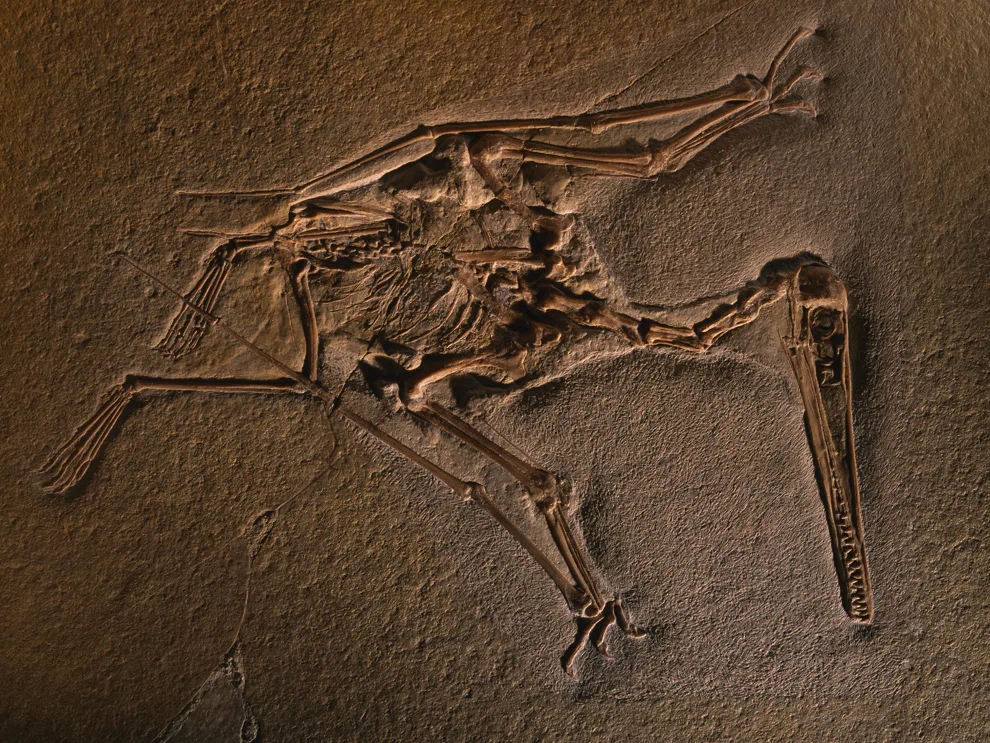
Practice problems that ask students to place major events — such as the Cambrian Explosion, the emergence of vascular plants, or the first vertebrates — on a geological time scale are particularly effective for building chronological understanding. Interpreting cladograms and evolutionary trees forces students to apply their knowledge of shared derived characteristics rather than just memorizing facts. Connecting fossil evidence to specific geological periods reinforces how the fossil record documents evolutionary change over time.
How do I help struggling students grasp the complexity of geological time and biological evolution?
Scaling geological time into a relatable format — such as compressing 4.6 billion years into a single calendar year or a football field — dramatically helps students who struggle with the abstract scope of deep time. Breaking the topic into discrete units (early Earth, prokaryotes, eukaryotes, multicellular life, mass extinctions) prevents cognitive overload and allows students to build knowledge incrementally. On Wayground, teachers can assign accommodations such as read aloud support and reduced answer choices for individual students, making digital quiz sessions more accessible without disrupting the rest of the class.
How can I use History of Life on Earth quizzes in my classroom?
History of Life on Earth quizzes on Wayground are available as printable PDFs for traditional classroom use and in digital formats for technology-integrated environments, giving teachers flexibility to assign them as independent practice, homework, or in-class review. Digital versions can be hosted as a quiz directly on Wayground, allowing teachers to track student performance and identify gaps in understanding across specific concepts like mass extinctions or the fossil record. All quizzes include complete answer keys, which reduces grading time and supports self-paced or independent learning.
How do I assess student understanding of major evolutionary milestones and the fossil record?
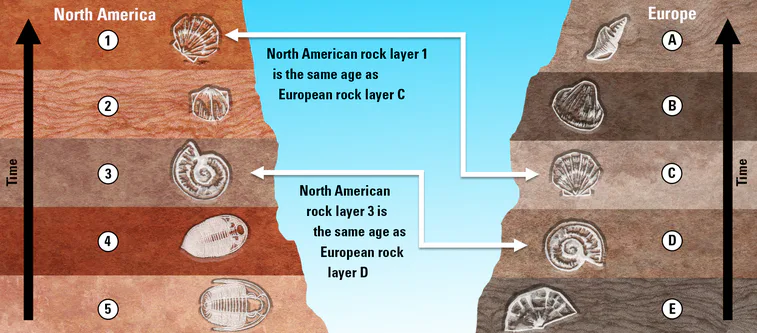
Effective assessment for this topic should go beyond recall and require students to interpret evidence — for example, analyzing a stratigraphic column to determine the relative age of fossils, or explaining how a mass extinction event could trigger adaptive radiation in surviving lineages. Short-answer questions that ask students to connect environmental changes to evolutionary outcomes reveal whether students understand causality or are simply memorizing a sequence of events. Including cladogram interpretation tasks in assessments is also a reliable way to evaluate conceptual understanding of evolutionary relationships.

Accessibility
Features
Wayground Super
School & District
Wayground for Business
Create a quiz
Create a presentation
Wayground AI
Subjects
Mathematics
Social Studies
Science
Physics
Chemistry
Biology
About
Our Story
Wayground Blog
Media Kit
Careers
Support
F.A.Q.
Help & Support
Privacy Policy
Terms of Service
Teacher Resources
2026 Wayground


Get our app

