


Logic and Reasoning Quizzes
Test your mathematical reasoning skills with our comprehensive Logic and Reasoning quiz designed to assess understanding of logical thinking patterns and problem-solving strategies. Practice self-paced questions that provide instant feedback to strengthen your analytical abilities and mathematical deduction skills.
Recommended topics for you

7 questions
Warm UP Law of Detachment & Law of Syllogism

Quiz
•
9th Grade

24 questions
2.5.1_Laws of Logic Video Lesson
Quiz
•
9th - 12th Grade

10 questions
G2.1 Inductive Reasoning
Quiz
•
7th - 12th Grade
20 questions
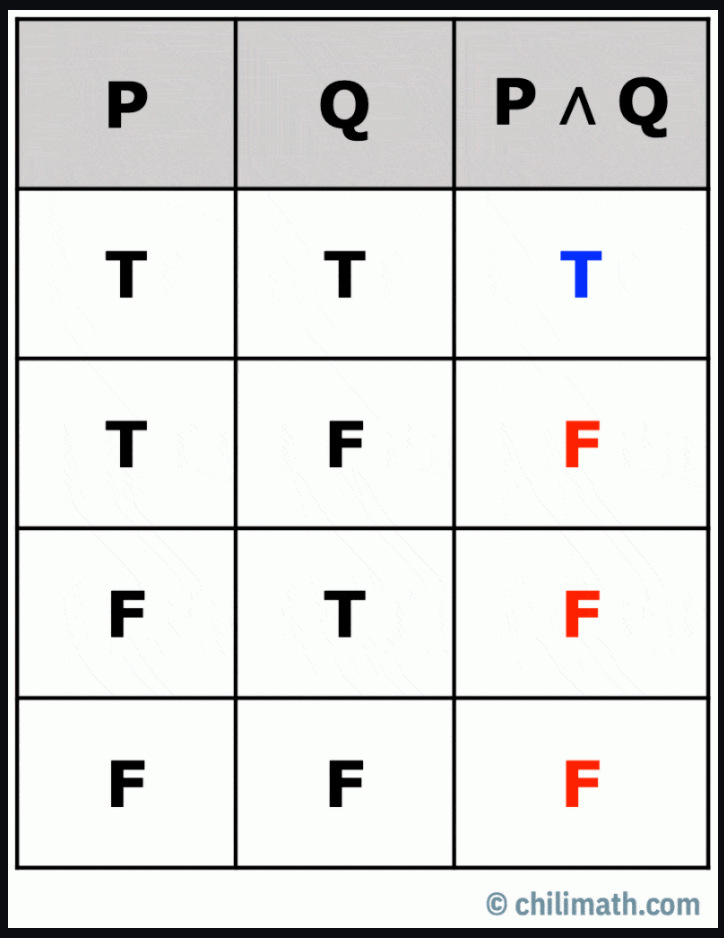
Geometry - Truth Tables & Conditional Statements
Quiz
•
9th - 10th Grade

10 questions
Logic Unit Quiz (G)
Quiz
•
8th - 11th Grade

15 questions
Inductive reasoning and conjecture
Quiz
•
5th - 8th Grade
15 questions
Deductive Reasoning Quiz
Quiz
•
8th Grade
35 questions
Geometry Truth Tables
Quiz
•
9th - 11th Grade
25 questions
Reasoning and Conditional Statements
Quiz
•
8th - 10th Grade
21 questions
Geometry Reasoning and Proofs
Quiz
•
8th Grade
15 questions
Proof and Logic review
Quiz
•
8th - 11th Grade
6 questions
Geometry Inductive reasoning
Quiz
•
4th - 12th Grade
Explore Logic and Reasoning Quizzes
Logic and reasoning skills form the foundation of mathematical thinking, requiring students to analyze patterns, construct valid arguments, and solve problems through systematic approaches. Mathematics quizzes focused on logic and reasoning provide comprehensive assessment opportunities that challenge students to demonstrate their understanding of deductive and inductive reasoning, logical sequences, and mathematical proof techniques. These practice questions develop critical thinking abilities by presenting scenarios that require students to identify logical fallacies, complete pattern sequences, and apply reasoning principles to mathematical contexts. Through immediate feedback and varied question formats, students strengthen their analytical skills while building confidence in their ability to approach complex mathematical problems methodically and systematically. Wayground, formerly Quizizz, empowers educators with access to millions of teacher-created logic and reasoning quiz resources that support diverse instructional needs across mathematics curricula. The platform's robust search and filtering capabilities enable teachers to locate materials aligned with specific standards and learning objectives, while customization tools allow for differentiation based on individual student abilities and learning styles. These digital-first quiz collections can be delivered through multiple formats including live classroom sessions, self-paced assignments, and homework activities, providing flexibility for both in-person and remote learning environments. Teachers utilize these comprehensive resources for diagnostic assessment, targeted remediation, and enrichment activities, ensuring that students receive appropriate challenges that reinforce logical thinking skills and prepare them for advanced mathematical reasoning concepts.
FAQs
How do I teach the difference between inductive and deductive reasoning?
Teach inductive reasoning as “bottom-up” logic—observing specific examples to form a general rule (e.g., seeing several swans are white and concluding all swans are white). Teach deductive reasoning as “top-down” logic—using a general rule to draw a conclusion about a specific case (e.g., all men are mortal; Socrates is a man; therefore, Socrates is mortal).
What exercises help students practice logical reasoning?
Effective practice includes identifying patterns in sequences, solving logic grid puzzles, and working with conditional (if-then) statements. Quizzes that cover the Law of Syllogism and the Law of Detachment provide structured practice in applying fundamental principles of deductive logic.
What are common mistakes students make with logic problems?
Students often confuse inductive and deductive reasoning, making generalizations from insufficient evidence. Another common error is incorrectly applying the laws of logic, such as confusing a conditional statement with its converse (e.g., confusing "If it is raining, the ground is wet" with "If the ground is wet, it is raining").
How does logic and reasoning fit into the math curriculum?
Logical reasoning is a foundational skill that underpins multiple areas of mathematics. Aligned with the Common Core's emphasis on constructing viable arguments, these skills are critical for justifying steps in algebra and are essential for mastering geometric proofs in high school.
How can I use this logic and reasoning quiz with my class?
Assign this quiz as a printable PDF for focused, offline practice or as an interactive digital quiz on the Wayground platform. Both formats use the same problems and include a complete answer key, allowing you to choose the best fit for your classroom's technology access and learning goals.
How can I support students who struggle with abstract reasoning?
For students who find abstract logic challenging, use Wayground's digital accommodation tools. You can reduce the number of answer choices on multiple-choice questions to lower cognitive load or activate the Read Aloud feature to support students with reading difficulties.

Accessibility
Features
Wayground Super
School & District
Wayground for Business
Create a quiz
Create a presentation
Wayground AI
Subjects
Mathematics
Social Studies
Science
Physics
Chemistry
Biology
About
Our Story
Wayground Blog
Media Kit
Careers
Support
F.A.Q.
Help & Support
Privacy Policy
Terms of Service
Teacher Resources
2026 Wayground


Get our app

