


12th Grade Mitosis Quizzes
Test your Grade 12 biology knowledge with this comprehensive mitosis quiz designed to assess your understanding of cell division processes. Practice key concepts through targeted questions and receive instant feedback to strengthen your grasp of mitotic phases, chromosome behavior, and cellular reproduction.

31 questions
Cell Cycle and Mitosis

Quiz
•
12th Grade

20 questions
Replication, Transcription, & Mitosis
Quiz
•
12th Grade

23 questions
Mitosis vs. Meiosis
Quiz
•
12th Grade
47 questions
Cell Cycle and Mitosis Concepts
Quiz
•
9th - 12th Grade

25 questions
Mitosis and Meiosis Review
Quiz
•
9th - 12th Grade

103 questions
bb Mitosis and Meiosis
Quiz
•
9th - 12th Grade
20 questions
Mitosis vs Meiosis
Quiz
•
9th - 12th Grade
21 questions
Cell cycle/Mitosis
Quiz
•
9th - 12th Grade
9 questions
Mitosis & Meiosis Warm Up
Quiz
•
9th - 12th Grade
23 questions
Cell Division Review
Quiz
•
9th - 12th Grade
12 questions
Unit 3: Cell Cycle Pop Quiz
Quiz
•
9th - 12th Grade
25 questions
Cell Cycle and Mitosis
Quiz
•
9th Grade
Explore 12th Grade Mitosis Quizzes
Mitosis represents one of the most fundamental processes in cellular biology, and Grade 12 students can deepen their understanding through comprehensive assessment tools available on Wayground (formerly Quizizz). These specialized quizzes provide detailed practice questions covering each phase of mitotic division, from prophase through telophase, enabling students to test their knowledge of chromosome behavior, spindle fiber formation, and nuclear envelope dynamics. The assessment materials offer immediate feedback on complex concepts such as sister chromatid separation, centromere function, and the role of checkpoints in cell cycle regulation, helping students identify areas requiring additional study while reinforcing their understanding of how diploid cells maintain genetic consistency through division. Wayground's extensive collection draws from millions of teacher-created resources specifically designed to support Grade 12 biology instruction on cellular reproduction processes. Teachers can efficiently locate mitosis-focused quizzes through robust search and filtering capabilities, with many resources aligned to state and national science standards for advanced high school coursework. The platform's customization tools allow educators to modify question difficulty, adjust time limits, and select specific subtopics within mitosis to meet diverse learning needs, supporting both remediation for struggling students and enrichment for advanced learners. These digital assessment formats integrate seamlessly into classroom instruction, homework assignments, and review sessions, providing teachers with flexible options to reinforce critical concepts about cell division while tracking student progress through detailed performance analytics.
FAQs
How do I teach mitosis phases to students who keep confusing them?
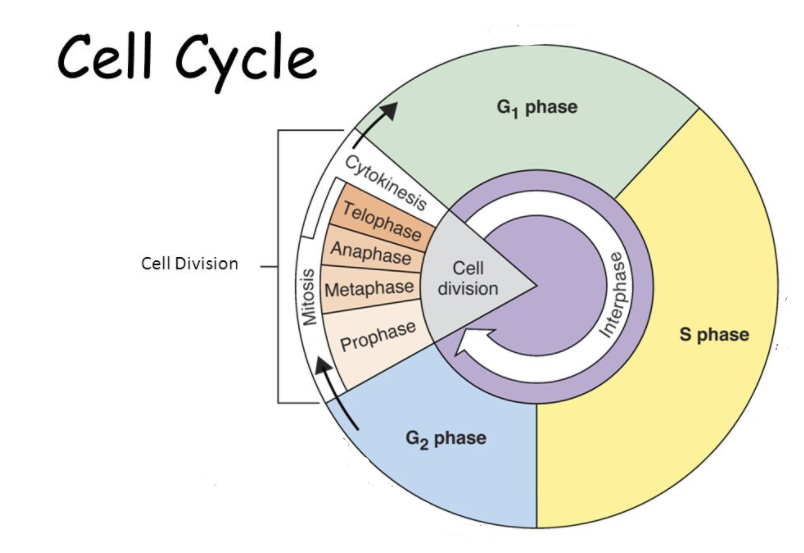
The most effective approach is to teach mitosis as a continuous, logical sequence rather than four isolated events. Have students trace what happens to chromosomes at each stage: prophase condenses them, metaphase aligns them, anaphase pulls them apart, and telophase re-envelops them in new nuclei. Using mitotic diagrams alongside this sequence — asking students to label and annotate what is actively happening — helps cement the logic behind the order rather than relying on rote memorization.
What exercises help students practice identifying mitosis stages?
Diagram-based identification exercises are the most effective practice format for mitosis because they require students to read visual evidence rather than recall definitions. Students should practice sequencing scrambled mitotic images, labeling cellular structures such as spindle fibers and chromosomes at each phase, and explaining why each stage must precede the next. Layering in short analytical questions — asking students to explain the biological significance of accurate chromosome separation — pushes practice beyond basic identification toward conceptual understanding.
What mistakes do students commonly make when learning mitosis?
The most common error is confusing mitosis with meiosis, particularly misattributing chromosome number reduction to mitosis. Students also frequently mix up anaphase and metaphase, often because they focus on visual snapshots without understanding the underlying chromosomal mechanics. Another persistent misconception is treating cytokinesis as part of mitosis itself rather than recognizing it as a separate process that follows nuclear division. Targeted practice problems that require students to explain why each phase produces a specific result — rather than simply name it — help correct these patterns.
How do I use Wayground's mitosis quizzes in my classroom?
Wayground's mitosis quizzes are available as printable PDFs for traditional classroom use and in digital formats for technology-integrated environments, giving you flexibility to assign them as in-class practice, homework, or assessments. You can also host any quiz as a live or asynchronous quiz directly on Wayground, which is useful for quickly gauging class-wide understanding of mitosis phases before moving into meiosis. Each quiz includes a complete answer key, so grading and providing targeted feedback on common errors requires minimal additional preparation.
How can I differentiate mitosis instruction for students at different levels?
For students who are still building foundational understanding, start with basic identification exercises that ask them to name phases from diagrams before introducing sequencing or analysis. Advanced learners can be challenged with problems that connect mitosis to broader concepts like cell cycle regulation, cancer biology, or the consequences of errors in chromosome distribution. On Wayground, teachers can apply individual accommodations such as read-aloud support, reduced answer choices, or extended time to specific students, ensuring that differentiation is embedded into the quiz experience rather than managed separately.
Why is understanding chromosome behavior during mitosis important for students?
Chromosome behavior during mitosis is the mechanistic foundation for understanding how genetic information is faithfully copied and distributed to daughter cells during growth and repair. Without grasping why chromosomes must align precisely at the metaphase plate and separate equally during anaphase, students cannot meaningfully engage with downstream topics like mutations, cancer, or inheritance. Mitosis also provides the conceptual scaffold students need before tackling meiosis, where chromosome behavior becomes significantly more complex.

Accessibility
Features
Wayground Super
School & District
Wayground for Business
Create a quiz
Create a presentation
Wayground AI
Subjects
Mathematics
Social Studies
Science
Physics
Chemistry
Biology
About
Our Story
Wayground Blog
Media Kit
Careers
Support
F.A.Q.
Help & Support
Privacy Policy
Terms of Service
Teacher Resources
2026 Wayground


Get our app

