
Resource Type


Subjects
3rd Grade Multiplication and Partial Products Quizzes
Practice Grade 3 multiplication and partial products with this interactive quiz designed to assess your understanding of breaking down multiplication problems into smaller, manageable parts. Test your skills with self-paced questions that provide instant feedback to help strengthen your multiplication strategies.

20 questions
Multiplication Using Rectangles

Quiz
•
3rd Grade

10 questions
Multiplication Review
Quiz
•
3rd Grade

15 questions
Develop Multiplying Multi-Digit Numbers | Grade 3
Quiz
•
3rd Grade

10 questions
Partial Products Grade 3
Quiz
•
3rd Grade
25 questions
Multiplication Using Area Models and Partial Products
Quiz
•
3rd Grade

12 questions
Multiplication & Division Assessment
Quiz
•
3rd Grade
10 questions
Multi-Digit Multiplication Partial Products
Quiz
•
3rd - 4th Grade
36 questions
Multiplication Practice
Quiz
•
3rd - 5th Grade
13 questions
Multi-digit multiplication Standard Algorithm
Quiz
•
1st - 5th Grade
15 questions
Multiplication Test
Quiz
•
3rd - 8th Grade
Explore 3rd Grade Multiplication and Partial Products Quizzes
Multiplication and partial products form a foundational mathematical strategy that helps Grade 3 students develop deeper number sense and computational fluency. Through comprehensive quiz collections available on Wayground, formerly Quizizz, students engage with targeted practice questions that break down multiplication problems into manageable components, allowing them to understand how numbers can be decomposed and recombined to solve complex calculations. These assessment tools provide immediate feedback as students work through problems involving area models, distributive property applications, and step-by-step multiplication processes, reinforcing their understanding of how partial products create complete solutions while building confidence in mathematical reasoning. Wayground supports educators with access to millions of teacher-created quiz resources specifically designed to address multiplication and partial products concepts for Grade 3 learners. The platform's robust search and filtering capabilities enable teachers to locate standards-aligned assessments that match their specific curriculum requirements and student needs. Differentiation tools allow instructors to customize quiz difficulty levels, question types, and pacing to accommodate diverse learning styles within their classrooms. These digital-first resources offer flexible delivery formats that support both whole-class instruction and individual practice sessions, making them invaluable for lesson planning, targeted remediation of computational gaps, enrichment activities for advanced learners, and ongoing skill reinforcement throughout the academic year.
FAQs
What grade do students learn partial products?
The partial products method is typically introduced in 3rd grade. It serves as a foundational strategy that bridges students' knowledge of basic multiplication facts to the more complex task of multi-digit multiplication they will encounter in later grades.
How can I introduce partial products to my 3rd-grade class?
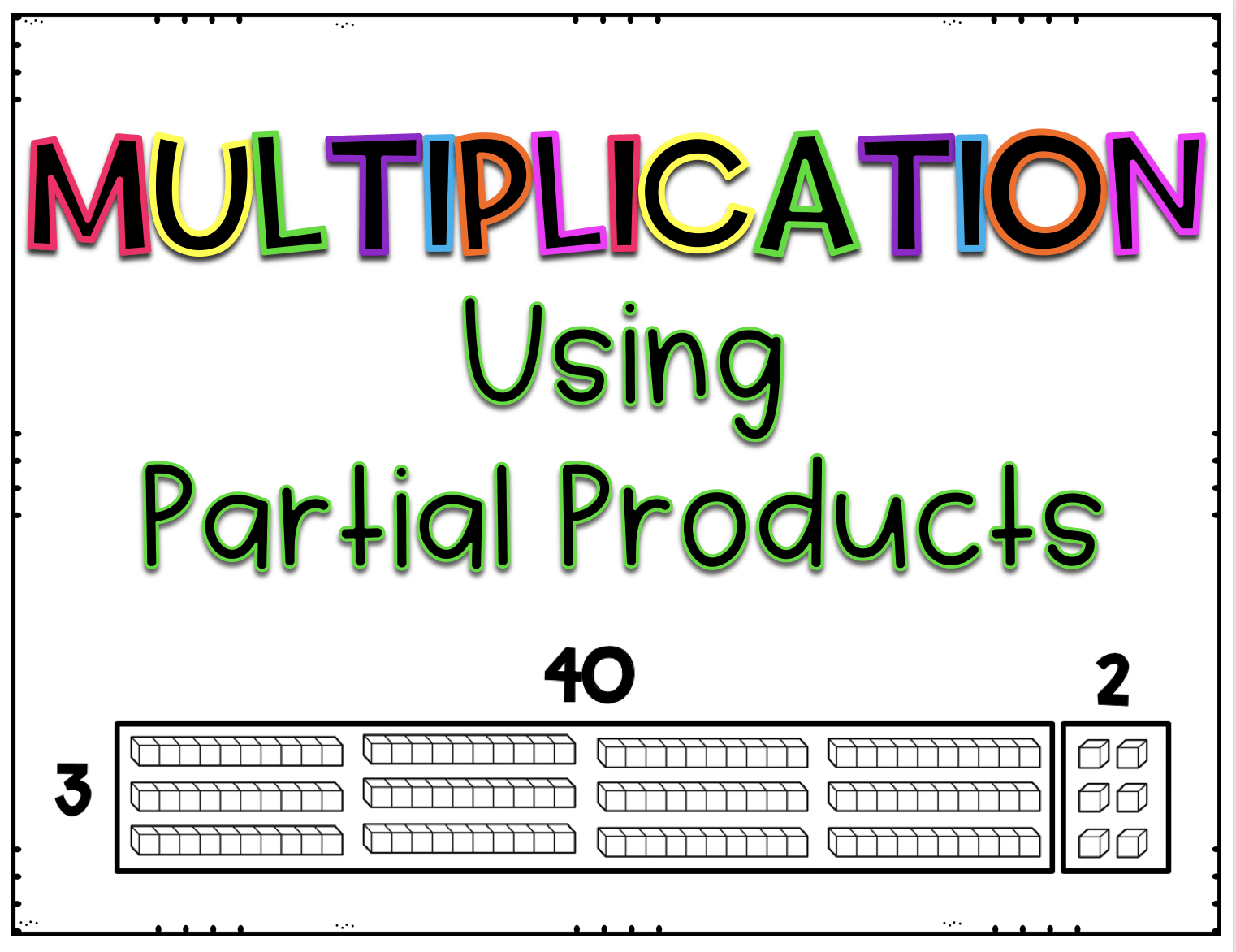
Start with visual and concrete models. Use an area model or arrays to help 3rd graders see how a larger multiplication problem can be broken down. For 14 x 6, for instance, you can draw a rectangle partitioned into a 10x6 section and a 4x6 section, then add the areas together.
What kind of practice is best for 3rd graders learning partial products?
For 3rd graders, practice should focus on two-digit by one-digit multiplication. The best quizzes provide ample space for students to write out the decomposed steps, such as (10 x 6) + (4 x 6), reinforcing the process and building good habits.
What are common errors for 3rd graders using partial products?
A common mistake for beginners is forgetting a step, such as only multiplying the tens place and neglecting the ones. Simple calculation errors in the addition or multiplication steps are also frequent as students are coordinating multiple operations.
How can I use these Grade 3 partial products quizzes?
These quizzes can be printed as PDFs for hands-on practice or assigned as a digital activity on Wayground for interactive learning. Every quiz includes a full answer key, allowing for quick grading or for students to self-check their work.
How does learning partial products in 3rd grade support curriculum standards?
This strategy directly aligns with the Common Core's emphasis on understanding the properties of operations. It provides a concrete way for students to apply the distributive property before they even learn the term, building a conceptual foundation for the standard algorithm.

Accessibility
Features
Wayground Super
School & District
Wayground for Business
Create a quiz
Create a presentation
Wayground AI
Subjects
Mathematics
Social Studies
Science
Physics
Chemistry
Biology
About
Our Story
Wayground Blog
Media Kit
Careers
Support
F.A.Q.
Help & Support
Privacy Policy
Terms of Service
Teacher Resources
2026 Wayground


Get our app

