

11th Grade One Dimensional Kinematics Quizzes
Test your mastery of Grade 11 One Dimensional Kinematics with this comprehensive quiz designed to assess your understanding of motion in a straight line. Practice essential physics problems covering displacement, velocity, and acceleration through instant feedback and self-paced assessment.
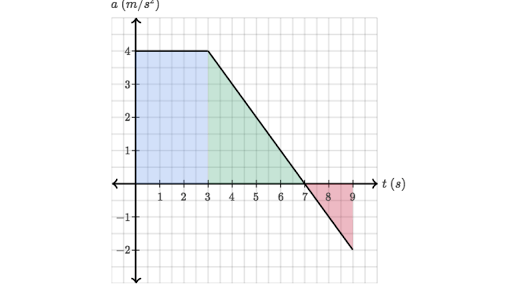
15 questions
One Dimensional Kinematics Unit Test

Quiz
•
11th Grade

10 questions
Kinematics Test 1 Review
Quiz
•
11th Grade

15 questions
Kinematics Review Guide
Quiz
•
11th Grade

30 questions
Kinematics Motion One Dimensional Final Review
Quiz
•
11th - 12th Grade

7 questions
Kinematics
Quiz
•
9th - 12th Grade
Browse by grade
Explore 11th Grade One Dimensional Kinematics Quizzes
One Dimensional Kinematics serves as a foundational pillar in Grade 11 physics education, encompassing the mathematical analysis of motion along a straight line without considering the forces that cause such motion. Through Wayground's comprehensive quiz collection, students engage with targeted practice questions that systematically build their understanding of displacement, velocity, acceleration, and the kinematic equations that govern linear motion. These assessment tools provide immediate feedback on problem-solving techniques, helping students master the critical skills of interpreting motion graphs, calculating time-dependent variables, and applying mathematical relationships to real-world scenarios involving objects moving in one dimension. Wayground supports physics educators with millions of teacher-created quiz resources specifically designed to reinforce one dimensional kinematics concepts through varied questioning formats and difficulty levels. The platform's robust search and filtering capabilities enable teachers to quickly locate quizzes aligned with curriculum standards, while customization tools allow for differentiation based on individual student needs and learning objectives. These digital assessment resources can be deployed flexibly across classroom instruction, homework assignments, and review sessions, supporting comprehensive lesson planning and enabling targeted remediation for students struggling with vector analysis or enrichment opportunities for advanced learners ready to tackle complex motion scenarios.
FAQs
How do I teach one dimensional kinematics to physics students?
Start by grounding students in the distinction between scalar quantities like distance and speed and vector quantities like displacement and velocity, since conflating these is one of the most persistent sources of error in kinematics. From there, build conceptual understanding through position-time and velocity-time graphs before introducing the kinematic equations, so students see the relationships visually before working with them algebraically. Connecting each equation to a real-world scenario, such as a car braking to a stop or a ball dropped from a height, helps students recognize which equation applies in context.
What are common mistakes students make when solving one dimensional kinematics problems?
The most frequent error is sign convention: students often ignore direction entirely, treating displacement and velocity as positive by default rather than assigning consistent positive and negative directions at the start of each problem. A second common mistake is selecting the wrong kinematic equation because students haven't identified which variable is unknown and which variables are given. Students also frequently confuse average velocity with instantaneous velocity, particularly when reading velocity-time graphs.
What practice exercises help students get better at one dimensional kinematics?
Graph interpretation exercises, where students extract displacement, velocity, and acceleration from position-time and velocity-time graphs, are especially effective because they build conceptual fluency before algebraic manipulation. Structured problem sets that require students to explicitly list known and unknown variables before selecting a kinematic equation help reinforce systematic problem-solving habits. Multi-step problems involving objects with changing acceleration or two objects moving toward each other push students to apply equations in sequence, which is closer to what they encounter on assessments.
How do I use one dimensional kinematics quizzes effectively in my physics class?
Wayground's one dimensional kinematics quizzes are available as printable PDFs for traditional classroom use and in digital formats for technology-integrated environments, including the option to host them as a quiz directly on Wayground. Use the printable versions for guided practice during instruction or as homework, and the digital format for timed practice, formative assessment, or self-paced review. Each quiz includes an answer key, so students can self-check during independent work and teachers can use the materials for immediate feedback cycles.
How can I differentiate one dimensional kinematics instruction for students at different skill levels?
For students who are still building foundational understanding, reduce cognitive load by starting with single-step problems that isolate one variable at a time before moving to multi-step scenarios. Wayground's digital platform includes accommodation tools such as extended time, read-aloud support, and reduced answer choices, which can be applied to individual students without disrupting the rest of the class. Advanced learners benefit from problems that require them to derive one kinematic equation from another or analyze motion graphs with non-constant acceleration.
How do I help students understand the difference between displacement and distance in kinematics?
Displacement is a vector quantity representing the straight-line change in position from start to finish, while distance is the total path length traveled regardless of direction. A reliable teaching strategy is to use number-line diagrams where students physically trace a path and then compare the total segments walked to the net arrow drawn from start to finish. Having students solve the same scenario once for distance and once for displacement side by side makes the distinction concrete before they encounter it in equations.

Accessibility
Features
Wayground Super
School & District
Wayground for Business
Create a quiz
Create a presentation
Wayground AI
Subjects
Mathematics
Social Studies
Science
Physics
Chemistry
Biology
About
Our Story
Wayground Blog
Media Kit
Careers
Support
F.A.Q.
Help & Support
Privacy Policy
Terms of Service
Teacher Resources
2026 Wayground


Get our app

