


12th Grade Potential and Kinetic Energy Quizzes
Test your mastery of potential and kinetic energy concepts with this comprehensive Grade 12 physics quiz designed to assess your understanding through challenging practice questions. Get instant feedback on energy transformations, calculations, and real-world applications as you work through this self-paced assessment.

94 questions
Potential and Kinetic Energy Lesson

Quiz
•
9th - 12th Grade

10 questions
Potential and Kinetic Energy
Quiz
•
6th Grade

15 questions
Potential and Kinetic Energy
Quiz
•
6th Grade

25 questions
Potential and Kinetic Energy Warm Up
Quiz
•
8th Grade
25 questions
Potential and Kinetic Energy
Quiz
•
6th Grade

10 questions
Calculating Potential and Kinetic Energy
Quiz
•
9th - 12th Grade
20 questions
Energy Conversion, Potential and Kinetic Energy Review
Quiz
•
9th - 12th Grade
14 questions
Potential and Kinetic Energy
Quiz
•
9th - 12th Grade
25 questions
Potential and Kinetic Energy Review
Quiz
•
6th Grade
25 questions
Calculating Potential and Kinetic Energy
Quiz
•
6th Grade
25 questions
Calculate Potential and Kinetic Energy
Quiz
•
6th Grade
25 questions
Potential and Kinetic Energy
Quiz
•
6th Grade
Explore 12th Grade Potential and Kinetic Energy Quizzes
Potential and kinetic energy assessment resources for Grade 12 students provide comprehensive practice questions designed to evaluate understanding of fundamental energy concepts in physics. These quizzes available through Wayground enable students to demonstrate their mastery of energy transformations, conservation principles, and mathematical calculations involving gravitational potential energy, elastic potential energy, and kinetic energy formulas. Through targeted practice questions with immediate feedback, students strengthen their ability to analyze energy systems, solve complex problems involving energy conversions, and apply theoretical knowledge to real-world scenarios such as pendulum motion, roller coaster dynamics, and collision analysis. Wayground supports physics educators with millions of teacher-created quiz resources that can be easily located through advanced search and filtering capabilities, allowing instructors to find content specifically aligned with Grade 12 physics standards and potential and kinetic energy learning objectives. Teachers benefit from robust differentiation tools that enable customization of question difficulty, timing, and content focus to meet diverse student needs, while flexible digital delivery formats support both individual practice and collaborative classroom activities. These assessment capabilities enhance lesson planning by providing ready-made formative and summative evaluation tools, support targeted remediation for students struggling with energy concepts, and offer enrichment opportunities for advanced learners ready to tackle more complex energy transformation problems.
FAQs
How do I teach potential and kinetic energy in a way students actually understand?
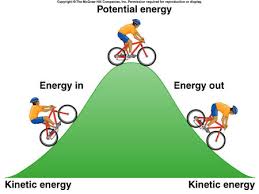
The most effective approach is to anchor instruction in physical, observable examples before introducing formulas. Start with a roller coaster or pendulum demonstration where students can visually track the trade-off between height (potential energy) and speed (kinetic energy). Once students can describe the energy transformation in words, introduce KE = ½mv² and gravitational PE = mgh as tools to quantify what they already observed conceptually. This sequence reduces formula anxiety and builds genuine understanding of energy conservation.
What kinds of practice problems help students get better at calculating kinetic and potential energy?
Students benefit most from a progression that starts with single-variable identification problems, moves into plug-and-solve calculations using KE = ½mv² and PE = mgh, and then advances to multi-step scenarios where students must calculate both forms of energy and explain the conversion between them. Real-world contexts like a ball rolling down a ramp or a compressed spring releasing give abstract formulas concrete meaning and help students transfer skills to novel problems.
What mistakes do students commonly make when solving kinetic and potential energy problems?
The most frequent error is misapplying the kinetic energy formula by forgetting to square the velocity or neglecting the ½ coefficient, which produces answers that are off by a factor of two or more. Students also commonly confuse mass and weight when calculating gravitational potential energy, especially in problems that give weight in Newtons but require mass in kilograms. A third common misconception is assuming that energy is lost rather than converted in a system, leading to incorrect answers on conservation-of-energy problems.
How do I differentiate energy quizzes for students at different skill levels?
For students who need scaffolding, provide formula reference sheets, partially completed problem setups, or diagrams labeling where potential and kinetic energy are at their maximum in a system. For advanced students, remove given values incrementally, require students to derive missing variables, or introduce elastic potential energy alongside gravitational PE. On Wayground, teachers can apply accommodations such as reduced answer choices or read-aloud support to individual students, so differentiation happens at the assignment level without requiring separate quiz versions.
How can I use potential and kinetic energy quizzes from Wayground in my classroom?
Wayground's potential and kinetic energy quizzes are available as printable PDFs, making them straightforward to distribute for homework, lab prep, or exam review. They are also available in digital formats, so teachers can assign them in technology-integrated classrooms or host them directly as a quiz on Wayground, where students can complete and submit work online. Answer keys are included with each quiz, which supports self-assessment and allows teachers to use these materials for independent practice without requiring constant supervision.
How do I help students who struggle to connect the formula for kinetic energy to real-world situations?
When students treat KE = ½mv² as a memorized string rather than a meaningful relationship, it helps to ask comparative questions first: 'Which has more kinetic energy, a slow-moving truck or a fast-moving bicycle?' Walking through the reasoning verbally before plugging in numbers forces students to interpret what mass and velocity actually contribute to energy. Following up with problems that vary only one variable at a time — holding mass constant while changing speed, then vice versa — makes the formula's logic visible and reduces procedural guessing.

Accessibility
Features
Wayground Super
School & District
Wayground for Business
Create a quiz
Create a presentation
Wayground AI
Subjects
Mathematics
Social Studies
Science
Physics
Chemistry
Biology
About
Our Story
Wayground Blog
Media Kit
Careers
Support
F.A.Q.
Help & Support
Privacy Policy
Terms of Service
Teacher Resources
2026 Wayground


Get our app

