

Kindergarten Reading Comprehension Strategies Quizzes
Help your kindergarten students assess their understanding of reading comprehension strategies with this interactive quiz. Practice essential early reading skills through engaging questions designed to build foundational comprehension abilities.
Recommended topics for you

16 questions
Listening Comprehension

Quiz
•
KG

12 questions
Nonfiction Text Features
Quiz
•
NaNth - NaNth Grade

5 questions
Beginning, Middle, and Ending Sounds
Quiz
•
KG

6 questions
Reading comprehension strategies
Quiz
•
KG
5 questions
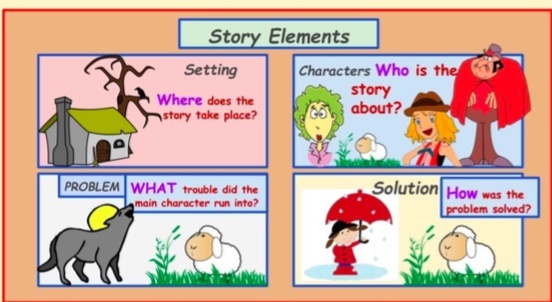
STORY ELEMENTS
Quiz
•
KG

10 questions
Character and Setting
Quiz
•
KG
18 questions
beginning middle and end letters
Quiz
•
KG
20 questions
Story Elements
Quiz
•
NaNth - NaNth Grade
20 questions
Plot Elements
Quiz
•
NaNth - NaNth Grade
17 questions
Listening Comprehension - Jack and the Beanstalk
Quiz
•
KG
16 questions
Character Traits
Quiz
•
NaNth - NaNth Grade
5 questions
Parts of a story
Quiz
•
KG
Explore Kindergarten Reading Comprehension Strategies Quizzes
Reading comprehension strategies form the foundation of literacy development for kindergarten students, providing essential tools that young learners need to understand and engage with text meaningfully. These specialized quizzes available through Wayground offer kindergarten teachers carefully designed assessment opportunities that focus on fundamental comprehension techniques such as making predictions, identifying main ideas, connecting prior knowledge to new information, and asking questions about text. Each practice question is crafted to develop critical thinking skills while building confidence in early readers, with immediate feedback helping students understand their progress and reinforcing successful comprehension approaches that will serve them throughout their academic journey. Wayground's extensive collection of millions of teacher-created reading comprehension strategy quizzes provides educators with robust search and filtering capabilities to locate resources perfectly aligned with kindergarten learning standards and individual student needs. Teachers can easily customize these digital assessments to support differentiated instruction, adapting question difficulty and format to accommodate diverse learning styles and readiness levels within their classrooms. The platform's flexible delivery options allow educators to seamlessly integrate these comprehension strategy quizzes into daily instruction for skill reinforcement, use them for targeted remediation with struggling readers, or deploy them for enrichment activities with advanced students, while comprehensive reporting features help teachers track student understanding and adjust their reading comprehension instruction accordingly.
FAQs
How do I teach reading comprehension strategies to students who struggle with complex texts?
Start with explicit instruction in one strategy at a time, such as making predictions or identifying the main idea, before asking students to apply multiple strategies simultaneously. Modeling through think-alouds helps students see how proficient readers monitor their understanding in real time. Gradually release responsibility by moving from guided practice to independent application, using texts that are slightly below frustration level so students can focus on the strategy itself rather than decoding.
What reading comprehension strategy quizzes are most effective for building analytical thinking?
Quizzes targeting inferential questions, citing textual evidence, and author's craft push students beyond literal recall and into analysis. Activities like text analysis, rhetorical analysis, and central idea with supporting details require students to engage deeply with structure and meaning rather than simply retelling. Pairing these with graphic organizers such as plot diagrams or story maps gives students a visible framework for organizing their thinking before writing responses.
What common mistakes do students make when applying reading comprehension strategies?
One of the most frequent errors is confusing the main idea with a supporting detail, leading students to write overly narrow summaries. Students also tend to make inferences that go far beyond textual evidence, treating personal opinion as a text-based conclusion. When working with cause and effect or chronological order, many students misidentify sequence as causation, which is why explicit practice distinguishing these relationships is essential.
How can I differentiate reading comprehension strategy quizzes for different reading levels in the same classroom?
Assigning the same strategy quiz at different text complexity levels allows all students to practice the same skill without the frustration of inaccessible content. On Wayground, teachers can apply student-level accommodations such as read aloud, which delivers audio reading of questions for students who need it, extended time, and reduced answer choices to lower cognitive load for struggling readers. These accommodations can be assigned to individual students while the rest of the class receives default settings, keeping differentiation seamless and private.
How do I use Wayground's reading comprehension strategies quizzes in my classroom?
Wayground's reading comprehension strategy quizzes are available as printable PDFs for traditional paper-based instruction and in digital formats for technology-integrated classrooms, including the option to host them as an interactive quiz directly on Wayground. Teachers can use the platform's search and filtering tools to locate quizzes aligned to specific standards, subtopics like summarizing or making inferences, or student reading levels. Complete answer keys are included with every quiz, reducing prep time and making them ready to use for skill practice, remediation, or enrichment.
What's the difference between teaching summarizing and paraphrasing as reading comprehension strategies?
Summarizing requires students to identify the most essential ideas in a text and condense them, necessarily omitting supporting details, while paraphrasing involves restating a specific passage or section in the student's own words without reducing its scope. Students often conflate the two, which leads to summaries that are too long or paraphrases that simply swap out a few words. Teaching them as distinct skills, with separate targeted practice, builds more precise comprehension and writing abilities.
How do I teach students to use text features as a reading comprehension strategy?
Teach students to preview headings, subheadings, captions, bold terms, and graphic sources before reading the full text, framing these features as the author's map of what matters most. Practice activities that ask students to predict content from text features alone, then compare their predictions to the actual text, build both anticipation and active reading habits. Functional text comprehension and visual literacy quizzes are particularly useful for helping students transfer this strategy across genres, from textbooks to infographics to primary source documents.

Accessibility
Features
Wayground Super
School & District
Wayground for Business
Create a quiz
Create a presentation
Wayground AI
Subjects
Mathematics
Social Studies
Science
Physics
Chemistry
Biology
About
Our Story
Wayground Blog
Media Kit
Careers
Support
F.A.Q.
Help & Support
Privacy Policy
Terms of Service
Teacher Resources
2026 Wayground


Get our app

