


Residuals Quizzes
Test your understanding of residuals in probability and statistics with this comprehensive quiz designed to assess your knowledge through practice questions. Get instant feedback on your performance while working through self-paced assessment problems covering residual analysis and interpretation.

13 questions
Linear Regression & Residuals

Quiz
•
9th - 12th Grade

14 questions
Residuals Desmos
Quiz
•
9th Grade

15 questions
Correlation Coefficients Residuals
Quiz
•
11th Grade

15 questions
Correlation and Residuals
Quiz
•
9th - 12th Grade
12 questions
Correlations and Residuals
Quiz
•
9th - 12th Grade

14 questions
T3U12 Residuals Opener
Quiz
•
7th - 12th Grade
28 questions
Residual Plots
Quiz
•
9th - 12th Grade
15 questions
Residuals and Correlation Coefficient
Quiz
•
8th - 12th Grade
12 questions
T3U12 Residual Plots Practice
Quiz
•
12th Grade
10 questions
Residuals & Causation
Quiz
•
9th Grade
20 questions
Least Square Regression Models and Residuals
Quiz
•
11th Grade
16 questions
Finding Residual Graphically
Quiz
•
10th Grade
Browse by grade
Explore Residuals Quizzes
Residuals represent a fundamental concept in statistical analysis, measuring the differences between observed values and predicted values in regression models. Mathematics educators can access comprehensive quiz collections through Wayground that provide targeted assessment opportunities for students learning to calculate, interpret, and analyze residuals in various statistical contexts. These practice questions develop critical skills in understanding how well regression models fit data, identifying outliers, and recognizing patterns in residual plots that indicate model appropriateness. Students receive immediate feedback on their calculations and interpretations, strengthening their ability to evaluate the accuracy of linear and nonlinear models while building confidence in advanced statistical reasoning. Wayground supports mathematics teachers with millions of educator-created quiz resources specifically designed for probability and statistics instruction, including extensive coverage of residuals and regression analysis. The platform's robust search and filtering capabilities enable instructors to quickly locate assessments aligned with specific learning standards and mathematical practices. Teachers can customize existing quizzes to match their students' skill levels, create differentiated versions for various learners, and deliver assessments through flexible digital formats that accommodate diverse classroom environments. These comprehensive tools facilitate effective lesson planning while providing targeted resources for remediation when students struggle with residual calculations and enrichment opportunities for advanced learners ready to explore complex statistical modeling concepts.
FAQs
How do I teach residuals for the first time?
Introduce residuals as the error in a prediction. Start with a simple scatter plot and a line of best fit. For a single point, show the observed value (the dot), the predicted value (on the line), and the residual as the vertical distance between them. Emphasize that a residual is simply `observed y - predicted y`.
What exercises help students practice analyzing residuals?
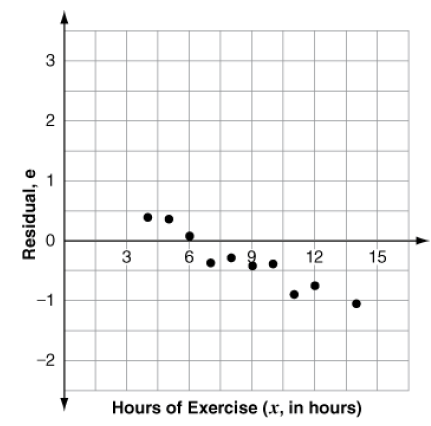
Effective practice moves through three stages: calculating individual residual values, plotting those residuals on a residual plot, and interpreting the resulting pattern. Quizzes should provide opportunities to identify whether a residual plot shows random scatter (indicating a good linear fit) or a distinct pattern like a curve (indicating a poor linear fit).
What are common student mistakes when working with residuals?
A primary mistake is misinterpreting the residual plot. Students often think a random, scattered plot means the model is wrong, when in fact, random scatter is the goal for a linear model. Another common error is calculating the residual as `predicted - observed` instead of `observed - predicted`, which inverts the sign of the error.
How can I use this residuals quiz in my class?
This quiz can be assigned as a digital quiz on Wayground for immediate feedback or printed as a PDF for hands-on practice. The printable version allows students to work offline and lets you grade their paper submissions quickly using the Wayground for Teachers mobile app. Every quiz includes a complete answer key for both formats.
How does learning about residuals fit into the high school math curriculum?
In curricula aligned with Common Core, analyzing residuals is a key part of the Statistics & Probability standards on interpreting categorical and quantitative data (S-ID). It builds on students' understanding of linear functions and scatter plots by providing a formal method to assess how well a function models the data. This skill is foundational for all future work in statistical modeling and regression analysis.
How can I support students who struggle with residual analysis?
For students who find the concept challenging, use Wayground's differentiation tools. When assigning a digital quiz, you can reduce the number of answer choices for multiple-choice questions about interpreting plots. You can also use the Read Aloud feature to support students who have difficulty with reading dense word problems describing the data.

Accessibility
Features
Wayground Super
School & District
Wayground for Business
Create a quiz
Create a presentation
Wayground AI
Subjects
Mathematics
Social Studies
Science
Physics
Chemistry
Biology
About
Our Story
Wayground Blog
Media Kit
Careers
Support
F.A.Q.
Help & Support
Privacy Policy
Terms of Service
Teacher Resources
2026 Wayground


Get our app

