


11th Grade Sine Ratio Quizzes
Practice your Grade 11 sine ratio skills with this comprehensive trigonometry quiz designed to assess your understanding of this fundamental concept. Get instant feedback as you work through carefully crafted questions that help reinforce your knowledge of sine ratios in right triangles.
24 questions
Trigonometric Ratios and Functions

Quiz
•
11th Grade

10 questions
The Sine Ratio
Quiz
•
11th - 12th Grade

8 questions
PW#11 Sine Ratios
Quiz
•
9th - 11th Grade
20 questions
Sine ratio practice 1
Quiz
•
9th - 11th Grade
6 questions
Sine Ratio
Quiz
•
10th - 12th Grade

22 questions
Sine Ratio for Right Triangles
Quiz
•
10th - 12th Grade
8 questions
Finding sine ratios
Quiz
•
10th - 12th Grade
10 questions
Trigonometry: Using the Sine Ratio to find Unknown Angles
Quiz
•
9th - 11th Grade
24 questions
SINE RATIO APPLICATION
Quiz
•
9th - 12th Grade
10 questions
Sine Ratio
Quiz
•
8th - 12th Grade
15 questions
Sine Ratio
Quiz
•
10th Grade
10 questions
Sine Ratio
Quiz
•
10th Grade
Browse by grade
Explore 11th Grade Sine Ratio Quizzes
Sine ratio serves as a fundamental trigonometric concept that Grade 11 mathematics students must master to progress in advanced mathematical studies. Wayground's comprehensive collection of sine ratio quizzes provides targeted assessment opportunities that help students develop proficiency in calculating ratios between opposite sides and hypotenuses in right triangles. These practice questions systematically build understanding through varied problem types, from basic ratio identification to complex real-world applications involving angles of elevation and depression. The immediate feedback mechanisms embedded within these quizzes enable students to identify misconceptions quickly and reinforce correct problem-solving approaches, ensuring solid conceptual foundation before advancing to more sophisticated trigonometric functions. Wayground's extensive library supports mathematics educators with millions of teacher-created sine ratio resources that can be easily discovered through robust search and filtering capabilities. Teachers can align quiz content with curriculum standards while utilizing differentiation tools to customize difficulty levels, question types, and assessment duration to meet diverse learning needs within their Grade 11 classrooms. The platform's flexible digital delivery formats accommodate various instructional approaches, whether implementing formative assessments during lessons, assigning independent practice for homework, or conducting summative evaluations. These comprehensive tools enable educators to effectively plan targeted instruction, provide remediation for struggling students, offer enrichment opportunities for advanced learners, and continuously reinforce sine ratio skills through spaced practice that promotes long-term retention and mathematical fluency.
FAQs
What new concepts related to sine are introduced in Grade 11?
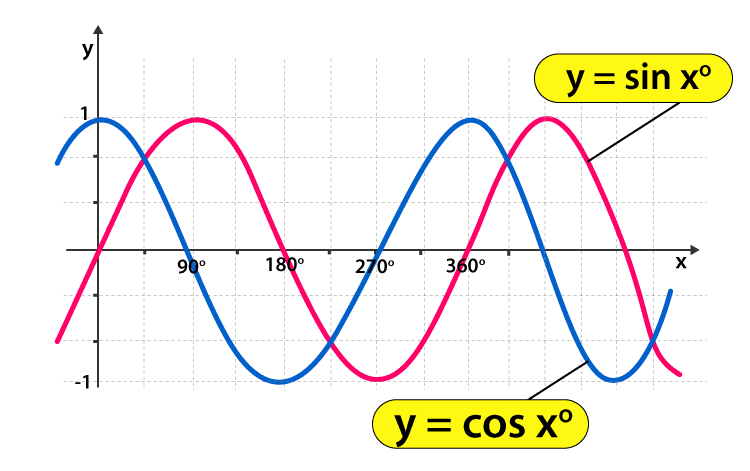
In Grade 11, typically in Algebra 2 or Pre-Calculus, sine expands from a ratio in a triangle to a circular function. Students learn to define sine using the unit circle, which allows them to find sine values for angles greater than 90° and negative angles. They also begin graphing the sine function and analyzing its properties like period and amplitude.
How can I help students connect the 'triangle' sine to the 'unit circle' sine?
Use a visual demonstration. Show a right triangle inscribed in the first quadrant of the unit circle, with the hypotenuse as the radius (length 1). In this context, sin(θ) = opposite/hypotenuse = y/1 = y. This reveals that the sine ratio is simply the y-coordinate of the point on the unit circle, a connection that holds for any angle.
What types of problems are on a Grade 11 sine quiz?
Practice at this level should focus on the unit circle and graphing. Include problems asking for the sine of angles like 120°, 225°, or -30° using the unit circle. Also include exercises on graphing transformations of y = sin(x), such as finding the amplitude and period of y = 3sin(2x).
What do students find most confusing about the sine function?
A common point of confusion is the difference between an angle (the input) and the sine of the angle (the output ratio). When working with the unit circle, students may mix up the angle measure, like π/6 radians, with the sine value, which is 1/2. Consistently reinforcing that sin(θ) is the y-coordinate on the unit circle helps clarify this.
How can I use this quiz for review or assessment?
This quiz is available in two formats: a printable PDF and a digital version on Wayground. You can use the digital format as a self-grading quiz for a quick formative assessment. The printable PDF is ideal for a more traditional quiz or as part of a cumulative review packet. Both formats include a complete answer key.
How does the sine function fit into the Algebra 2 curriculum?
In alignment with Common Core standards for functions (HSF.TF.A.2 and HSF.TF.B.5), the Grade 11 curriculum extends the sine ratio into a full periodic function. Students use the unit circle to define sine for all real numbers and then model periodic phenomena using the sine graph. This builds directly on the right-triangle foundation from Geometry and is essential for calculus.

Accessibility
Features
Wayground Super
School & District
Wayground for Business
Create a quiz
Create a presentation
Wayground AI
Subjects
Mathematics
Social Studies
Science
Physics
Chemistry
Biology
About
Our Story
Wayground Blog
Media Kit
Careers
Support
F.A.Q.
Help & Support
Privacy Policy
Terms of Service
Teacher Resources
2026 Wayground


Get our app

