

5th Grade Sinking and Floating Quizzes
Test your Grade 5 understanding of sinking and floating with this interactive science quiz designed to assess your knowledge of buoyancy and density. Practice answering questions about why objects sink or float in water while receiving instant feedback to reinforce your learning.

25 questions
Floating and Sinking Quiz

Quiz
•
5th Grade

10 questions
EDEN HAFIZ MONTESSORI INTERMEDIATE (FLOATING AND SINKING)
Quiz
•
5th Grade

17 questions
Buoyancy and Floating Quiz
Quiz
•
5th Grade
19 questions
Floating and Sinking Review Grade 5
Quiz
•
5th Grade

14 questions
Floating and Sinking
Quiz
•
5th Grade

10 questions
Relative Density
Quiz
•
5th Grade
10 questions
Relative Density
Quiz
•
5th Grade
15 questions
Science Max: Density
Quiz
•
3rd - 5th Grade
6 questions
Sinking and Floating
Quiz
•
1st - 5th Grade
7 questions
Floating and sinking
Quiz
•
4th - 8th Grade
10 questions
Density and Buoyancy
Quiz
•
1st - 6th Grade
Explore 5th Grade Sinking and Floating Quizzes
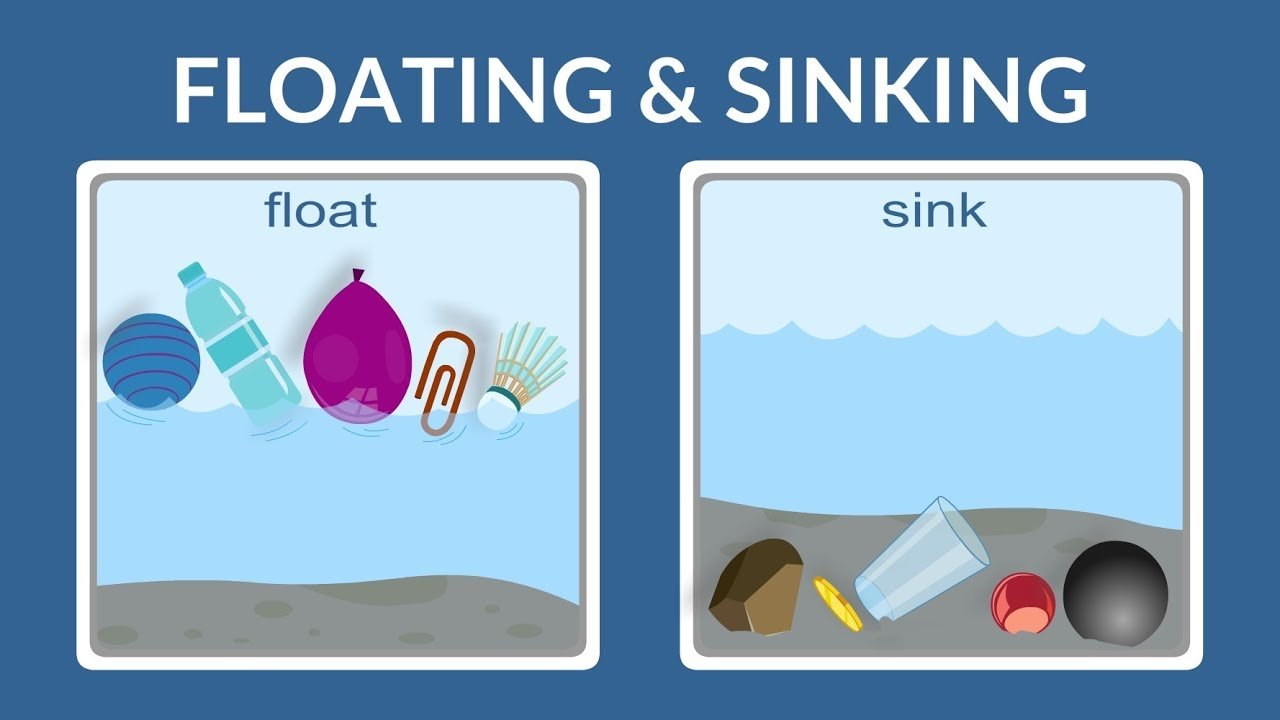
Sinking and floating concepts form a fundamental component of Grade 5 physics education, helping students develop critical scientific thinking skills through hands-on exploration and systematic observation. These comprehensive quiz collections available through Wayground provide targeted assessment opportunities that evaluate student understanding of density, buoyancy, and the physical properties that determine whether objects sink or float in various liquids. The practice questions guide learners through real-world scenarios involving different materials, shapes, and liquid types, while immediate feedback helps students identify misconceptions and strengthen their grasp of underlying scientific principles. Students engage with problems that require them to predict outcomes, analyze experimental results, and apply their knowledge of mass, volume, and displacement to explain why certain objects behave differently when placed in water or other fluids. Wayground's extensive library draws from millions of teacher-created resources, offering educators powerful search and filtering capabilities to locate sinking and floating quizzes that align with specific curriculum standards and learning objectives. The platform's customization tools enable teachers to differentiate instruction by modifying question difficulty, adjusting time limits, or creating targeted assessments for diverse learning needs within their Grade 5 classrooms. Digital delivery formats support flexible implementation during whole-class instruction, small group activities, or individual practice sessions, while comprehensive analytics help educators identify students requiring additional support or enrichment opportunities. These quiz collections serve multiple instructional purposes, from initial concept introduction and formative assessment during unit progression to summative evaluation and skill reinforcement, enabling teachers to create comprehensive learning experiences that build student confidence in applying scientific reasoning to predict and explain physical phenomena.
FAQs
How do I teach sinking and floating to elementary students?
Start with hands-on prediction activities where students guess whether common objects will sink or float before testing them in water. Once students have observed results, introduce the concept of density as the key variable — objects less dense than water float, while denser objects sink. Connecting observations to Archimedes' principle helps students move from intuitive understanding to scientific reasoning.
What exercises help students practice buoyancy and density concepts?
Effective practice includes prediction tasks where students classify objects before testing, data analysis problems using experimental results, and scenario-based questions asking students to apply Archimedes' principle to real-world situations. Quizzes that require students to compare object density to fluid density reinforce the core relationship underlying all buoyancy behavior.
What mistakes do students commonly make when learning about sinking and floating?
The most common misconception is that heavier objects always sink and lighter objects always float. Students frequently confuse mass with density, leading them to incorrectly predict outcomes for large, low-density objects like wood logs or small, high-density objects like metal coins. Explicit instruction on the density-to-fluid-density comparison, rather than mass alone, is essential to correcting this error.
How can I differentiate sinking and floating instruction for students at different skill levels?
For struggling learners, focus on concrete classification tasks with familiar objects before introducing density calculations. Advanced students can be challenged with problems involving multiple fluids of different densities or layered liquid scenarios. Wayground's differentiation tools allow teachers to customize quizzes for varying skill levels, supporting both remediation and enrichment within the same classroom.
How do I use Wayground's sinking and floating quizzes in my classroom?
Wayground's sinking and floating quizzes are available as printable PDFs for traditional classroom use and in digital formats for technology-integrated environments, making them flexible for in-class activities, homework assignments, and assessment preparation. Teachers can also host quizzes as a live quiz on Wayground for real-time student engagement. Each quiz includes a complete answer key, supporting both teacher-led review and independent student self-assessment.

Accessibility
Features
Wayground Super
School & District
Wayground for Business
Create a quiz
Create a presentation
Wayground AI
Subjects
Mathematics
Social Studies
Science
Physics
Chemistry
Biology
About
Our Story
Wayground Blog
Media Kit
Careers
Support
F.A.Q.
Help & Support
Privacy Policy
Terms of Service
Teacher Resources
2026 Wayground


Get our app

