
Resource Type


7th Grade Three Branches of Government Quizzes
Test your knowledge of the three branches of government with this comprehensive Grade 7 civics quiz designed to assess understanding of executive, legislative, and judicial powers. Practice key concepts through targeted questions and receive instant feedback to strengthen your grasp of how American government is structured and functions.
32 questions
three branches of government

Quiz
•
7th Grade

21 questions
Three Branches of Government Quiz
Quiz
•
7th Grade

17 questions
The Three Branches of The US Government & Govt. Structure
Quiz
•
7th Grade

21 questions
Three Branches of Government
Quiz
•
6th - 8th Grade

14 questions
Three Branches of Government
Quiz
•
6th - 8th Grade

22 questions
Three Branches of Government
Quiz
•
7th Grade
12 questions
Three Branches of Government Week 1
Quiz
•
2nd Grade
25 questions
Three Branches of Government
Quiz
•
7th - 8th Grade
12 questions
Three Branches of Government
Quiz
•
7th Grade
48 questions
Unit 4: Three Branches of Government
Quiz
•
7th Grade
10 questions
Three branches of government
Quiz
•
7th Grade
13 questions
The Three Branches of Government
Quiz
•
5th - 7th Grade
Explore 7th Grade Three Branches of Government Quizzes
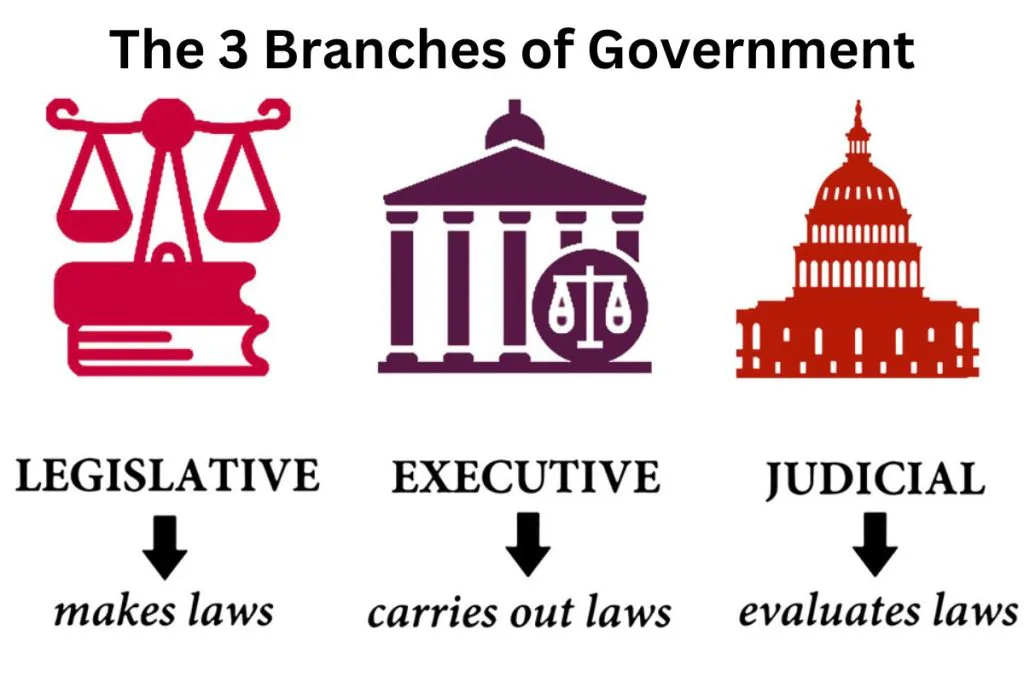
Three Branches of Government quizzes for Grade 7 students provide comprehensive assessment opportunities that help educators evaluate student understanding of the legislative, executive, and judicial branches of the United States government. These carefully designed practice questions cover essential concepts including the separation of powers, checks and balances, and the specific roles and responsibilities of Congress, the President, and the Supreme Court. Students receive immediate feedback as they work through questions about constitutional principles, government processes, and the interconnected relationships between branches, developing critical thinking skills about how American democracy functions in practice. Wayground supports teachers with millions of educator-created Three Branches of Government quiz resources that can be easily discovered through robust search and filtering capabilities aligned to civics and government standards. Teachers can customize existing quizzes or create new assessments tailored to their Grade 7 students' specific needs, adjusting difficulty levels and question formats to support differentiated instruction. The platform's flexible digital delivery options enable seamless integration into classroom instruction, homework assignments, and review sessions, while detailed analytics help educators identify knowledge gaps and plan targeted remediation or enrichment activities that reinforce students' understanding of governmental structure and democratic principles.
FAQs
How do I teach the three branches of government to students?
Start by establishing why the Founders divided power across three branches — executive, legislative, and judicial — as a safeguard against tyranny. Use concrete examples like a presidential veto, a congressional override, or a Supreme Court ruling to show each branch in action. Once students understand each branch's distinct role, introduce the system of checks and balances so they can see how the branches interact and constrain one another. Anchoring abstract constitutional structure to real-world scenarios significantly improves retention and engagement.
What exercises help students practice the three branches of government?
Effective practice exercises include scenario-based questions where students identify which branch would handle a given situation, matching activities pairing powers to the correct branch, and fill-in-the-blank questions targeting vocabulary like 'veto', 'bicameral', and 'judicial review'. Quizzes that require students to explain how one branch checks another push beyond simple recall into applied constitutional reasoning. Varied question types across a single quiz help students build from basic identification to more complex analysis of how governmental power is distributed and limited.
What misconceptions do students commonly have about the three branches of government?
One of the most common errors is conflating the roles of Congress and the President — students often believe the President writes laws rather than signs or vetoes them. Many students also struggle to distinguish between the Senate and the House of Representatives, treating Congress as a single undifferentiated body. A third frequent misconception is that the Supreme Court can proactively make laws, rather than ruling on whether existing laws are constitutional. Quizzes that present real legislative and judicial scenarios can directly surface and correct these misunderstandings.
How does the system of checks and balances work, and how do I explain it to students?
Checks and balances is the constitutional mechanism by which each branch holds specific powers over the other two, preventing any single branch from accumulating unchecked authority. A practical way to teach it is through a cause-and-effect chart: if Congress passes a bill, the President can veto it; if the President vetoes it, Congress can override with a two-thirds majority; if a law is challenged, the Supreme Court can strike it down as unconstitutional. Walking students through one full legislative scenario — bill to law to potential court challenge — makes the system concrete and memorable.
How can I use Three Branches of Government quizzes in my classroom?
Three Branches of Government quizzes on Wayground are available as printable PDFs for traditional classroom use and in digital formats for technology-integrated learning environments, including the option to host them as a quiz directly on Wayground. Printable versions work well for guided notes, independent practice, or homework, while digital formats allow for self-paced completion and instant feedback. All quizzes include complete answer keys, making them practical for both instruction and quick assessment of student understanding.
How do I differentiate Three Branches of Government instruction for diverse learners?
For students who need additional support, simplify tasks by focusing first on naming and describing each branch before introducing checks and balances. Wayground's accommodation tools allow teachers to enable Read Aloud so questions and content are read to students who benefit from audio support, and Reduced Answer Choices can lower the cognitive load for students who are overwhelmed by multiple-option questions. Extended time settings can also be applied on a per-student basis for assessments, ensuring all learners have equitable access without disrupting the rest of the class.

Accessibility
Features
Wayground Super
School & District
Wayground for Business
Create a quiz
Create a presentation
Wayground AI
Subjects
Mathematics
Social Studies
Science
Physics
Chemistry
Biology
About
Our Story
Wayground Blog
Media Kit
Careers
Support
F.A.Q.
Help & Support
Privacy Policy
Terms of Service
Teacher Resources
2026 Wayground


Get our app

