
Resource Type


Subjects
7th Grade Transcontinental Railroad Quizzes
Test your knowledge of the Transcontinental Railroad with this Grade 7 quiz designed to assess understanding of this pivotal achievement in U.S. History. Practice key concepts through self-paced questions and receive instant feedback on your comprehension of how this massive construction project connected the nation.

8 questions
Transcontinental Railroad: Central Pacific

Quiz
•
7th Grade

6 questions
Transcontinental Railroad
Quiz
•
7th Grade
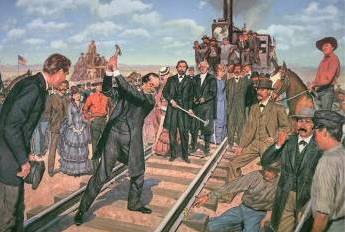
15 questions
Transcontinental Railroad
Quiz
•
5th Grade
15 questions
Transcontinental Railroad
Quiz
•
5th Grade

15 questions
Transcontinental Railroad
Quiz
•
5th Grade

10 questions
The Transcontinental Railroad
Quiz
•
6th - 8th Grade
23 questions
Chapter 7 - Westward Expansion
Quiz
•
7th Grade
50 questions
American West Unit Review
Quiz
•
6th - 8th Grade
20 questions
King Cotton & RRs
Quiz
•
7th Grade
25 questions
Railroads Ch. 3 WSH & G
Quiz
•
7th Grade
Explore 7th Grade Transcontinental Railroad Quizzes
The Transcontinental Railroad represents one of the most transformative achievements in American history, and Grade 7 students can deepen their understanding of this monumental engineering feat through comprehensive quiz assessment on Wayground. These carefully designed practice questions guide students through the complex political, economic, and social factors that drove the construction of America's first transcontinental railroad, while developing critical thinking skills about how this infrastructure project reshaped the nation. Students receive immediate feedback as they explore key concepts including the roles of the Central Pacific and Union Pacific railroad companies, the contributions of immigrant workers, government subsidies and land grants, and the profound impact on Native American communities and western expansion. The assessment format encourages thorough understanding of how the railroad's completion in 1869 accelerated economic growth, facilitated westward migration, and fundamentally altered American society. Wayground's extensive collection draws from millions of teacher-created resources specifically aligned with Grade 7 social studies standards, providing educators with robust search and filtering capabilities to locate high-quality Transcontinental Railroad quiz content that matches their instructional objectives. Teachers can easily differentiate instruction by customizing question difficulty, modifying time limits, and selecting specific subtopics within the broader railroad construction narrative to address diverse learning needs in their classrooms. The platform's flexible digital delivery formats support various pedagogical approaches, whether educators need quick formative assessments, comprehensive unit reviews, or targeted remediation activities for students struggling with complex historical concepts. These customization tools enable teachers to create enrichment opportunities for advanced learners while providing additional skill reinforcement for students who need extra support in analyzing primary sources, understanding cause-and-effect relationships, and connecting historical events to broader patterns in American development.
FAQs
How do I teach the Transcontinental Railroad to middle or high school students?
Effective instruction on the Transcontinental Railroad begins with the economic and political context of the Pacific Railway Act before moving into the construction timeline from 1863 to 1869. Teachers often use primary sources and map activities to show how the Central Pacific and Union Pacific routes converged at Promontory Summit, Utah. Connecting the railroad's completion to westward expansion, displacement of Native American communities, and immigrant labor gives students a fuller picture of its historical significance.
What quizzes help students practice their understanding of the Transcontinental Railroad?
Practice quizzes that ask students to analyze the roles of the Central Pacific and Union Pacific companies, identify key legislation like the Pacific Railway Act, and assess the contributions of Chinese and Irish immigrant workers are especially effective. Map-based and timeline activities reinforce the geographic and chronological dimensions of the project, while cause-and-effect exercises help students connect the railroad's construction to broader outcomes such as westward expansion and economic growth.
What common mistakes do students make when learning about the Transcontinental Railroad?
Students frequently conflate the Transcontinental Railroad with a single company rather than understanding it was built by two competing railroad companies working from opposite ends. Many also underestimate the role of Chinese immigrant laborers in completing the Central Pacific's portion, or overlook the hardships and discrimination that workforce faced. Another common misconception is treating the railroad's completion as an unambiguous triumph, without accounting for its devastating impact on Native American communities and the buffalo-dependent ecosystems of the Great Plains.
How can I use Transcontinental Railroad quizzes in my classroom?
Transcontinental Railroad quizzes on Wayground are available as printable PDFs for traditional classroom use and in digital formats for technology-integrated or remote learning environments, and can also be hosted as an interactive quiz directly on Wayground. Teachers can use them for direct instruction support, formative assessment, homework assignments, or targeted remediation of historical thinking skills. Each quiz includes a complete answer key, making it easy to review student work and identify gaps in understanding.
How does the Transcontinental Railroad connect to broader U.S. History standards?
The Transcontinental Railroad is a central topic in U.S. History standards covering Reconstruction, westward expansion, industrialization, and immigration. It provides a concrete case study for analyzing how government policy, private industry, and diverse labor forces shaped national development. Teachers can use it to address standards related to the impact of technology on society, economic growth, and the conflicts between expansion and Native American sovereignty.
How do I differentiate Transcontinental Railroad instruction for students at different levels?
For students who need additional support, simplified reading passages with guided questions help build foundational knowledge of key figures and events before tackling analysis tasks. Advanced students benefit from document-based questions that ask them to evaluate competing historical perspectives on the railroad's legacy. On Wayground, teachers can apply accommodations such as read-aloud support, reduced answer choices, and extended time to individual students, ensuring every learner can access the material without disrupting the rest of the class.

Accessibility
Features
Wayground Super
School & District
Wayground for Business
Create a quiz
Create a presentation
Wayground AI
Subjects
Mathematics
Social Studies
Science
Physics
Chemistry
Biology
About
Our Story
Wayground Blog
Media Kit
Careers
Support
F.A.Q.
Help & Support
Privacy Policy
Terms of Service
Teacher Resources
2026 Wayground


Get our app

