
Resource Type


9th Grade Transitional Words and Phrases Quizzes
Test your understanding of transitional words and phrases with this comprehensive Grade 9 English quiz designed to assess your mastery of connecting ideas smoothly in writing. Practice identifying and using appropriate transitions through targeted questions that provide instant feedback to strengthen your writing organization skills.
10 questions
Transitional Words and Phrases

Quiz
•
9th Grade

20 questions
Transitional Words and Phrases for Writing
Quiz
•
9th - 10th Grade

18 questions
transitional words
Quiz
•
8th - 9th Grade

22 questions
Transitional Words
Quiz
•
7th - 9th Grade

12 questions
Transitional Words and Phrases
Quiz
•
7th - 10th Grade

20 questions
Transitional Words and Phrases
Quiz
•
8th - 11th Grade
25 questions
Transitional Words and Phrases
Quiz
•
6th - 9th Grade
23 questions
Transitional Words and Phrases
Quiz
•
7th - 10th Grade
23 questions
Transitional Words and Phrases: Act Style
Quiz
•
7th - 10th Grade
15 questions
Transitional Words and Phrases: Act Style
Quiz
•
9th - 12th Grade
11 questions
Transitional Words and Phrases: Act Style
Quiz
•
6th - 9th Grade
23 questions
Transitional Words and Phrases for Writing
Quiz
•
7th - 10th Grade
Explore 9th Grade Transitional Words and Phrases Quizzes
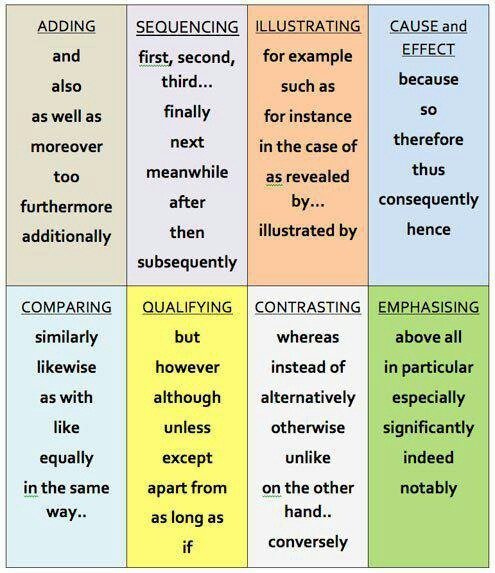
Transitional words and phrases serve as the essential connective tissue in Grade 9 writing, guiding readers smoothly from one idea to the next while establishing clear logical relationships between sentences and paragraphs. Our comprehensive quiz collection through Wayground provides targeted assessment opportunities that help students master these crucial organizational tools, from simple coordinators like "and" and "but" to sophisticated academic transitions such as "consequently," "furthermore," and "in contrast." These practice questions systematically develop students' understanding of how different transitional elements signal specific relationships—whether showing cause and effect, comparing ideas, indicating time sequences, or emphasizing important points. Through immediate feedback and varied question formats, students gain confidence in selecting appropriate transitions that enhance coherence and create sophisticated, well-structured academic writing. Wayground's extensive library draws from millions of teacher-created resources, offering educators powerful search and filtering capabilities to locate quiz materials perfectly aligned with Grade 9 writing standards and transitional word instruction. Teachers can easily customize existing assessments or combine multiple quiz sets to address diverse learning needs, creating differentiated practice that supports both struggling writers who need foundational transition work and advanced students ready for complex organizational challenges. The platform's flexible digital delivery system enables seamless integration into classroom instruction, homework assignments, and individual remediation sessions, while detailed analytics help educators identify specific areas where students struggle with transitional usage. These comprehensive tools support strategic lesson planning and targeted skill reinforcement, ensuring that all Grade 9 students develop the organizational writing skills essential for academic success across all subject areas.
FAQs
How do I teach transitional words and phrases effectively?
Start by categorizing transitions by function — sequence, contrast, cause-and-effect, and emphasis — so students understand that word choice depends on the logical relationship between ideas, not just sentence position. Model the revision process using mentor texts: show students a choppy paragraph, then rewrite it together using appropriate transitions to demonstrate how connective language changes both flow and meaning. Explicit instruction on function categories before asking students to practice independently leads to stronger transfer into their own writing.
What exercises help students practice using transitional words and phrases?
Effective practice exercises include cloze activities where students select the most appropriate transition for a given context, sentence-combining tasks that require students to join two ideas using a logical connector, and passage revision exercises where students identify weak or missing transitions and improve them. These varied formats build both recognition and production skills, which are both necessary for fluent written communication. Practicing across multiple exercise types prevents students from memorizing word lists without understanding function.
What mistakes do students commonly make with transitional words and phrases?
The most common error is treating transitions as interchangeable fillers — students frequently overuse 'however' or 'also' regardless of the logical relationship between ideas, which can actually obscure meaning rather than clarify it. Another frequent mistake is placing transitions incorrectly within a sentence or using them at the start of every sentence mechanically, which creates a stilted, formulaic tone. Students also confuse transitions that signal similar relationships, such as 'although' and 'however', without recognizing their grammatical differences.
How can I use transitional words and phrases quizzes in my classroom?
Transitional words and phrases quizzes on Wayground are available as printable PDFs for traditional classroom use and in digital formats for technology-integrated instruction, making them flexible for independent practice, guided lessons, or homework assignments. Teachers can also host quizzes as a quiz directly on Wayground, enabling real-time student responses and immediate feedback. The included answer keys support self-assessment and allow teachers to quickly review student work without additional preparation.
How do I differentiate transitional words and phrases instruction for struggling writers?
For struggling writers, narrow the scope of practice to one transition category at a time — for example, sequence words only — before introducing contrast or cause-and-effect connectors. Providing a reference card with transitions grouped by function gives students scaffolded support without removing the cognitive challenge of selecting the right word. On Wayground, teachers can also enable accommodations such as reduced answer choices or read-aloud settings for individual students, lowering barriers without altering the rigor of the task for the rest of the class.
How do transitional words and phrases connect to broader writing standards?
Transitional words and phrases are explicitly addressed in writing standards across grade levels, particularly in standards related to text organization, coherence, and style. Mastery of transitions supports students' ability to write organized informational texts, structured argumentative essays, and sequenced narratives — making this a cross-genre skill with direct impact on standardized writing assessments. Building this skill systematically at the sentence and paragraph level prepares students for the more complex organizational demands of multi-paragraph and extended writing tasks.

Accessibility
Features
Wayground Super
School & District
Wayground for Business
Create a quiz
Create a presentation
Wayground AI
Subjects
Mathematics
Social Studies
Science
Physics
Chemistry
Biology
About
Our Story
Wayground Blog
Media Kit
Careers
Support
F.A.Q.
Help & Support
Privacy Policy
Terms of Service
Teacher Resources
2026 Wayground


Get our app

