


Vestigial Structures Quizzes
Test your knowledge of vestigial structures with this interactive science quiz designed to assess understanding of evolutionary evidence. Practice identifying and analyzing remnant organs and body parts through self-paced questions with instant feedback.

7 questions
vestigial structures

Quiz
•
8th Grade

8 questions
Homologous/Analogous/Vestigial Structures
Quiz
•
10th Grade
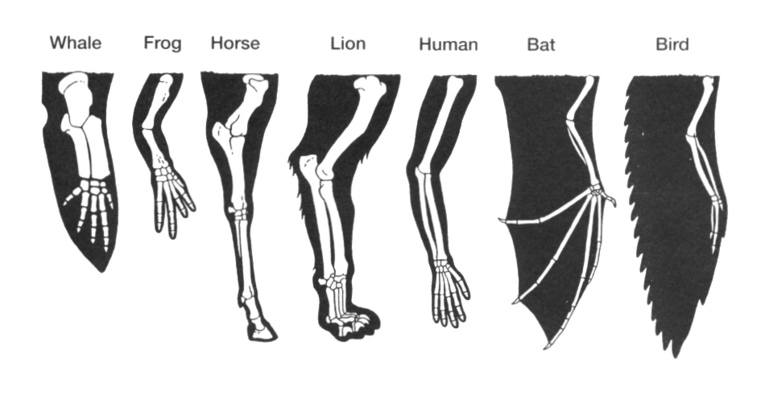
15 questions
Homologous and Vestigial Structures Review
Quiz
•
9th Grade

15 questions
Vestigial Structures
Quiz
•
8th Grade

15 questions
Homologous and Vestigial Structures Review
Quiz
•
9th Grade

20 questions
Analogous, Homologous & Vestigial Structures
Quiz
•
8th Grade
9 questions
Anatomy Comparison Vestigial Structures
Quiz
•
6th - 9th Grade
20 questions
Homologous, Analogous, Vestigial Structures
Quiz
•
6th - 8th Grade
25 questions
Homologous and Vestigial Structures Review
Quiz
•
9th Grade
20 questions
Review: Evidence of Evolution
Quiz
•
6th Grade
30 questions
Evidence of Evolution
Quiz
•
9th - 12th Grade
40 questions
U6L1 Evidence for Evolution Quiz Review
Quiz
•
9th - 12th Grade
Explore Vestigial Structures Quizzes
Vestigial structures represent one of the most compelling pieces of evidence for evolutionary theory, demonstrating how organisms retain remnants of features that served important functions in their ancestral forms. Through comprehensive science quizzes available on Wayground (formerly Quizizz), students engage with detailed assessment questions that explore these fascinating anatomical remnants, from the human appendix and tailbone to the hip bones in whales and wings in flightless birds. These practice questions challenge learners to analyze how vestigial structures support evolutionary relationships, compare homologous features across species, and evaluate evidence for common descent. The interactive feedback system helps students develop critical thinking skills essential for understanding evolutionary biology while reinforcing their comprehension of how natural selection shapes organisms over time, leaving behind traces of evolutionary history embedded within modern anatomy. Wayground's extensive collection of teacher-created vestigial structures quizzes draws from millions of educational resources, providing science educators with robust search and filtering capabilities to locate assessments perfectly aligned with their curriculum standards and learning objectives. Teachers can easily customize quiz content to differentiate instruction for diverse learners, adjusting question difficulty and focus areas to support both remediation for struggling students and enrichment for advanced learners. The platform's flexible digital delivery formats enable seamless integration into classroom instruction, homework assignments, and review sessions, while real-time analytics help educators identify knowledge gaps and track student progress in understanding evolutionary concepts. These comprehensive tools support effective lesson planning and skill reinforcement, allowing teachers to create targeted learning experiences that deepen students' grasp of how vestigial structures illuminate the interconnected nature of life on Earth and provide tangible evidence for evolutionary processes.
FAQs
How do I teach vestigial structures to my biology students?
Start by grounding students in the concept of common descent before introducing vestigial structures as anatomical evidence. Use comparative anatomy examples like the human coccyx, whale pelvis, and snake femur remnants to show how structures can persist without retaining their original function. Connecting vestigial structures to natural selection helps students understand why these features were not eliminated rather than simply memorizing a list of examples.
What quizzes or exercises help students practice identifying vestigial structures?
Comparative anatomy exercises are highly effective, asking students to match vestigial structures to their presumed ancestral function and identify which modern species share homologous remnants. Practice problems that require students to explain why a structure is considered vestigial rather than simply label it push for deeper conceptual understanding. Diagrams of skeletal anatomy with labeling tasks also help students visualize how these features fit within an organism's body plan.
What common mistakes do students make when learning about vestigial structures?
The most frequent misconception is that vestigial means completely useless — students often struggle when they learn that the coccyx, for example, still serves as a muscle attachment site. Another common error is confusing vestigial structures with analogous structures, conflating evolutionary remnants with convergently evolved features. Students also sometimes apply teleological reasoning, assuming organisms 'chose' to retain these structures, which signals a misunderstanding of how natural selection operates.
How do vestigial structures serve as evidence for evolution?
Vestigial structures support the theory of common descent because they reveal ancestral body plans that have been retained across lineages even after their original function became unnecessary. The presence of a pelvis in whales, for instance, indicates descent from a four-limbed terrestrial ancestor and would be inexplicable without an evolutionary framework. This makes vestigial structures one of the most concrete and visually accessible lines of anatomical evidence teachers can use when addressing evolutionary theory.
How do I use vestigial structures quizzes from Wayground in my classroom?
Wayground's vestigial structures quizzes are available as printable PDFs for traditional classroom use and in digital formats for technology-integrated or remote learning environments, giving you flexibility depending on your setup. You can also host the quiz as a quiz directly on Wayground, allowing you to collect student responses digitally and review performance data. Complete answer keys are included, reducing prep time and making it straightforward to use these materials for guided practice, homework, or formative assessment.
How can I differentiate vestigial structures instruction for students with different learning needs?
When hosting quizzes digitally on Wayground, you can apply student-level accommodations such as read aloud support for students who benefit from audio delivery, reduced answer choices to lower cognitive load for struggling learners, and extended time for students who need it. These settings can be assigned to individual students without other students being notified, keeping the experience seamless for the whole class. Pairing accommodations with tiered versions of comparative anatomy tasks ensures all students engage with the core concept at an appropriate level of challenge.

Accessibility
Features
Wayground Super
School & District
Wayground for Business
Create a quiz
Create a presentation
Wayground AI
Subjects
Mathematics
Social Studies
Science
Physics
Chemistry
Biology
About
Our Story
Wayground Blog
Media Kit
Careers
Support
F.A.Q.
Help & Support
Privacy Policy
Terms of Service
Teacher Resources
2026 Wayground


Get our app

