


3rd Grade Water on Earth Quizzes
Assess your Grade 3 students' understanding of water on Earth with this comprehensive science quiz featuring instant feedback and self-paced questions. Practice key concepts about Earth's water systems through engaging assessment questions designed specifically for third-grade learners.

12 questions
Water on Earth

Quiz
•
3rd Grade
10 questions
Distribution of Water on Earth Pop Quiz
Quiz
•
3rd Grade

10 questions
Water on Earth
Quiz
•
3rd Grade

14 questions
LAND / WATER ON EARTH
Quiz
•
3rd Grade

10 questions
Sources of water on Earth | Grade 3
Quiz
•
3rd Grade

8 questions
Science: Water on Earth
Quiz
•
3rd Grade
7 questions
Water on Earth homework questions
Quiz
•
3rd Grade
10 questions
Science: Landscapes, Land and Water on Earth 2C
Quiz
•
2nd - 3rd Grade
10 questions
Water on Earth!
Quiz
•
3rd - 5th Grade
18 questions
Water on Earth!
Quiz
•
3rd - 5th Grade
9 questions
water on earth
Quiz
•
1st - 3rd Grade
15 questions
5.7 Water on Earth Quiz
Quiz
•
1st - 5th Grade
Explore 3rd Grade Water on Earth Quizzes
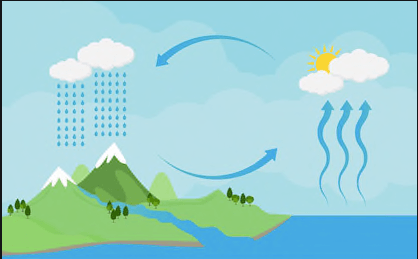
Water on Earth quizzes for Grade 3 students provide comprehensive assessment opportunities that help young learners explore the fundamental concepts of our planet's most essential resource. These interactive practice questions guide students through understanding the water cycle, identifying different forms of water including liquid, solid, and gas states, and recognizing where water exists on Earth's surface and atmosphere. The assessment activities develop critical thinking skills as students analyze how water moves through evaporation, condensation, and precipitation processes while building their understanding of oceans, rivers, lakes, and groundwater systems. Through immediate feedback and engaging question formats, these quizzes strengthen scientific observation skills and help students connect water's role in weather patterns, plant growth, and daily life experiences. Wayground's extensive collection of teacher-created water on Earth quizzes offers educators millions of resources designed to support diverse instructional needs and learning objectives. The platform's robust search and filtering capabilities enable teachers to locate standards-aligned content that matches specific curriculum requirements while providing differentiation tools to customize assessments for varying student ability levels. Digital delivery formats allow for real-time progress monitoring and instant feedback, while the flexibility to adapt question difficulty and content focus supports both remediation for struggling learners and enrichment opportunities for advanced students. These comprehensive quiz collections enable educators to reinforce key water cycle vocabulary, assess conceptual understanding of Earth's water systems, and plan targeted instruction that builds upon students' prior knowledge while addressing individual learning gaps through systematic skill reinforcement.
FAQs
How do I teach the water cycle and Earth's water systems effectively?
Effective water cycle instruction builds from concrete to abstract: start with observable phenomena like evaporation and precipitation before moving to broader concepts like groundwater recharge and ocean circulation. Use diagrams that label each stage of the hydrological cycle, then connect those stages to real-world examples such as watershed drainage and aquifer replenishment. Reinforcing these connections through structured practice helps students see water systems as interconnected rather than isolated processes.
What exercises help students practice understanding Earth's water systems?
Practice exercises that work well for water on Earth topics include labeling water cycle diagrams, analyzing maps of freshwater versus saltwater distribution, and interpreting data on precipitation patterns or groundwater levels. Tasks that ask students to trace water's movement through different reservoirs — atmosphere, surface, and subsurface — build systems thinking alongside content knowledge. Mixing diagram-based tasks with short written analysis questions strengthens both recall and conceptual understanding.
What misconceptions do students commonly have about the water cycle and freshwater resources?
A common misconception is that freshwater is abundant and evenly distributed across Earth, when in fact the vast majority of Earth's water is saltwater and most freshwater is locked in glaciers or ice caps. Students also frequently confuse evaporation with boiling, not recognizing that evaporation occurs at ambient temperatures. Another persistent error is treating the water cycle as a linear sequence rather than a continuous, interconnected system with multiple simultaneous processes.
How do human activities affect Earth's water systems, and how can I teach this concept?
Human activities such as deforestation, agriculture, urbanization, and industrial discharge alter natural water cycles by changing infiltration rates, increasing surface runoff, depleting aquifers, and introducing pollutants into watersheds. Teaching this topic is most effective when students compare natural versus modified landscapes and examine case studies of specific water resource challenges. Asking students to evaluate trade-offs between water use and conservation ties the science directly to civic and environmental reasoning.
How do I use Wayground's Water on Earth quizzes in my classroom?
Wayground's Water on Earth quizzes are available as free printable PDFs for traditional classroom use and in interactive digital formats for technology-integrated environments, giving teachers flexibility across different instructional settings. Each quiz includes a complete answer key, making them practical for independent practice, homework, or formative assessment without additional prep. Teachers can also host these materials as a quiz directly on Wayground, enabling real-time student responses and streamlined review.
How can I differentiate Water on Earth instruction for students at different skill levels?
Wayground's differentiation tools allow teachers to customize water science materials for varying skill levels, so struggling learners can engage with foundational concepts while advanced students tackle more complex analysis. For students who need additional support, accommodations such as read aloud, reduced answer choices, and extended time can be applied individually without disrupting the rest of the class. These settings are saved and reusable across future sessions, reducing setup time for recurring differentiation needs.

Accessibility
Features
Wayground Super
School & District
Wayground for Business
Create a quiz
Create a presentation
Wayground AI
Subjects
Mathematics
Social Studies
Science
Physics
Chemistry
Biology
About
Our Story
Wayground Blog
Media Kit
Careers
Support
F.A.Q.
Help & Support
Privacy Policy
Terms of Service
Teacher Resources
2026 Wayground


Get our app

